Are your expensive molds at risk of damage due to improper storage? Accidents happen quickly in busy warehouses. You need to know how to prevent them now.
When using mold racks1, prioritize safety by placing heavy items at the bottom to prevent tipping. Avoid overloading shelves2 beyond their rated capacity. Ensure operators stay clear of loaded racks overhead, and always handle molds gently to avoid structural impact damage3.
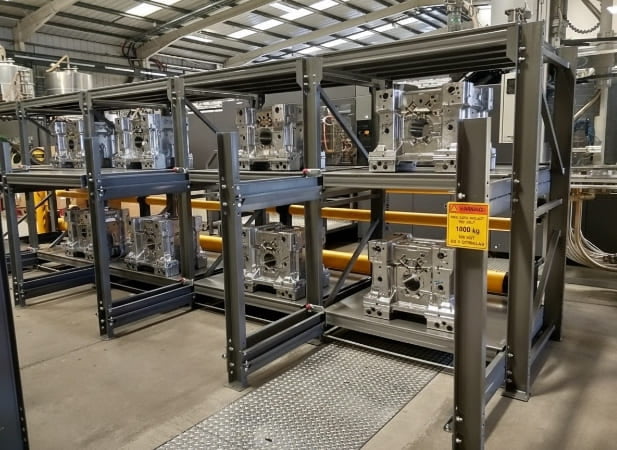
I have seen many factories make simple mistakes. These mistakes cost money and hurt people. I want to share my experience with you. Here are the specific details you need to follow for safety.
How Can You Prevent Impact Damage to the Rack?
Forklift accidents destroy racks every day. Do you want your investment to turn into scrap metal? You must act carefully during daily operations.
Operators must handle goods gently. Avoid hitting the rack columns or beams with forklifts or molds. Rough handling weakens the structure over time. Using guide rails4 and training drivers to drive slowly reduces the risk of collision significantly.
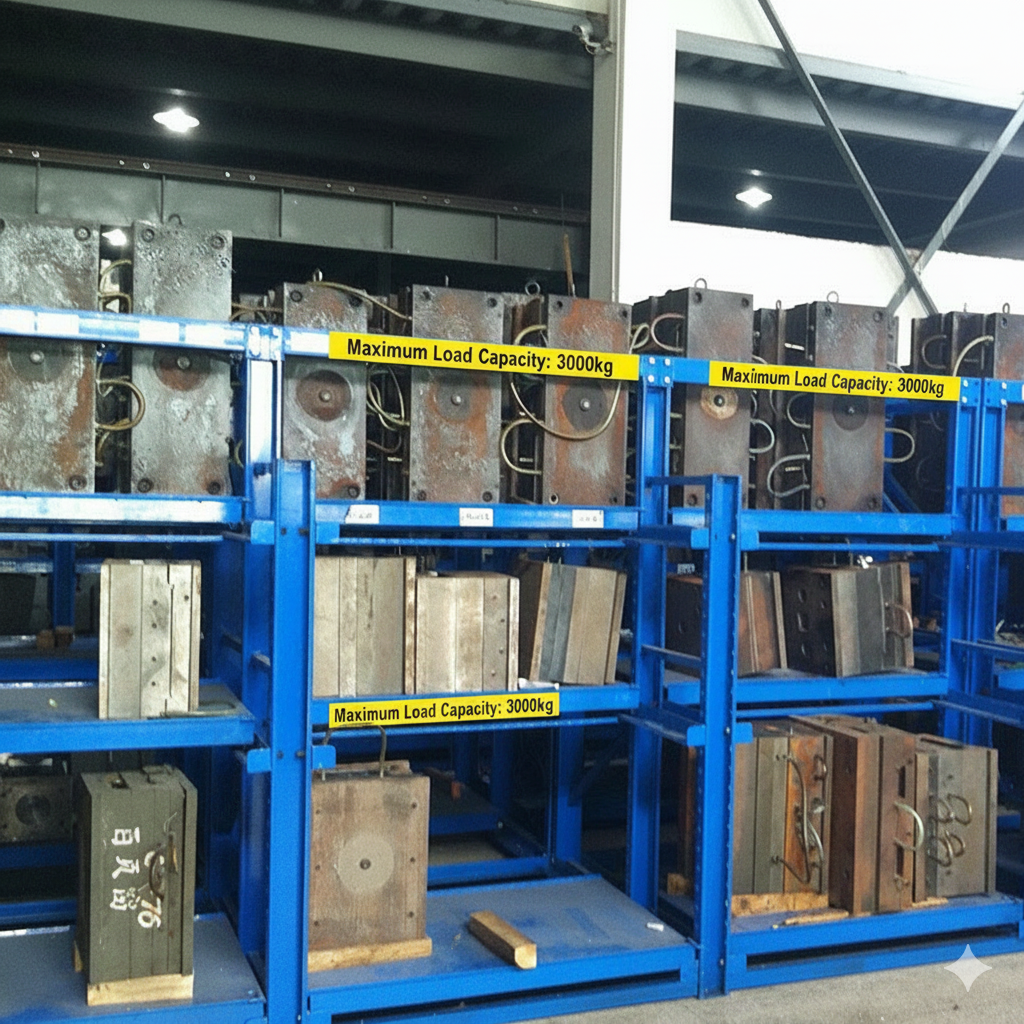
At Dongguan Top-notch Metal & Plastic Products Co., Ltd, we build our racks to be strong. However, no steel can withstand constant heavy impact forever. When I visit client sites, I often see dents in the upright columns. This usually happens because the forklift driver is in a hurry. You must treat the mold rack with care. We call this "light taking and light putting."
When you move a heavy mold, the momentum is very high. If this hits the rack, it causes structural damage. This damage might not look bad today, but it makes the rack weak. One day, it could collapse. I always tell my clients to install upright protectors5. But the best protection is a careful driver. You should train your staff to slow down.
Here is a simple breakdown of how to handle the equipment:
| Action | Correct Method | Incorrect Method |
|---|---|---|
| Approach | Drive slowly and align the forklift straight. | Driving fast and turning while entering the rack. |
| Lifting | Lift the mold clearly above the beam before moving in. | Dragging the mold across the beam surface. |
| Placement | Lower the mold gently until it rests completely. | Dropping the mold quickly (shock loading). |
We use high-quality steel for our products. But physics is still physics. If you hit metal hard enough, it will bend. Protecting the rack means protecting your investment.
Why Is Weight Distribution Crucial for Stability?
A toppling rack is a warehouse manager's worst nightmare. Are you stacking your shelves correctly? Ignoring physics can lead to a total collapse.
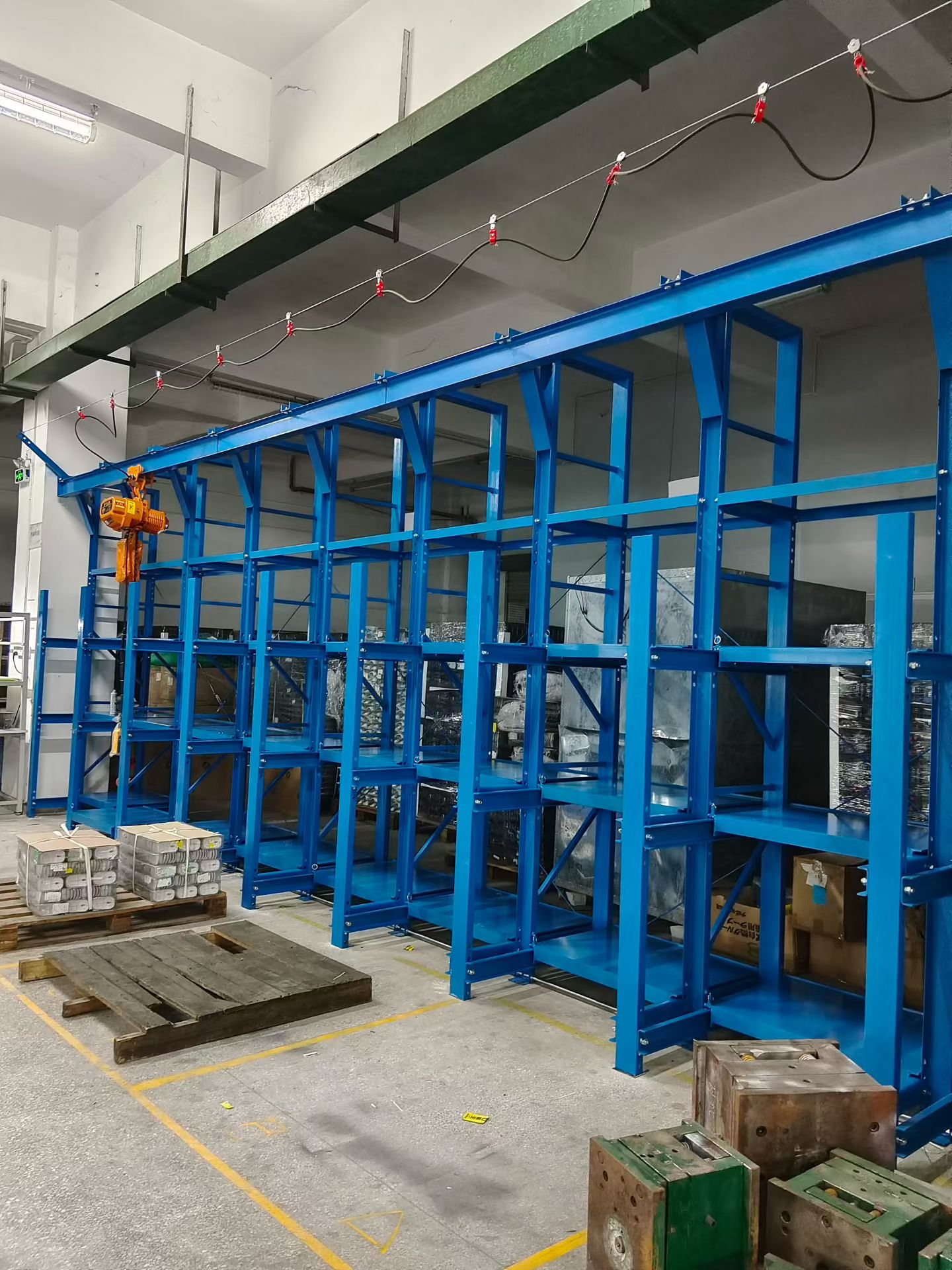
You must follow the principle of "light goods on high layers, heavy goods on low layers." This lowers the center of gravity. It keeps the mold rack stable and prevents it from becoming top-heavy6 and falling over.
I cannot stress this enough: do not make the rack top-heavy6. In the storage industry, we see this error frequently. A warehouse manager wants to keep the heavy, often-used molds at eye level. This seems convenient. But it is very dangerous. The center of gravity must stay low.
Imagine the rack is like a tree. If the branches are heavier than the trunk, the wind will blow it over. Your mold rack works the same way. At Dongguan Top-notch, we design our bases to be wide and stable. But we cannot control how you load them. You must put the heaviest molds on the bottom shelf. As you go up, the molds should get lighter.
If you put a 2-ton mold on the top shelf and an empty pallet on the bottom, the rack becomes unstable. Even a small bump from a forklift could knock it over. This puts your workers in danger. It also risks damaging all the molds stored on that unit.
Please look at this guide for loading distribution:
| Shelf Level | Recommended Load Type | Reason |
|---|---|---|
| Top Level | Lightest Molds / Spare Parts | Keeps center of gravity low. |
| Middle Level | Medium Weight Molds | Accessible but maintains balance. |
| Bottom Level | Heaviest Molds | Anchors the structure to the ground. |
By following this rule, you ensure the long service life of the product. It is a simple habit that saves lives.
How Strict Are the Weight Capacity Limits?
Overloading seems like a quick fix for space issues. But is it worth the risk of structural failure? Ignoring weight limits is dangerous.
Never exceed the maximum load capacity designed for each shelf. If a shelf is rated for 1000kg, do not put 1001kg on it. Overloading causes beam deflection and permanent metal fatigue7, leading to sudden breakage.
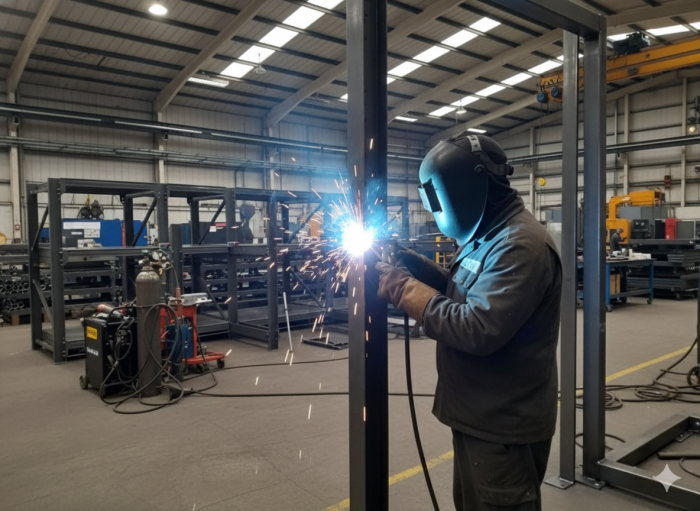
Every rack we manufacture at Dongguan Top-notch has a specific load rating. Our engineers calculate this very carefully. We use ISO 9001 standards to ensure quality. When we say a shelf holds 1000kg, we mean it safely holds 1000kg. We do not mean it holds 1500kg "just for a few minutes."
I often hear customers say, "It looks strong enough." Steel is deceptive. It can hold a load for a while even if it is overloaded. But inside the metal, stress is building up. This is called metal fatigue7. Eventually, the beam will not bend; it will snap. This happens without warning.
You must know the weight of your molds. Do not guess. If you do not know the weight, weigh it before you store it. Also, consider the total weight of the entire bay, not just one shelf. The uprights hold the total weight of all shelves combined.
Here is how you can identify if you are overloading your system:
| Sign of Overloading | What it Means | Action Required |
|---|---|---|
| Beam Deflection | The beam is bowing in the middle. | Remove weight immediately. |
| Creaking Sounds | The metal joints are under too much stress. | Evacuate the area and unload. |
| Safety Pin Failure | The locking pins are shearing off. | Inspect for damage and replace parts. |
We provide tailored solutions. If you need to store heavier items, tell us. We can build a stronger rack for you. Do not risk safety to save a small amount of space.
Where Should Operators Stand During Loading?
Falling objects cause severe injuries in workshops. Are your workers standing in the danger zone? You must protect your team from gravity.
When there are goods placed on the upper racks, operators must not enter the space directly at the bottom of the mold rack. Gravity can cause loose items to fall. Keeping the area clear prevents serious head injuries.
At Dongguan Top-notch, we care about social responsibility. We hire people with disabilities and treat our staff like family. I want you to treat your staff the same way. The most dangerous place in a warehouse is directly under a loaded rack.
Sometimes, a worker might walk under a rack to check a label. Or they might sweep the floor while a forklift is loading the top shelf. This is strictly forbidden. If a pallet breaks, or a mold slides, gravity brings it down instantly. A hard hat offers some protection, but a heavy mold will crush anything in its path.
You need to establish a "No Entry Zone8" when the rack is being used. If goods are stored up high, the bottom area is for storage only, not for standing. We recommend painting lines on the floor to show where it is safe to walk.
Here are the safety protocols9 you should enforce:
| Protocol | Description |
|---|---|
| The Red Zone | The area directly under the rack. No standing here if goods are above. |
| Visual Checks | Inspect pallets for damage before lifting them overhead. |
| Communication | Forklift drivers must honk or signal before lifting loads. |
We design our drawer cabinets and racks with safety locks10. But mechanical safety is not enough. You need human awareness. Keep your team safe by keeping them out from under the load.
Does Size Matter When Storing Molds?
Forcing a large mold into a small space damages both. Are you scratching your beams? You need to respect the physical limits of the bay.
You must prevent exceeding height and width limits. The mold dimensions should be at least 100mm smaller than the net space of the rack. This clearance allows for safe maneuvering without scraping the uprights11 or beams.
Space is money. I understand that you want to maximize your storage density. However, you must leave room to move. We recommend a clearance gap12 of 100mm. This means if your rack opening is 1000mm wide, your mold should not be wider than 900mm.
Why do we insist on this 100mm gap? It is for the forklift driver. No driver is perfect. They need a margin of error. If the fit is too tight, the driver has to struggle to get the mold in. This leads to scraping against the uprights. This removes the paint and leads to rust and corrosion. It also shakes the whole rack structure.
Also, you need to consider the height. If you stack goods too high, you might hit the shelf above. Or, you might hit the fire sprinklers or lights in the ceiling.
Here is a guide to calculating your required space:
| Dimension | Rule | Benefit |
|---|---|---|
| Width Clearance | Total Width - 100mm | Prevents side impact on uprights. |
| Height Clearance | Total Height - 100mm | Allows lifting space13 to clear the beam. |
| Depth Clearance | fully supported by beams | Ensures the load is not hanging off the edge. |
We offer OEM and ODM services. If your molds are an unusual size, we can design a rack that fits them perfectly. Do not try to force a big object into a small hole. It damages the equipment and slows down your operation.
Conclusion
To use mold racks safely, you must prevent impacts, distribute weight correctly, avoid overloading, keep workers out from under loads, and maintain proper clearance. Contact us for help.
Explore this resource to learn essential safety practices for using mold racks effectively. ↩
Understand the risks associated with overloading shelves and how to avoid them. ↩
Learn about the causes of structural impact damage and how to prevent it. ↩
Find out how guide rails can enhance safety and reduce accidents in warehouses. ↩
Explore the benefits of upright protectors in maintaining rack integrity. ↩
Understand the dangers of a top-heavy rack and how to avoid it. ↩
Discover how metal fatigue can compromise the safety of your storage racks. ↩
Find out how to create effective No Entry Zones to enhance safety. ↩
Discover essential safety protocols to implement in your warehouse operations. ↩
Learn how safety locks can improve safety in your warehouse operations. ↩
Find out how scraping the uprights can lead to serious issues in storage. ↩
Understand why maintaining a clearance gap is essential for safe storage. ↩
Learn about the significance of having adequate lifting space for safety. ↩