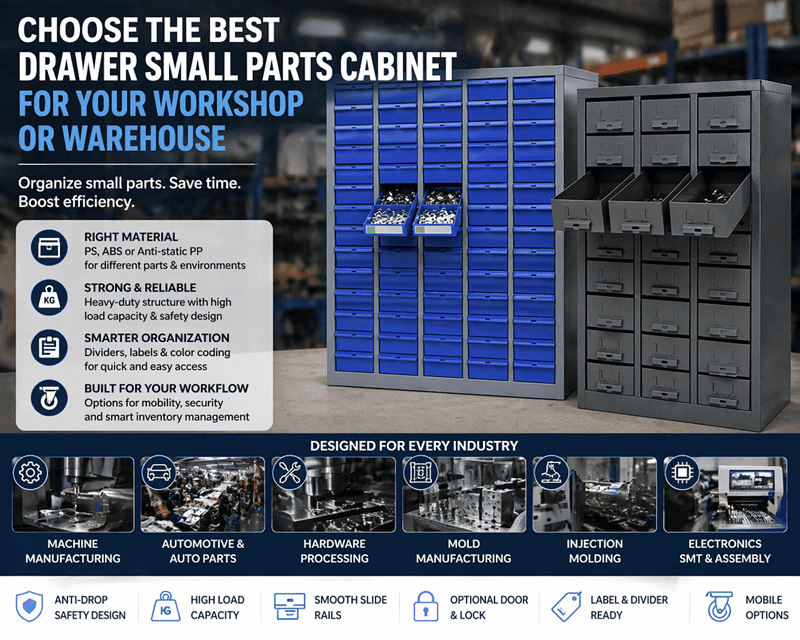
How Do You Choose the Best drawer Small Parts Cabinet1 for Your Workshop or Warehouse? Struggling to find small parts in your workshop? This chaos costs you time and money. A well-chosen drawer cabinet2 can restore order and boost your efficiency immediately.
To choose the best parts cabinet, first define what you're storing and your environment. Then, evaluate the required load capacity, drawer structure, and safety features. Finally, consider efficiency-boosting options like dividers, labels, and mobility to match your daily workflow perfectly.
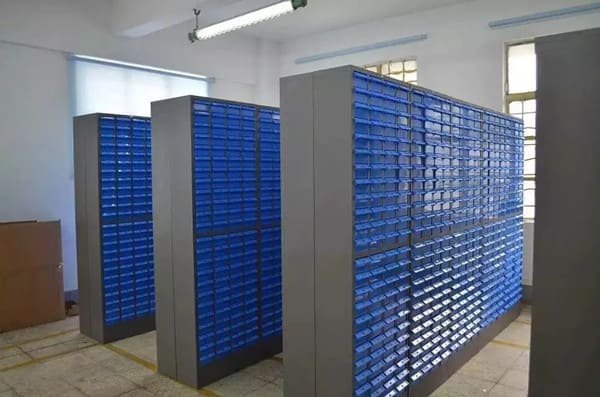
Choosing the right cabinet seems simple, but the details make all the difference between a helpful tool and a frustrating purchase. I've seen it all in my years in the industry. Let's break down the process step-by-step so you can make a confident decision. We’ll start with the most basic question.
What Type of Small Parts Are You Storing and How Does It Affect Cabinet Choice?
Storing different parts in the wrong drawers leads to damage and mess. This can ruin expensive components or cause safety issues. Match the drawer material to your items for secure storage.
The items you store directly dictate the cabinet's material. For general hardware, transparent PS or oil-resistant ABS drawers work well. If you handle sensitive electronics, you must choose anti-static PP drawers3 to prevent static discharge damage and protect your valuable components.
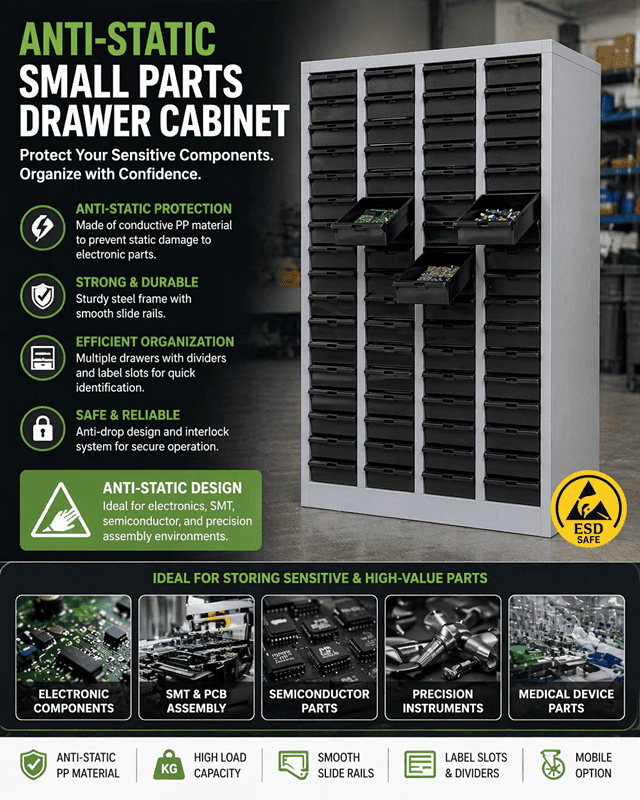
The first thing I always ask a client is, "What exactly are you putting in these drawers?" The answer changes everything. You wouldn't store delicate microchips in the same way you store greasy bolts. Your working environment is just as important. A dusty, oily workshop requires a different solution than a cleanroom. To simplify this, I've broken down the common drawer materials we use and their best applications.
| Drawer Material | Best For | Key Feature |
|---|---|---|
| PS (Polystyrene) | General hardware, screws, nails | Transparent for easy visibility |
| ABS (Acrylonitrile Butadiene Styrene) | Oily parts, garage tools | High impact and oil resistance |
| PP (Polypropylene) | Electronic components, circuit boards | Anti-static/Conductive properties |
For example, in an auto repair shop, I always recommend blue ABS drawers because they won't degrade from contact with oils and lubricants. But for a client in electronics manufacturing, choosing anything other than black anti-static PP drawers3 is a major risk. That static shock you can barely feel can destroy a sensitive component instantly. It’s a small detail that saves thousands in the long run.
How Much Load Capacity and Drawer Structure Do You Really Need?
Worried about drawers buckling under weight? A collapsed drawer is a safety risk and a major headache. Selecting the correct load capacity and structure ensures your cabinet works safely for years.
For light parts under 20kg, a standard cabinet with triple-slide rails is fine. For heavier items or tools, you need a heavy-duty unit4 with double-slide rails supporting up to 250kg per drawer. Always look for anti-drop stoppers and interlocking systems to prevent tipping.
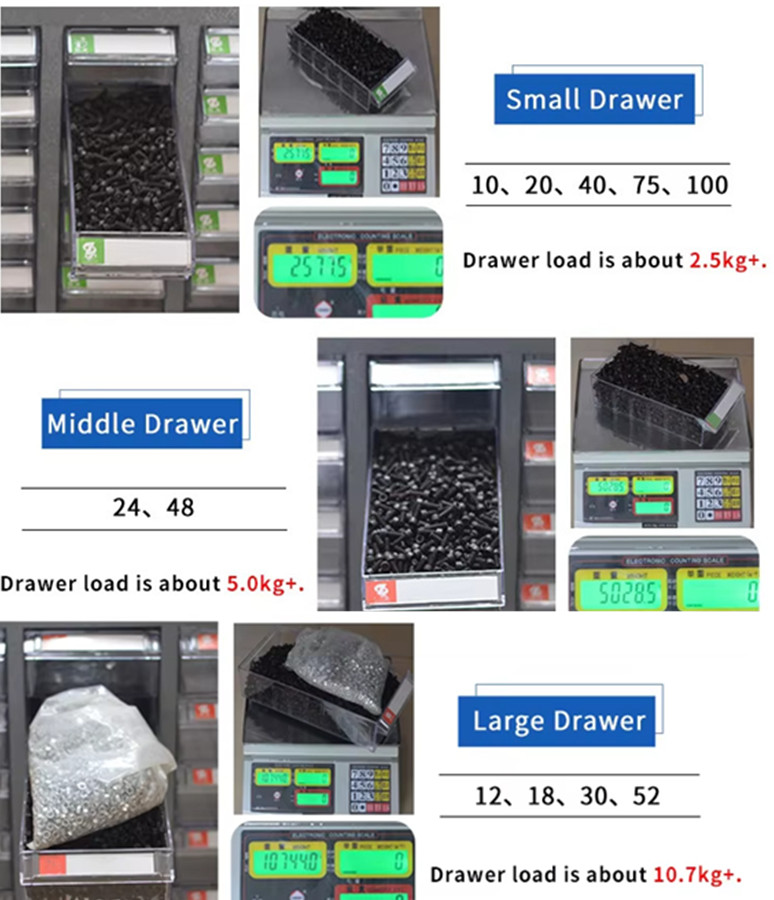
Don't just guess the weight. The difference between a light-duty and heavy-duty cabinet is significant, both in price and performance. For most workshops storing screws, resistors, and small fittings, a standard cabinet is perfect. These typically handle up to 20kg per drawer using triple-slide rails. However, if you're storing heavier tools, molds, or steel parts, you must upgrade. Our heavy-duty drawer racks are built for this. They feature drawers on double-slide rails that can manage 100-250kg each. The entire structure is beefier, with uprights up to 12mm thick.
Key Structural Features to Insist On
- Anti-Drop Stoppers: A small tab or design at the back of the drawer that prevents it from accidentally pulling all the way out and falling.
- Interlocking System: This is a crucial safety feature for tall cabinets. It only allows one drawer to be opened at a time, preventing the cabinet from becoming top-heavy and tipping over.
- Quality Slide Rails: Smooth, ball-bearing slides make accessing heavy items effortless and safe.
As a manufacturer, I can tell you these features aren't just nice-to-haves; they are essential for workplace safety and the cabinet's longevity.
What Features Actually Improve Efficiency in Daily Warehouse Operations?
Searching for one small part can halt your entire workflow. This wasted time adds up, killing your team's productivity. Smart organizational features can make finding parts instant and effortless.
To boost efficiency, look for cabinets with adjustable dividers5 and color-coded label cards. This allows for clear visual management. For moving inventory between workstations, models with heavy-duty casters6 and brakes are essential. For high-value items, consider smart cabinets with RFID tracking.
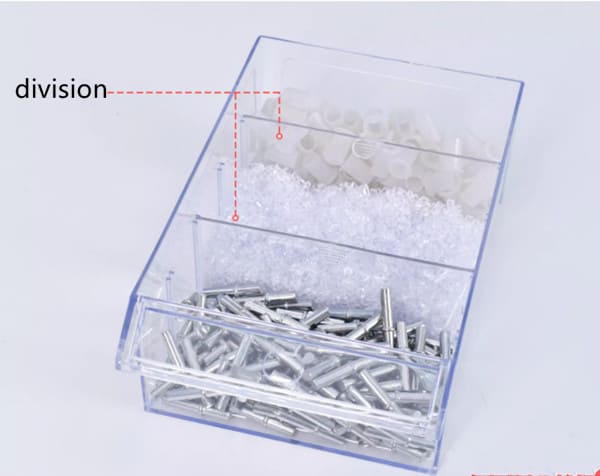
A cabinet is more than just storage; it’s a tool for efficiency. The best features are often the simplest ones. I always recommend getting cabinets with slots for color label cards and a good supply of adjustable dividers. This allows you to create a visual system where anyone can find what they need in seconds, without prior training. If your workflow involves moving parts between assembly stations, don't overlook casters. Just make sure they have reliable brakes to keep the cabinet stationary when needed. For added protection in dusty environments, models with lockable doors are a great choice.
For more advanced needs, like managing high-value components or meeting strict compliance standards, smart cabinets are becoming more common. These can integrate with your ERP system using RFID or barcode scanning. They track who takes what, when, and can even monitor inventory levels automatically. While not necessary for every workshop, for industries dealing with expensive or critical parts, they provide an unmatched level of control and error prevention. It’s about matching the technology to the value of the items you’re protecting.
Conclusion
Choosing the right parts cabinet comes down to matching the material, capacity, and features to your specific needs. A thoughtful choice improves organization, safety, and overall workshop efficiency.
Explore this resource to discover top-rated small parts cabinets that enhance organization and efficiency in your workspace. ↩
Explore this link to discover top-rated drawer cabinets that enhance organization and efficiency in your workspace. ↩
Discover the advantages of anti-static PP drawers for storing sensitive electronics safely. ↩
Find out what makes a storage cabinet heavy-duty and why it matters for your workshop. ↩
Find out how adjustable dividers can streamline your storage and make finding parts easier. ↩
Learn about heavy-duty casters and how they can improve mobility and safety in your storage solutions. ↩