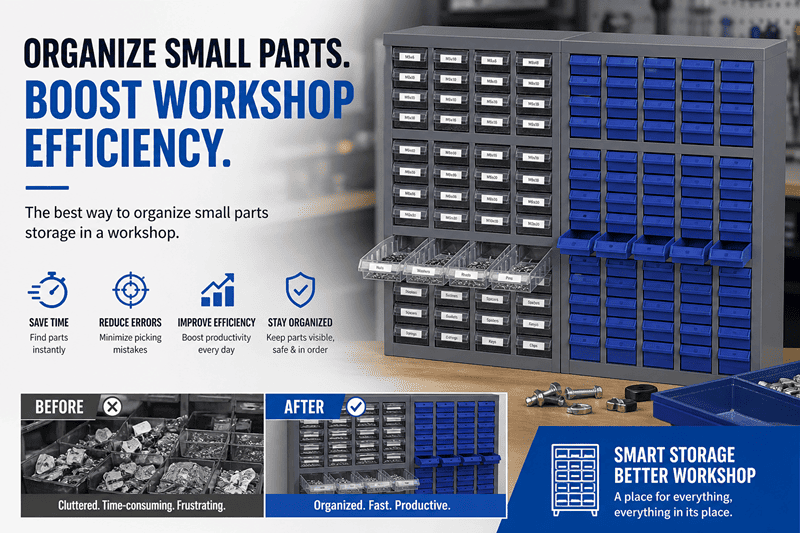
What Is the Best Way to Organize Small Parts Storage in a Workshop? Tired of wasting time searching for small parts? This chaos kills productivity and creates daily frustration. A visual storage system1 can make finding anything you need almost instantly.
The best way to organize small parts is with a visual and standardized system. Use clear drawer parts cabinets with dividers and consistent labels. This approach reduces search time, minimizes errors, and allows anyone in the workshop to find what they need quickly, boosting overall efficiency.
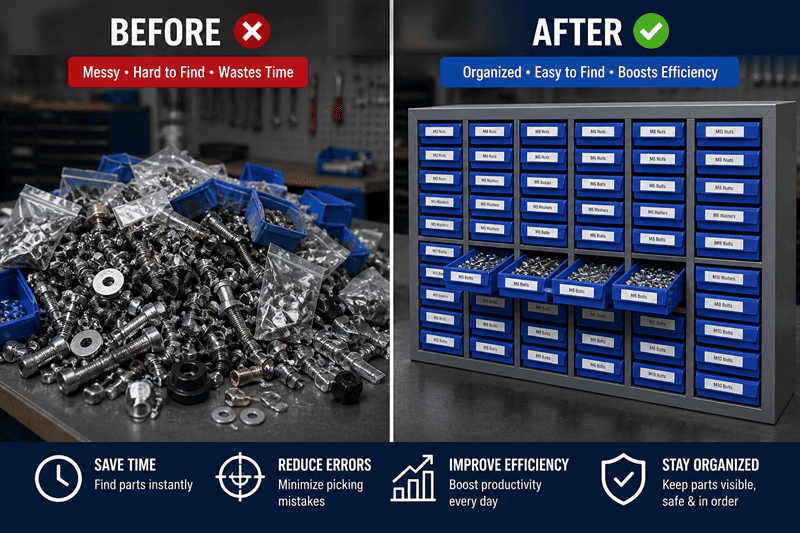
I've seen countless workshops struggle with this exact problem. They buy more cabinets, but the mess just grows. The real solution isn't about adding more space; it's about changing your approach entirely. It's about thinking smarter, not bigger. Let's break down exactly how you can implement a system that actually works and saves you time every single day.
How Do You Organize Small Parts in a Workshop Efficiently?
Is your workshop a mess of jumbled parts bins? This chaos leads to costly mistakes and slows down every project. I’ll explain how to organize based on workflow.
Efficiently organize small parts by placing the most frequently used items closest to workstations. Classify everything with clear labels and use drawer cabinets with dividers for easy access. This workflow-based approach minimizes movement and dramatically boosts your team's productivity.
Most people make the mistake of organizing parts by category, like putting all screws together. This sounds logical, but it's not efficient in practice. The real key is to organize by how and how often you use things. I call this workflow-based organization, and it has transformed the workshops I've worked with.
Create Usage Zones
Think about your workshop in zones based on frequency of use. High-frequency items should be within arm's reach of the main workbench. Medium-frequency items can be a few steps away, and low-frequency parts can be stored further back. This simple change stops people from walking across the shop for a common bolt.
Workflow Path Optimization
Map out the typical path of a project. Where do you start? What parts do you need first? Place your storage along this path. This minimizes backtracking and wasted steps, making the entire process smoother.
Here’s a simple comparison of methods:
| Organization Method | Pros | Cons |
|---|---|---|
| By Product Type | Easy to set up initially. | Inefficient, causes lots of walking and search time. |
| By Usage Frequency | Drastically reduces search time and motion. | Requires initial workflow analysis to set up. |
This shift in thinking from "what is it?" to "how is it used?" is what separates a cluttered workshop from a lean, productive one.
What Is the Best Storage System for Small Parts in Industrial Workshops?
Are your generic shelves and bins just not cutting it? This lack of visibility leads to picking errors and lost inventory. The right cabinet system can solve this problem.
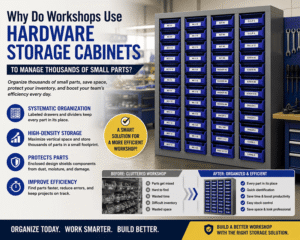
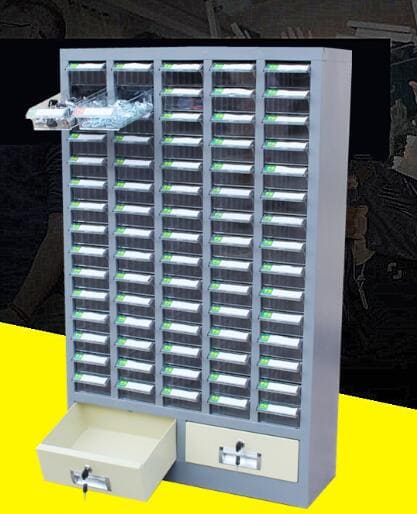
The best storage system for small industrial parts is a high-density drawer parts cabinet2. These units, especially those with clear plastic or steel drawers and adjustable dividers, offer maximum visibility and protection3. They allow for precise organization, preventing mix-ups and keeping parts safe.
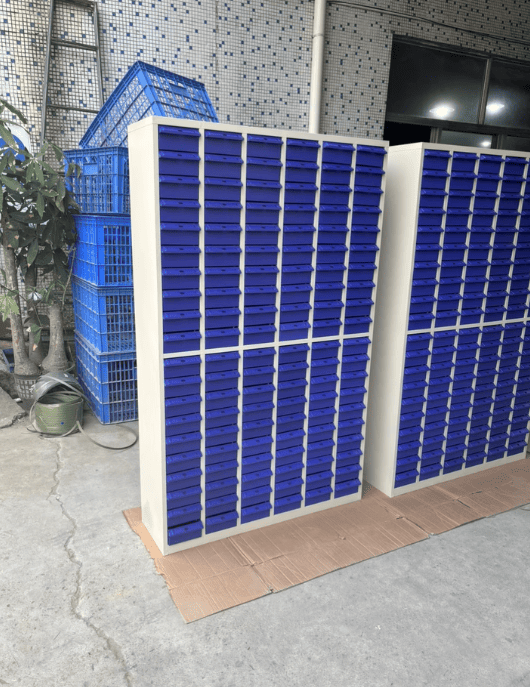
When I talk to clients, they often think any old shelf will do. But for small parts, the container itself is crucial. You need a system that offers visibility, protection, and high-density storage. This is where specialized drawer parts cabinets are essential. They are designed specifically to solve the challenges of managing small components in an industrial setting.
Choosing the Right Drawer Type
The choice between clear plastic and steel drawers depends on your environment.
- Clear Drawers: These are my top recommendation for most workshops. You can see the contents instantly without opening anything. This visual confirmation is a huge time-saver and error-reducer.
- Steel Drawers: For heavier parts or harsher environments with oil and grease, steel drawers offer superior durability and protection for your valuable components.
The Power of Dividers and Labels
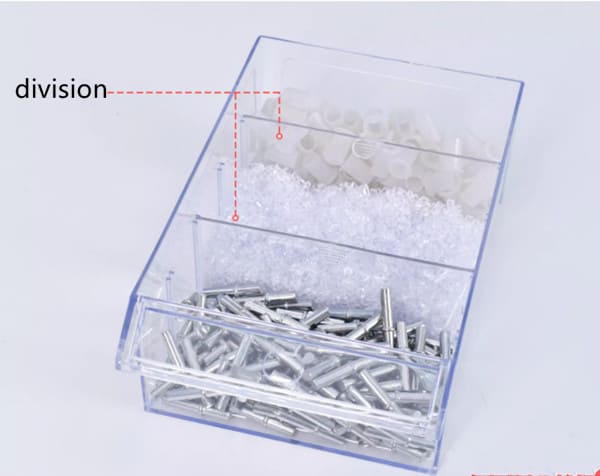
A drawer is only as good as its organization. Use adjustable dividers to create custom-sized compartments for each part. This prevents tiny screws and components from mixing together. Then, apply a clear, standardized label to the front of every single drawer. No exceptions. This combination of dividers and labels is the foundation of a mistake-proof system. It supports 5S principles4 by ensuring everything has a specific, clean, and easily identifiable home.
How Can You Reduce Time Wasted Searching for Small Parts in a Workshop?
Do you see your team wasting minutes searching for parts? Those minutes add up to hours of lost productivity every week. A standardized visual system can eliminate searching.
Reduce search time by implementing a system of visualization and standardization. Use clear-fronted drawers, consistent labeling, and fixed locations for every part. This ensures anyone can find what they need instantly, reduces picking errors, and makes inventory management simple.
The biggest time-waster in any workshop isn't the work itself; it's the time spent looking for the tools and parts to do the work. The solution isn't just about being tidy—it's about creating a system that requires zero thought to use. That’s where standardization comes in and makes a huge difference.
Fixed Location, Fixed Quantity
This is a core principle of lean manufacturing that I always recommend. Every single part has one, and only one, designated home. When a part is used, it's either reordered or the empty space signals a need for replenishment. This "fixed location, fixed quantity" approach removes all guesswork. You no longer have to wonder where the M4 screws are, or if you have any left.
Benefits Beyond Speed
A standardized system does more than just save time.
- New Employee Onboarding: A new team member can become productive on day one because the system is self-explanatory and easy to learn.
- Error Reduction: The chances of grabbing the wrong part are almost zero when everything is clearly labeled and visible.
- Inventory Control: You can see stock levels at a glance, preventing costly project delays due to missing parts.
This is how you move from a reactive, chaotic workshop to a proactive, lean operation. It's not about buying more cabinets; it's about implementing a smarter, standardized process for everyone to follow.
Conclusion
Organizing small parts5 is about visibility and system, not just space. Implement clear drawers, smart layouts, and standardization to boost your workshop’s efficiency and stop wasting valuable time.
"[PDF] Fundamentals of Communication, 2nd ed. | CUNY Academic Works", https://academicworks.cuny.edu/context/bx_oers/article/1059/viewcontent/COMM_11_OER_2nd_ed_textbook_Fisher_2022.pdf. Studies of 5S and visual management in lean workplaces report that visible, labeled, and standardized storage locations reduce search-related waste and improve item retrieval efficiency. Evidence role: general_support; source type: paper. Supports: A visual storage system can make finding anything you need almost instantly.. Scope note: The source may support reduced search time generally in workplace or manufacturing settings rather than proving that any specific workshop can find items “almost instantly.” ↩
"A systematic design procedure for small parts warehousing systems ...", https://www.academia.edu/18955707/A_systematic_design_procedure_for_small_parts_warehousing_systems_using_modular_drawer_and_bin_shelving_systems. Industrial storage and materials-management references describe drawer or compartment cabinets as suitable for organizing numerous small items in limited floor space while maintaining item separation and access. Evidence role: general_support; source type: education. Supports: High-density drawer parts cabinets are well suited for storing small industrial parts.. Scope note: This supports suitability for small-part storage; it does not establish that drawer cabinets are the single best system in all industrial workshops. ↩
"Supply Chain Visibility: The Key to AI Success", https://www.luc.edu/quinlan/whyquinlan/centersandlabs/labforappliedartificialintelligence/publishedresearch/2024/1stquarter2024/supplychainvisibilitythekeytoaisuccess/. Visual management and storage-design sources support that transparent or clearly identified containers improve item visibility, while enclosed compartments protect parts from mixing, contamination, or handling damage. Evidence role: mechanism; source type: institution. Supports: Clear or enclosed drawer systems improve visibility and protection for small parts.. Scope note: The evidence would support the functional mechanisms, not a measured ranking of cabinet types by visibility and protection. ↩
"5S (methodology) - Wikipedia", https://en.wikipedia.org/wiki/5S_(methodology). 5S references define the method as Sort, Set in order, Shine, Standardize, and Sustain, and describe labeled, designated locations as central to setting items in order and maintaining workplace organization. Evidence role: definition; source type: encyclopedia. Supports: Dividers and standardized labels align with 5S workplace-organization principles.. Scope note: The source supports the connection to 5S principles, not necessarily the effectiveness of this specific labeling system. ↩
"(PDF) 5s Implementation - Academia.edu", https://www.academia.edu/14755242/5s_Implementation. Evidence from lean/5S and visual-management literature can substantiate that systematic workplace organization, visual controls, and standardized locations reduce searching, motion waste, and errors in work environments. Evidence role: general_support; source type: paper. Supports: Organizing small parts is about visibility and system, not just space; clear drawers, smart layouts, and standardization can improve workshop efficiency and reduce time wasted searching.. Scope note: The evidence is likely to support the general workplace-organization principle rather than quantify results for every specific workshop or small-parts cabinet configuration. ↩