Worried your pallet racks might collapse? An overloaded rack risks inventory and safety. Understanding true safe capacity, beyond the sticker, is key to preventing disaster.
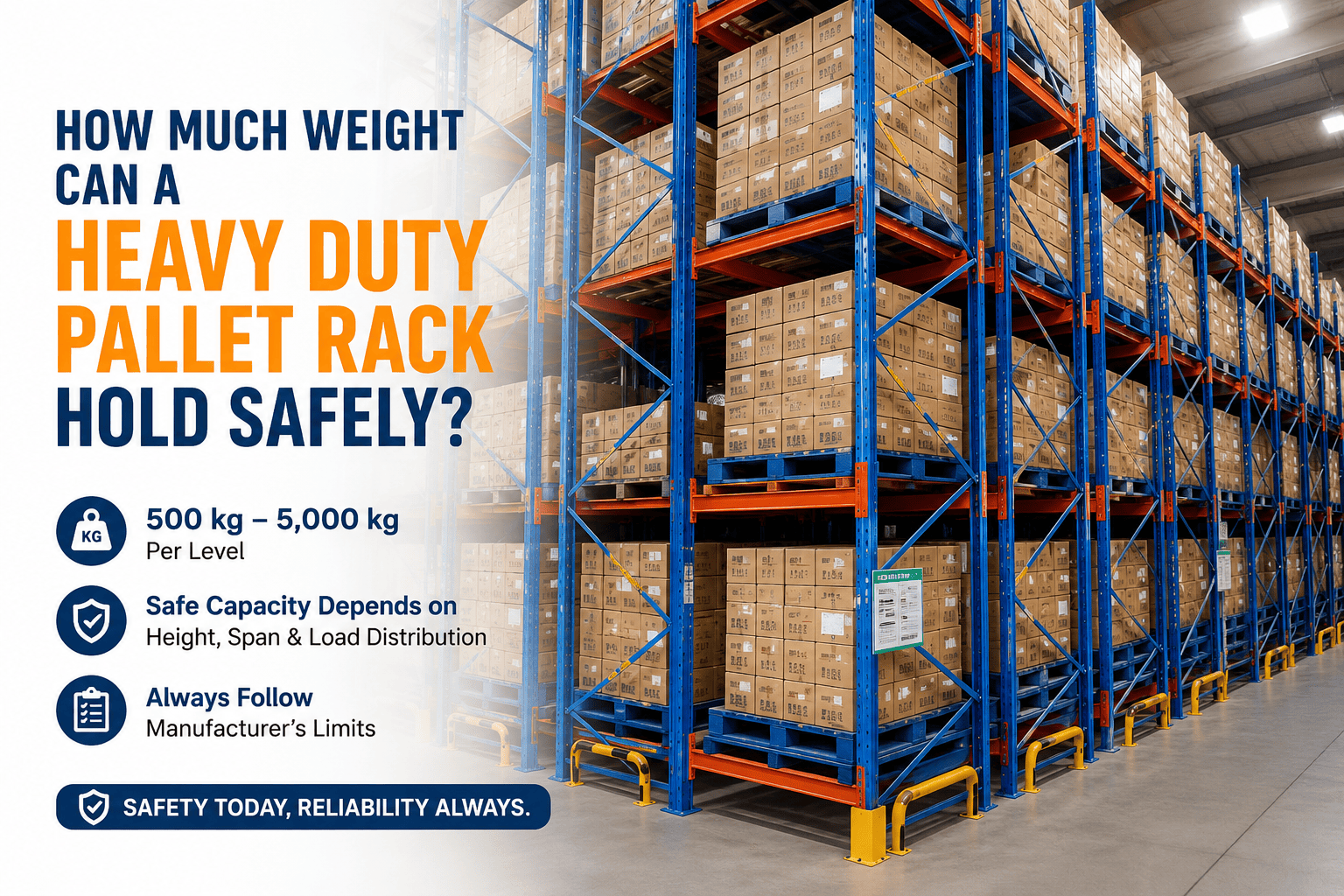
A heavy-duty pallet rack typically holds 500 kg to 5,000 kg per level1. However, its real safe capacity depends on factors like rack height, beam length, and load distribution2. Always respect the manufacturer's limits3 for both individual levels and the total frame.
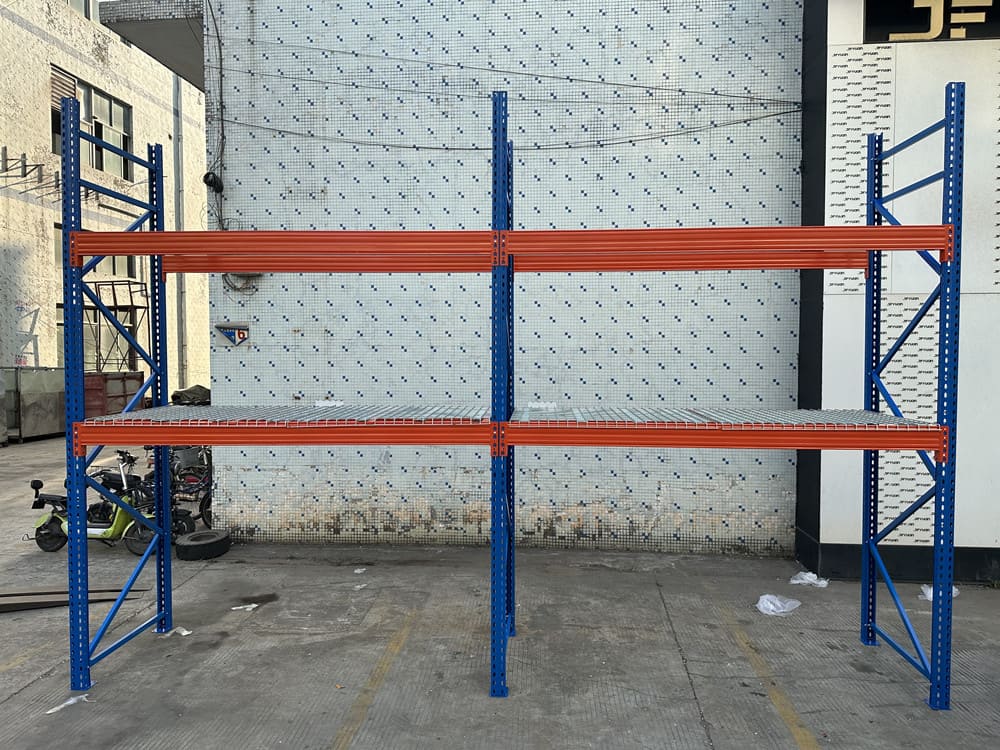
When I walk through a warehouse, I see load capacity stickers on every rack beam. It's easy to think that number is the final word on safety. But in my years of designing and installing storage systems, I've learned that the sticker is just the starting point. The real answer to "how much can it hold safely?" is much more complex. This knowledge is crucial for keeping your operations running without incident. Let's look beyond the simple numbers and understand what really keeps a rack standing.
What Is the Real Safe Load Capacity of Heavy Duty Pallet Racking (Not Just Rated Tons)?
You see a 4-ton capacity rating on your rack beam. But loading it to 4 tons feels risky, and you wonder if that number is the whole truth.
The real safe capacity isn't just the beam rating. It's the lower of two values: the capacity of a single beam level and the total capacity of the entire upright frame4. Overloading one level can compromise the whole structure5, even if other levels are empty.
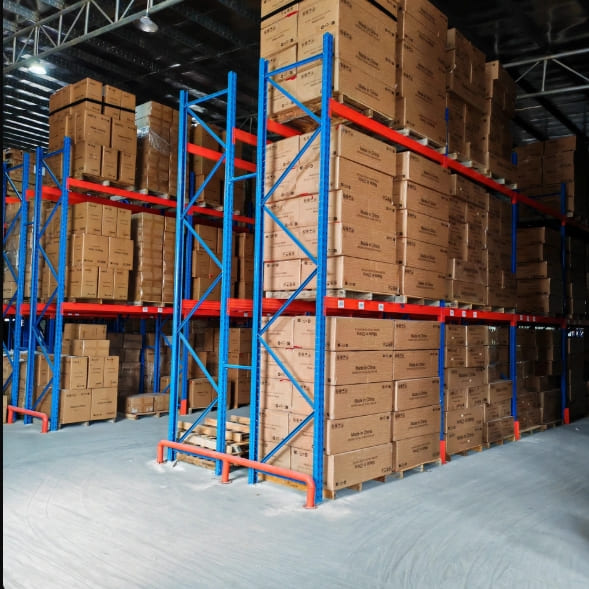
I often see people focus only on the beam capacity. They think if a beam is rated for 2 tons, they can put 2 tons on every level. This is a dangerous mistake. You also have to consider the total capacity of the upright frames. The frames support the combined weight of all the levels. So, if your uprights are rated for 8 tons, you can't put 2 tons on five different levels. That would be 10 tons, which is 2 tons over the frame's limit, creating a serious risk of collapse. Another key point is how you load the pallet. A "Uniformly Distributed Load6" (UDL) spreads the weight evenly across the beams. But a concentrated load, like a heavy engine block in the middle of a pallet, creates a single stress point7. This can cause the beam to bend and fail long before you reach its UDL rating.
| Factor | What it Means | Why it Matters |
|---|---|---|
| Beam Capacity | The maximum weight a single pair of beams can hold. | This is the most visible number, but not the only one. |
| Frame Capacity | The maximum total weight the uprights can support. | Often overlooked, but determines the safety of the entire bay. |
| Load Type | How weight is spread (Uniform vs. Concentrated). | Concentrated loads create weak points and reduce safe capacity. |
Why Do Rack Height, Beam Span, and Load Distribution Directly Affect Pallet Racking Safety?
You've installed tall racking to maximize vertical space. But taller racks can feel less stable, making you nervous about loading them fully. Height and beam length directly reduce safe capacity.
Taller racks have a higher center of gravity, making them less stable8 and reducing their safe load capacity. Similarly, longer beams are more prone to bending under weight9. Proper load distribution across the beams is essential to prevent concentrated stress and potential failure.
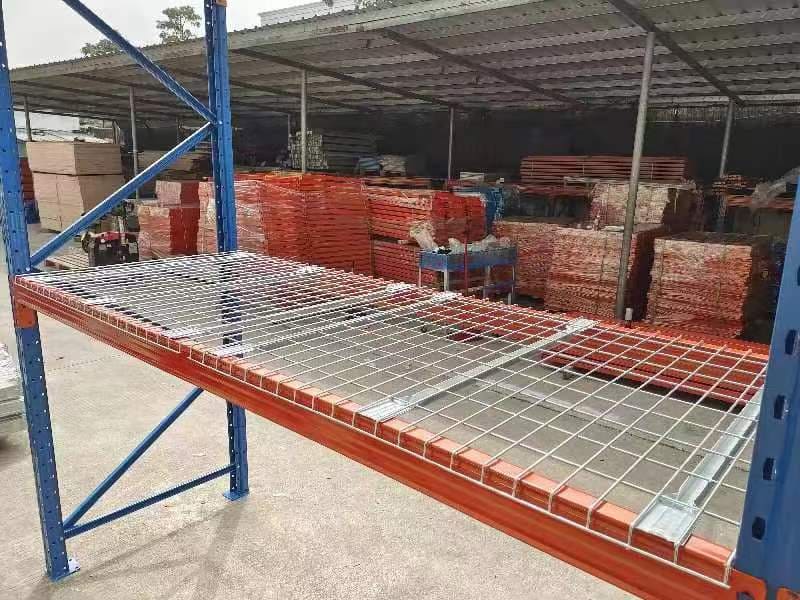
Physics plays a huge role in racking safety. Think of it like this: a tall, skinny object is easier to tip over than a short, wide one. The same principle applies to pallet racks. As you increase the height of the uprights, the overall stability decreases. That's why for a very tall system, maybe around 10 meters, I'd recommend a lower capacity per level, like 2 tons, to maintain stability. For heavier loads of 3 or 4 tons, it's much safer to use shorter racking, around 5 meters high. The length of the beams—the span—also matters. A longer beam has more room to bend in the middle. To support heavy loads safely, you need shorter beam spans. This ensures the weight is transferred more directly to the strong upright frames instead of stressing the center of the beam.
| Rack Dimension | Effect on Capacity | My Recommendation |
|---|---|---|
| Increased Height | Decreases stability and safe load. | For racks over 8m, reduce the rated load per level. |
| Increased Beam Span | Increases risk of beam bending (deflection). | For loads over 3 tons, use shorter spans (e.g., < 2.7m). |
| Uneven Load | Creates dangerous stress points on beams. | Always center pallets and ensure even weight distribution. |
What Are the Hidden Overload Risks in Warehouse Racking?
Your racks seem fine even when occasionally overloaded. But invisible damage like metal fatigue could be building up, leading to a sudden collapse without any warning.
Hidden risks include structural fatigue from repeated minor overloads, which weakens the steel over time10. Also, the warehouse floor itself might not support the rack's total weight11. Finally, accidental impacts from forklifts can severely damage uprights, drastically reducing their safe load capacity.
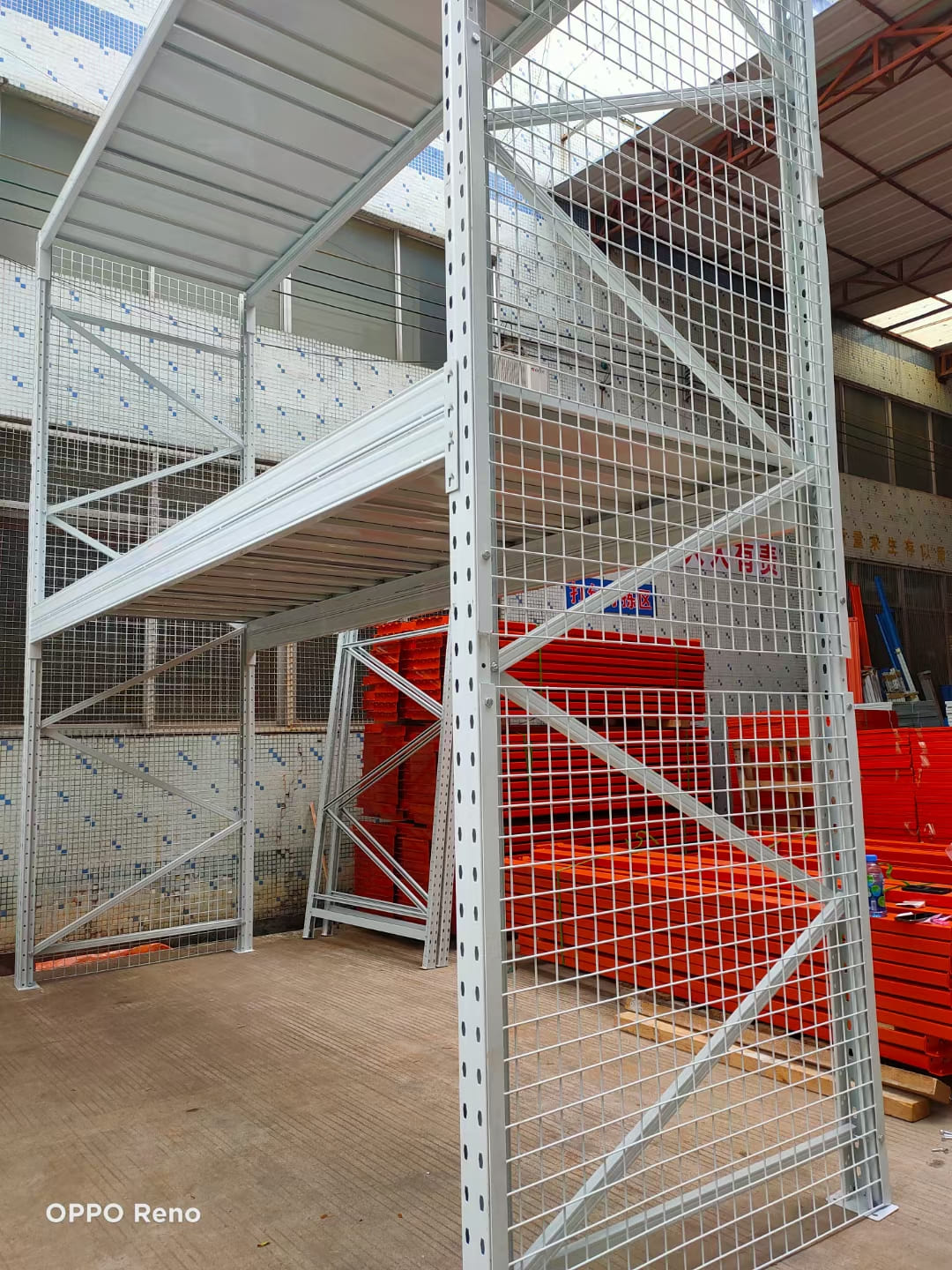
In my experience, the most catastrophic failures often come from risks nobody was paying attention to. One of these is structural fatigue. Every time you slightly overload a rack, you create microscopic stress in the steel. Over years, this adds up and weakens the structure until it fails unexpectedly. Another huge factor is the floor. Your concrete slab has a load-bearing limit, too. A fully loaded rack bay can weigh 15-20 tons. If your floor isn't rated for that, the rack could sink, tilt, and collapse. But the most common hidden danger I see is forklift damage12. A small dent or scrape on an upright from a forklift might look harmless, but it can reduce that upright's strength by over 50%. It creates a weak point that can buckle under a normal load. Regular inspections are not optional; they are essential for long-term safety.
| Hidden Risk | Description | How to Check |
|---|---|---|
| Structural Fatigue | Weakening of steel from repeated stress cycles. | Look for bent beams or twisted uprights that don't straighten out. |
| Floor Limits | The floor cannot support the rack's total weight. | Check building plans for floor capacity. Look for cracks around baseplates. |
| Forklift Impact | Dents, scrapes, or twists in uprights or braces. | Conduct weekly visual inspections of all uprights, especially at aisle ends. |
Conclusion
Safe racking capacity is more than a number. It requires understanding the entire system, from the frame and beams to your floor and daily operations, to ensure a truly safe warehouse.
"Lifting Operations and Lifting Equipment Regulations 1998 (LOLER)", https://www.hse.gov.uk/work-equipment-machinery/loler-overview.htm. Engineering guidance on industrial steel storage racks documents that pallet-rack capacity varies by member size, configuration, and loading arrangement, providing contextual support for wide per-level capacity ranges rather than a single universal rating. Evidence role: general_support; source type: institution. Supports: A heavy-duty pallet rack typically holds 500 kg to 5,000 kg per level.. Scope note: The source is unlikely to validate this exact numeric range for every manufacturer or rack design; it supports the principle that rated capacity is configuration-specific. ↩
"Citation 1060970.015/01001 | Occupational Safety and ... - OSHA", https://www.osha.gov/ords/imis/generalsearch.citation_detail?id=1060970.015&cit_id=01001. Rack-design standards and guidance identify frame geometry, beam span, bracing, and load placement as variables used in determining safe rack capacity. Evidence role: expert_consensus; source type: institution. Supports: Real safe pallet-rack capacity depends on rack height, beam length, and load distribution.. Scope note: Such sources generally describe design factors rather than calculating the capacity of the specific rack shown in the article. ↩
"1926.250 - General requirements for storage. - OSHA", http://www.osha.gov/laws-regs/regulations/standardnumber/1926/1926.250. Occupational-safety guidance for storage racks states that racks should be used within the rated load information supplied by the manufacturer or competent designer. Evidence role: expert_consensus; source type: government. Supports: Users should respect manufacturer limits for individual levels and total rack frames.. Scope note: The guidance supports following rated limits generally, not the accuracy of any individual manufacturer's label. ↩
"Pallet Rack Capacity Charts", https://www.unarcorack.com/pallet-rack-capacities/. Storage-rack engineering references distinguish between beam-pair load ratings and upright-frame capacity, supporting the claim that safe loading must satisfy both component and frame limits. Evidence role: mechanism; source type: institution. Supports: The safe capacity of a pallet rack is constrained by both beam-level capacity and total upright-frame capacity.. Scope note: The exact governing limit depends on the full rack design, anchorage, bracing, seismic requirements, and condition of the installation. ↩
"8 Most Common Rack Failures - Pallet Rack Systems", https://www.palletracksystems.com/8-common-rack-failures/. Rack safety guidance notes that loads exceeding rated beam or bay capacities can deform members and compromise rack stability, supporting the need to avoid overloads at individual storage levels. Evidence role: mechanism; source type: government. Supports: Overloading a single rack level can threaten the safety of the rack structure.. Scope note: The source may discuss overload risk generally rather than proving that every single-level overload will compromise the whole structure. ↩
"[PDF] Beam Diagrams and Formulas", https://people.duke.edu/~hpgavin/egr201/CourseNotes/BeamAnalysisTables-AISC.pdf. Engineering definitions of uniformly distributed load describe a load spread evenly over a member or area, supporting the article's distinction between evenly distributed and concentrated pallet loads. Evidence role: definition; source type: education. Supports: A uniformly distributed load spreads weight evenly across the rack beams.. Scope note: A general structural-engineering definition does not by itself establish the capacity of any particular pallet rack. ↩
"[PDF] DA6-BeamFormulas.pdf - Purdue Engineering", https://engineering.purdue.edu/~ce474/Docs/DA6-BeamFormulas.pdf. Structural-engineering texts distinguish concentrated loads from distributed loads and show that point loads create localized bending and shear effects in beams, supporting the article's warning about localized rack stress. Evidence role: mechanism; source type: education. Supports: Concentrated loads create localized stress points that can be more demanding than uniformly distributed loads.. Scope note: The example of an engine block is illustrative; the source would support the load mechanism rather than that specific item or pallet arrangement. ↩
"Center of Gravity | Physics Van - University of Illinois", https://van.physics.illinois.edu/ask/listing/74. Physics and structural-stability references explain that raising a structure's center of mass can reduce resistance to overturning, providing contextual support for the stability concern in taller rack systems. Evidence role: mechanism; source type: education. Supports: Taller rack systems can be less stable because their center of gravity is higher.. Scope note: Actual pallet-rack stability also depends on anchorage, bracing, bay geometry, floor condition, and seismic or impact loads. ↩
"[PDF] BEAM DEFLECTION FORMULAS", https://home.engineering.iastate.edu/~shermanp/STAT447/STAT%20Articles/Beam_Deflection_Formulae.pdf. Beam theory shows that deflection and bending effects increase with span length under comparable loading, supporting the statement that longer rack beams are more susceptible to bending. Evidence role: mechanism; source type: education. Supports: Longer beams are more prone to bending under load.. Scope note: The magnitude of bending depends on beam section properties, material, load arrangement, and connection details. ↩
"Fatigue (material) - Wikipedia", https://en.wikipedia.org/wiki/Fatigue_(material). Materials-engineering literature defines metal fatigue as progressive damage caused by repeated cyclic stresses, supporting the claim that repeated overload events can weaken steel members over time. Evidence role: mechanism; source type: paper. Supports: Repeated minor overloads can contribute to structural fatigue in steel pallet-rack components.. Scope note: Fatigue life depends on stress range, number of cycles, material properties, welds, notches, and existing damage; the source would not prove fatigue in a specific rack without inspection or analysis. ↩
"Warehouse Slab Specs for Pallet Racks - OneRack", https://oneracksolutions.com/warehouse-slab-specs-for-pallet-racks/. Industrial floor and storage-rack guidance notes that rack loads are transferred through baseplates into the slab and subgrade, so floor load capacity must be checked for concentrated rack reactions. Evidence role: mechanism; source type: institution. Supports: Warehouse floors may be unable to support the total weight imposed by loaded rack systems.. Scope note: The source can support the need for floor-capacity verification but cannot determine whether a specific warehouse floor is adequate without structural assessment. ↩
"Citation 1529215.015/01001 | Occupational Safety and Health ...", https://www.osha.gov/ords/imis/generalsearch.citation_detail?id=1529215.015&cit_id=01001. Occupational-safety guidance identifies impact damage from mobile equipment as a significant hazard for storage racks and recommends regular inspection for damaged uprights and bracing. Evidence role: expert_consensus; source type: government. Supports: Accidental forklift impacts can damage rack uprights and reduce safe load capacity.. Scope note: This supports forklift impact as a recognized rack-safety hazard, not the precise strength reduction caused by a particular dent or scrape. ↩