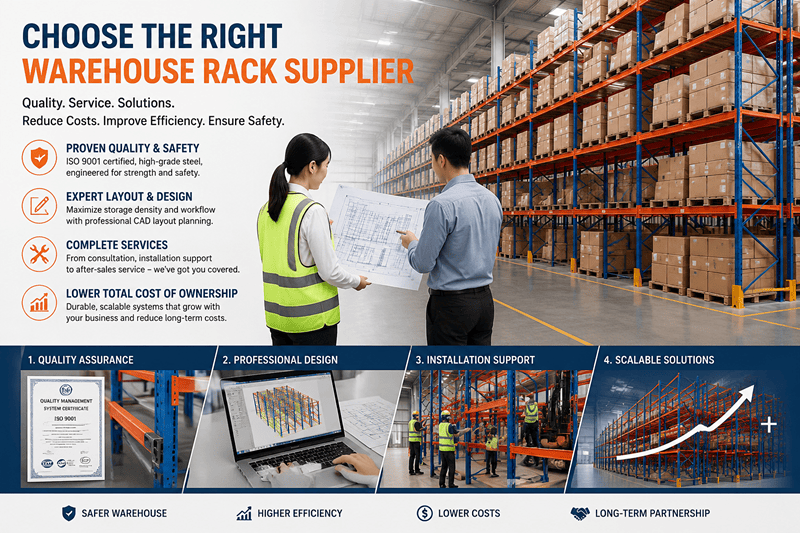
Struggling to choose a warehouse rack supplier from endless quotes? Picking the cheapest option feels smart, but it can lead to disaster, costing you far more in the long run1.
To choose the right warehouse rack supplier, look beyond the initial price. Focus on their engineering expertise, quality certifications like ISO 90012, comprehensive services including layout design and installation support, and their ability to provide scalable systems that reduce long-term operational costs and safety risks.

When I talk to purchasing managers, the conversation almost always starts with price. I get it. You have a budget, and you need to stick to it. But I've been in this industry for over a decade, and I've seen firsthand what happens when the decision is based on price alone. A collapsed rack, damaged inventory, and a stalled operation wipe out any initial savings in an instant. The real cost of warehouse racking isn't on the invoice; it's hidden in the quality of the engineering, the reliability of the service, and the durability of the product. Let's break down what you should really be looking for to find a supplier who is a true partner, not just a vendor.
How Do You Evaluate the Quality and Safety Standards of a Warehouse Rack Supplier?
All steel racks can look the same in a catalog. This makes it tough to spot a quality product from one that's a safety hazard waiting to happen.
You evaluate a supplier's quality and safety by demanding proof. Ask for their ISO 9001 certification, request detailed specifications on the raw materials they use, and require certified engineering reports that verify the load capacity of the racks3. Trustworthy suppliers provide this documentation without hesitation.
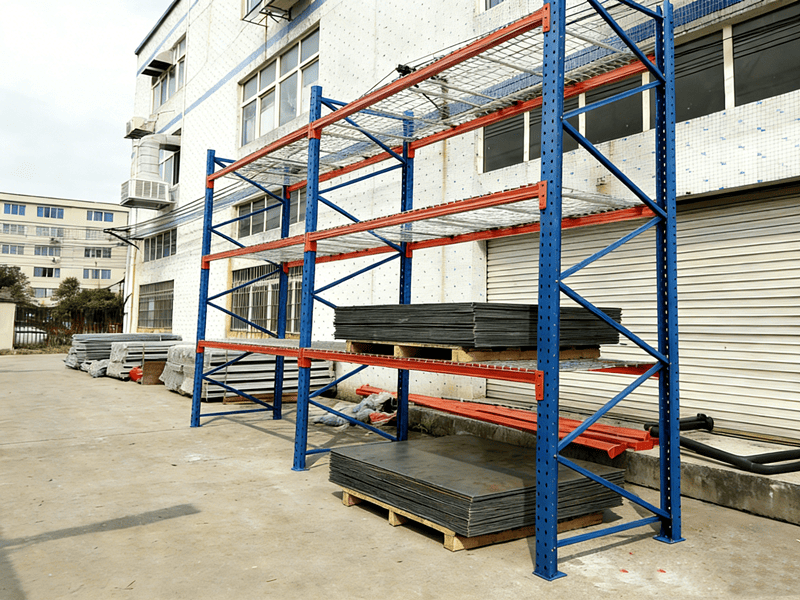
Over the years, I've learned that you can't just take a supplier's word for it. Quality is something that must be proven. When you're responsible for the safety of your team and the security of millions of dollars in inventory, you need concrete evidence. The first thing to ask for is certifications. An ISO 9001 certification isn't just a piece of paper; it shows the company has a robust quality management system4. It means they have processes in place to ensure consistency and quality from raw material sourcing to final production. Next, dig into the materials. Ask specifically about the grade of steel used. We insist on using premium, high-strength steel because it directly impacts the rack's durability and ability to resist damage and corrosion. A supplier who can't give you a clear answer on their steel grade is a red flag. Finally, the most critical step is to demand engineering proof.
Deeper Dive into Verifying Quality
| Quality Check | Why It Matters | What to Ask For |
|---|---|---|
| ISO 9001 Certification | Confirms a commitment to a consistent, documented quality control process. | "Can you provide a copy of your current ISO 9001 certificate?" |
| Raw Material Specs | Determines the rack's actual strength, lifespan, and resistance to impact. | "What specific grade of steel do you use for uprights and beams?" |
| Load Capacity Reports | Guarantees the rack can safely hold your specified weight, which is vital for insurance and safety compliance. | "Please provide certified engineering calculations for our proposed load." |
| Welding & Finish Quality | Prevents structural weak points and protects against rust, extending the product's life. | Ask for close-up photos or samples to inspect the powder coating and weld integrity. |
What Services Should a Reliable Warehouse Rack Supplier Provide Beyond Manufacturing?
You've ordered the racks, and now several tons of steel are on your dock. The problem is, you still need a layout, an installation crew, and a project plan.
A reliable supplier is a one-stop partner. They should provide crucial services like warehouse layout design, professional installation support5, project management, and after-sales service. They handle the complexities so you can focus on your business, ensuring the project is done right.
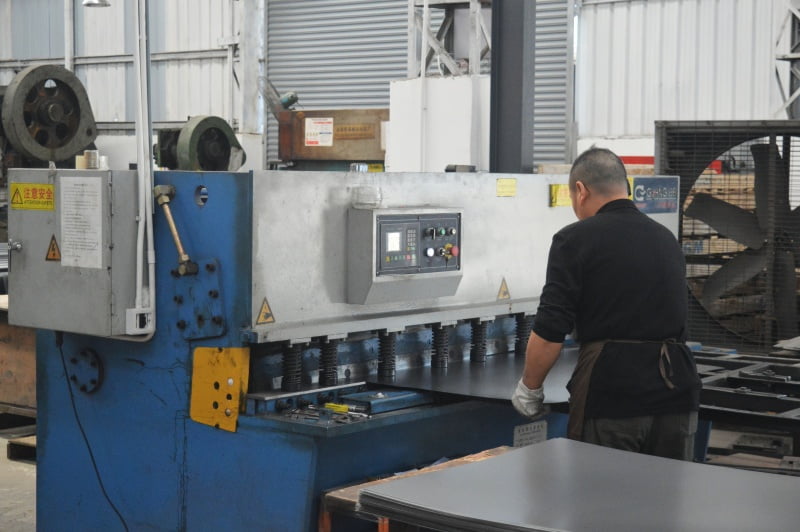
A few years ago, a client came to us after a bad experience. They had bought racks from a supplier who just manufactured and shipped them. The client was left to figure out the layout, hire a separate installation team, and manage the entire process. It was a nightmare of delays and unexpected costs. This is why we believe our job doesn't end when the product is made. A great supplier acts as an extension of your team. The most valuable service we offer is layout planning and design. We use CAD software to create detailed 2D and 3D models of your space. This allows us to optimize storage density and workflow6 before a single rack is installed. We also provide project management and connect you with trusted installation partners. We coordinate delivery schedules and ensure everything arrives on time. It's about providing a complete solution, not just a product.
Key Services of a True Partner
- Pre-Sale Consultation: We start by understanding your operation, inventory, and growth goals. This includes site visits to measure and assess your space accurately.
- Custom Layout Design: We don't just sell standard sizes. We design a system that maximizes your specific warehouse footprint and workflow. This includes providing detailed CAD drawings for your approval.
- Project Management & Installation Support: We help manage the logistics from factory to facility. We can offer our own experienced installation teams or work with your contractors to ensure a smooth, safe, and efficient setup.
- After-Sales Support: Our relationship continues after installation. We are here to help with future safety inspections, provide guidance on maintenance, and plan for future expansions or reconfigurations. This long-term support is what turns a supplier into a trusted partner.
How Can the Right Warehouse Rack Supplier Reduce Your Long-Term Storage Costs?
You're focused on the upfront price to save money on your project. But a cheap rack in a poorly planned layout will cost you much more in wasted space and inefficiency.
The right supplier lowers your total cost of ownership. They do this through expert layout design that maximizes your storage density, providing durable racks that last longer, and designing scalable systems that allow you to expand affordably without starting over.
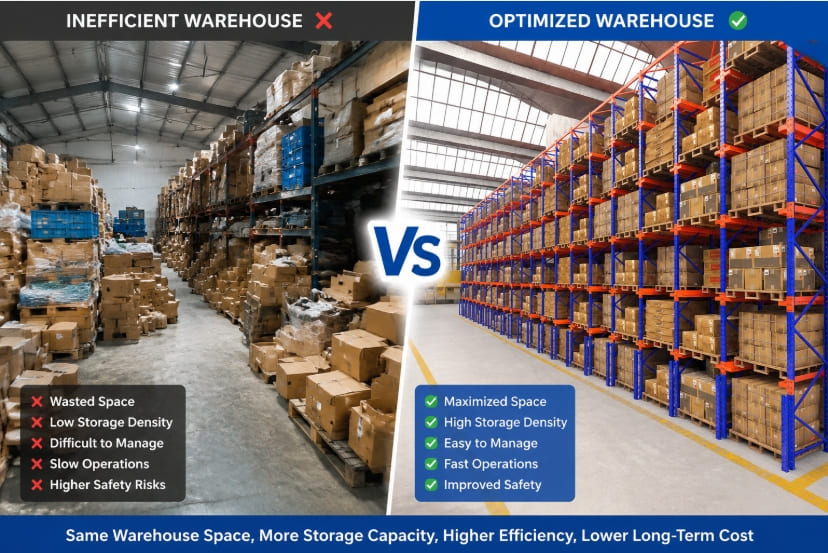
The biggest hidden cost in any warehouse is wasted space.7 A supplier focused only on selling you racks might give you a layout that's easy for them but inefficient for you. A true partner, however, acts as a consultant. Their goal is to maximize your storage capacity within your existing footprint. A well-designed system can often increase storage density by 20-30% or more8. This delays or eliminates the need to lease more space, which is a massive long-term saving. Another major factor is durability. We build our racks to last, using high-quality steel and corrosion-resistant finishes. This means you aren't spending money on frequent repairs or replacing damaged components a few years down the line. Finally, we think about your future. A business that is successful will grow, and your storage system needs to grow with you.
Breaking Down the Total Cost of Ownership
| Cost Factor | How a Cheap Supplier Increases It | How a Quality Supplier Reduces It |
|---|---|---|
| Space Utilization | An inefficient layout wastes valuable square footage, forcing you to expand sooner. | Expert design maximizes every inch of your warehouse, increasing storage density. |
| Labor Efficiency | A poor workflow design slows down picking and putaway, increasing labor hours. | An optimized layout improves operational speed and reduces travel time for staff. |
| Maintenance & Repairs | Low-quality materials and thin steel lead to frequent damage from forklift impacts. | Durable, high-grade steel and strong construction minimize repair and replacement costs. |
| Future Expansion | Incompatible or obsolete systems require a complete and costly overhaul to expand. | Scalable, modular designs allow for easy and affordable additions as your business grows.9 |
Conclusion
Choosing a warehouse rack supplier is about finding a long-term partner, not just a low price. Focus on proven quality, comprehensive services, and smart design to ensure safety and reduce total costs.
"Warehousing - Hazards and Solutions - OSHA", http://www.osha.gov/warehousing/hazards-solutions. Occupational-safety guidance on warehouse racking documents that rack failure can cause worker injury, product damage, and operational disruption, supporting the claim that low-cost systems may create larger downstream costs. Evidence role: general_support; source type: government. Supports: Choosing the cheapest warehouse rack supplier can create safety and operational risks that cost more over time.. Scope note: Such sources support the risk pathway but do not quantify the cost impact for every purchasing decision. ↩
"ISO 9001:2015 - Quality management systems — Requirements", https://www.iso.org/standard/62085.html. ISO describes ISO 9001 as an international standard specifying requirements for a quality management system, supporting its relevance as evidence of documented quality-control processes. Evidence role: definition; source type: institution. Supports: ISO 9001 is a relevant quality certification to consider when evaluating a warehouse rack supplier.. Scope note: ISO 9001 certifies a management system, not the structural adequacy of any individual rack design. ↩
"Citation 1060970.015/01001 | Occupational Safety and ... - OSHA", https://www.osha.gov/ords/imis/generalsearch.citation_detail?id=1060970.015&cit_id=01001. Racking design standards and safety guidance require rack systems to be designed for specified loads and to display or document load capacities, supporting the need for engineering verification of rated capacity. Evidence role: expert_consensus; source type: institution. Supports: Buyers should request certified engineering reports verifying rack load capacity.. Scope note: The exact form of required documentation varies by jurisdiction and applicable racking standard. ↩
"ISO 9001 explained", https://www.iso.org/home/insights-news/resources/iso-9001-explained.html. ISO states that ISO 9001 sets requirements for an organization’s quality management system, including process control and continual improvement, supporting the interpretation of certification as evidence of formal quality-management practices. Evidence role: definition; source type: institution. Supports: ISO 9001 certification indicates that a supplier has a formal quality management system.. Scope note: Certification indicates conformity of the quality-management system, not necessarily superior product quality compared with all uncertified firms. ↩
"How to Install Pallet Racking in a Warehouse (Step-by-Step Guide)", https://oneracksolutions.com/how-to-install-pallet-racking/. Racking safety guidance notes that storage racks should be installed according to manufacturer instructions and competent engineering or installation practices, supporting the value of professional installation support. Evidence role: expert_consensus; source type: government. Supports: Professional installation support is important for safe and compliant rack projects.. Scope note: The source supports proper installation as a safety requirement, not that the supplier itself must provide the installation service. ↩
"warehouse layout design: minimizing travel time with a genetic and ...", https://www.academia.edu/14453190/WAREHOUSE_LAYOUT_DESIGN_MINIMIZING_TRAVEL_TIME_WITH_A_GENETIC_AND_SIMULATIVE_APPROACH_METHODOLOGY_AND_CASE_STUDY. Warehouse-layout research shows that storage assignment, aisle configuration, and facility layout influence travel distance, throughput, and space utilization, supporting the claim that design work can improve density and workflow. Evidence role: mechanism; source type: paper. Supports: Warehouse layout design can optimize storage density and workflow before installation.. Scope note: The amount of improvement depends on facility constraints, SKU mix, handling equipment, and operating policy. ↩
"Warehouse Space Utilization: How to Calculate and Optimize", https://www.netsuite.com/portal/resource/articles/inventory-management/space-utilization-warehouse.shtml. Logistics and warehousing literature identifies space utilization as a major driver of warehousing cost because building area, storage capacity, and handling distances affect operating expense, supporting the claim’s general direction. Evidence role: general_support; source type: paper. Supports: Wasted warehouse space can be a major hidden cost.. Scope note: The wording 'biggest' is stronger than most sources can prove across all warehouse types and may need qualification. ↩
"Optimize Your Warehouse with Warehouse Racking Solutions", https://www.prologis.com/insights-news/industry-trends/optimize-your-layout-and-maximize-throughput-warehouse-racking. Industry-neutral warehousing research or institutional guidance can document that racking configuration and storage-system selection materially affect storage density, providing context for possible percentage improvements. Evidence role: statistic; source type: paper. Supports: A well-designed warehouse racking system can increase storage density by 20–30% or more.. Scope note: A specific 20–30% improvement requires a source measuring comparable layouts; results may not generalize to every warehouse. ↩
"Types of Pallet Racking | Pallet Rack Identification Guide", https://www.sjf.com/racktypes.html?srsltid=AfmBOorjx4qGksxy_b2rZ29mjFWbqCnp2VdDni_6jfSuWSilpCvgrTSC. Engineering and warehousing references describe pallet-rack systems as modular structures whose bays and components can be added or reconfigured within design limits, supporting the scalability claim. Evidence role: mechanism; source type: institution. Supports: Modular racking designs can support future additions and reconfiguration as storage needs grow.. Scope note: Additions are only easy or affordable when new loads, seismic requirements, anchoring, and compatibility with existing components are verified. ↩