Drowning in paperwork and struggling to find important documents? A messy office costs time and money.1 You need a system that restores order and boosts productivity2, not just more storage.
The best paper storage cabinet is not defined by its size, but by how efficiently it allows your team to file, locate, and retrieve documents. It should enhance workflow, reduce errors3, and be built to withstand daily use, making it a tool for productivity.
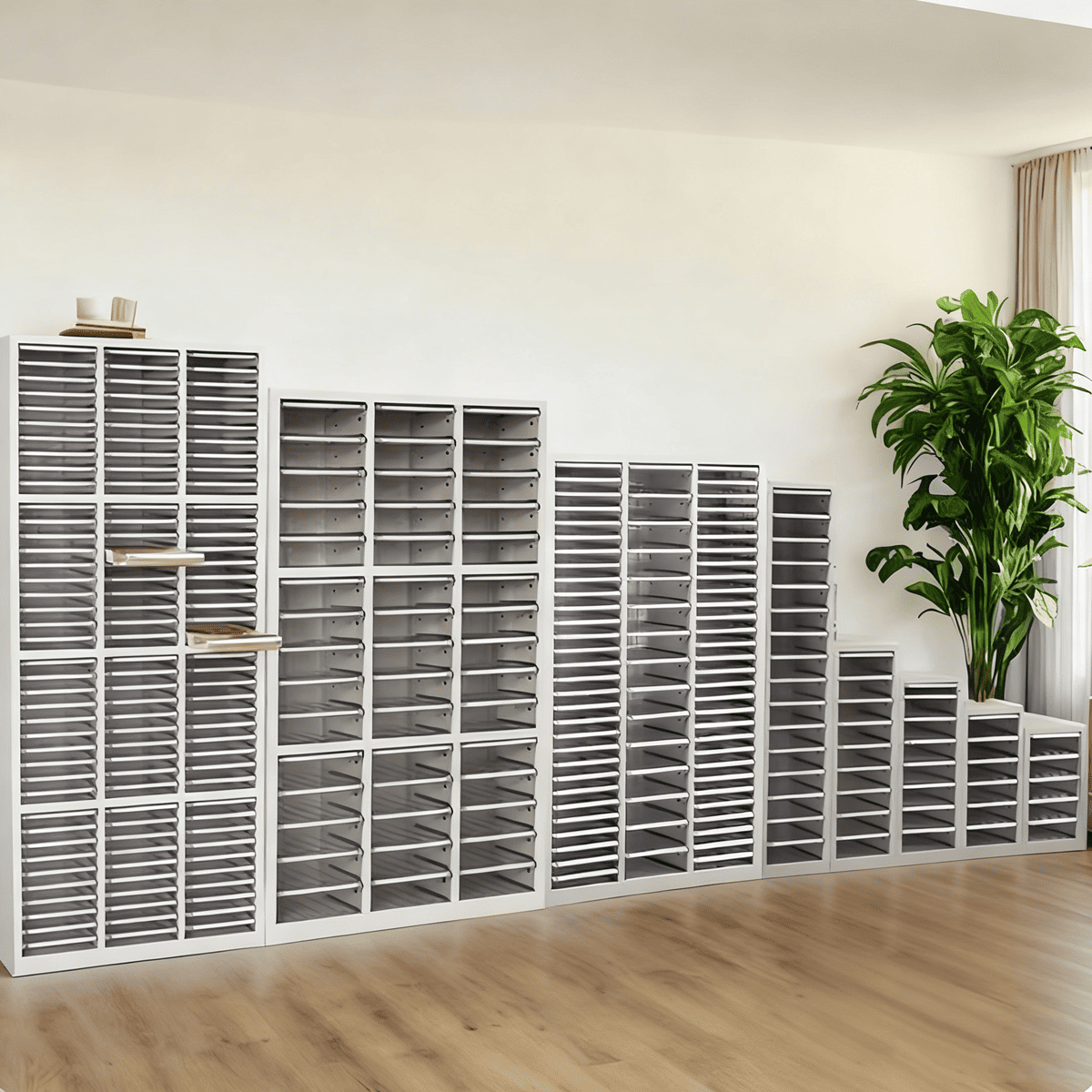
For years, I've walked into workshops and offices filled with stacks of paper on desks, on floors, and stuffed into the wrong drawers. It's a common sight, but it's also a huge drain on efficiency. The problem isn't always a lack of storage; it's a lack of the right kind of storage. Finding the perfect paper storage solution is about transforming that chaos into a streamlined, functional system. This journey starts with understanding what "best" truly means for your specific needs. Let's explore how to find a cabinet that works as hard as you do.
What Is the Best Paper Storage Cabinet for Organizing Large Volumes of Documents?
Struggling with mountains of invoices, reports, and records? This chaos slows down your entire operation. A proper system is needed to turn that clutter into an efficient, accessible archive.
The best cabinet prioritizes quick access and clear organization over sheer volume4. A system that allows employees to find any document in seconds5 is far more valuable than one that simply holds more paper. It's an active tool, not passive storage.
In my experience, many businesses make the mistake of buying the biggest cabinet they can find, thinking that solves the problem. But soon, that cabinet also becomes a black hole of disorganized paper. The real issue is the workflow. The "best" cabinet is one that integrates into your daily processes seamlessly. It's about how quickly a new document can be filed correctly and, more importantly, how quickly a specific document can be retrieved when needed. I've seen offices cut their document search time from several minutes down to under 30 seconds just by implementing a logical system supported by the right hardware. This is a direct saving in labor costs and a huge reduction in employee frustration. The goal is a system where anyone on the team can find what they need without having to ask, "Where did we put that file?"
What Features Should the Best Paper Storage Cabinet Have?
Choosing a cabinet without knowing what features to look for is a recipe for buyer's remorse. You end up with a unit that doesn't fit your needs or breaks down quickly.
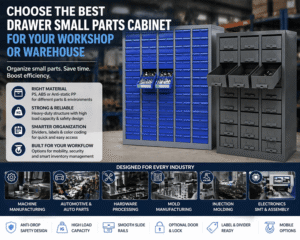
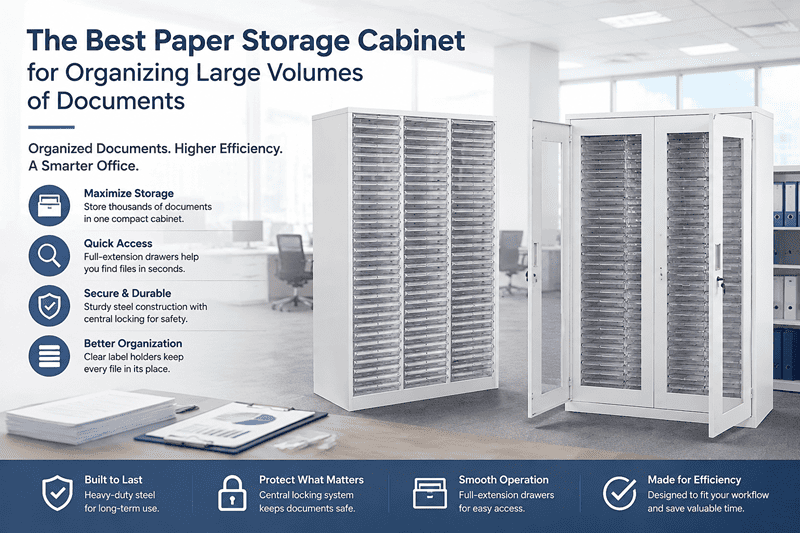
A great cabinet must have features that support efficiency and durability. Look for full-extension drawers for total access6, robust construction for longevity7, and a reliable locking mechanism for security8. These aren't luxuries; they are essential for a functional office.
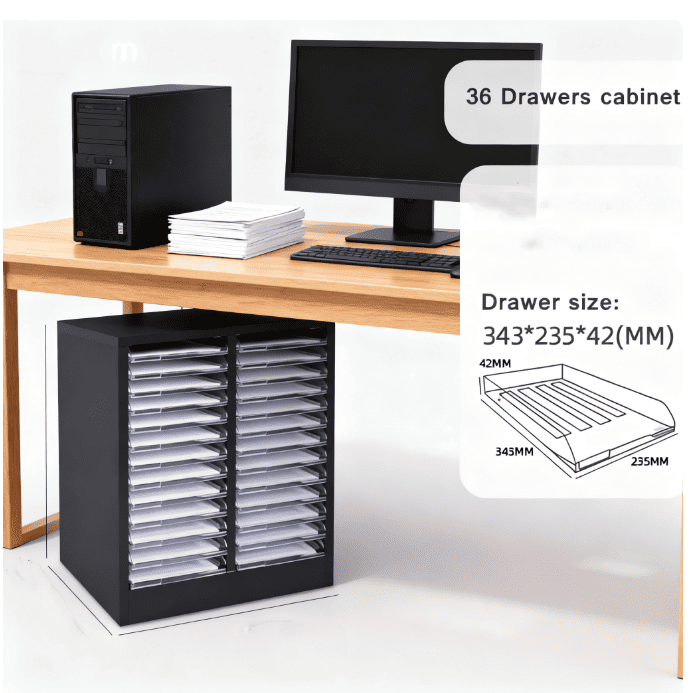
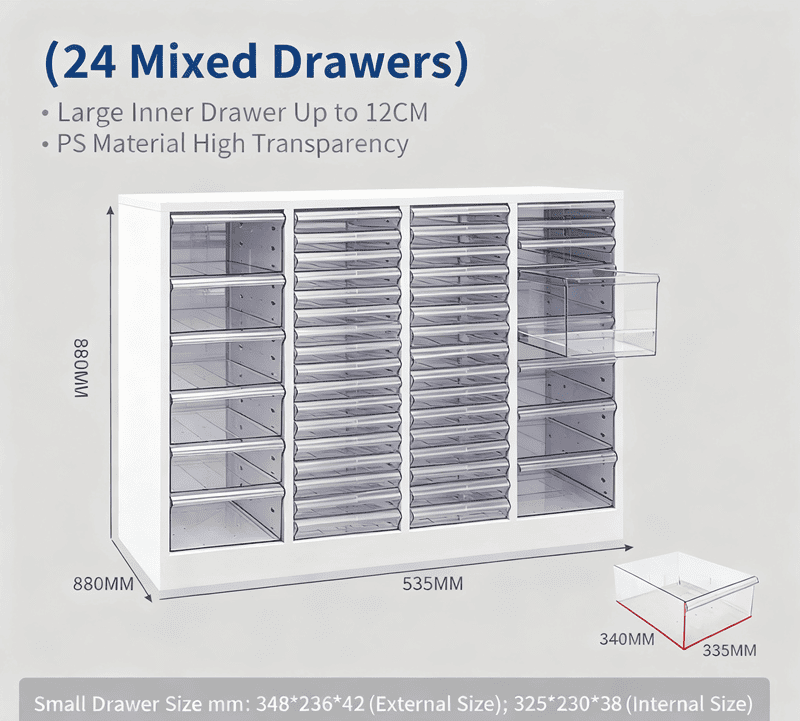
When we design and manufacture storage solutions, we focus on the details that make a real difference in a busy environment. A flimsy cabinet will not withstand the demands of a factory office or a busy logistics hub. You need something built for industrial use, even in an office setting. Here are the features I always tell clients to prioritize and why they matter for efficiency:
| Feature | Benefit for Efficiency & Durability |
|---|---|
| Full-Extension Drawers | Eliminates "lost" files at the back. Every inch of drawer space is visible and accessible, speeding up retrieval.9 |
| Heavy-Gauge Steel | Provides a sturdy frame that won't warp or bend, ensuring drawers operate smoothly for years, even when full. |
| Central Locking System | Secures all drawers with a single key turn, saving time and ensuring sensitive documents are protected quickly. |
| High Weight Capacity | Allows drawers to be filled completely without risk of sagging or failure, maximizing your storage footprint safely. |
| Clear Label Holders | Enables a logical, at-a-glance filing system. This drastically cuts down search time for all employees. |
Investing in these features means you're buying a long-term tool, not a temporary fix.
How Can a Paper Storage Cabinet Improve Document Organization and Office Efficiency?
Are your employees wasting valuable time searching for misplaced paperwork10? This common problem directly impacts your bottom line through lost productivity and can even lead to costly operational errors.
A well-designed paper storage cabinet transforms document chaos into a streamlined system. It provides a designated, logical home for every file, drastically reducing search times, preventing document loss11, and empowering employees to work more efficiently and with less frustration.
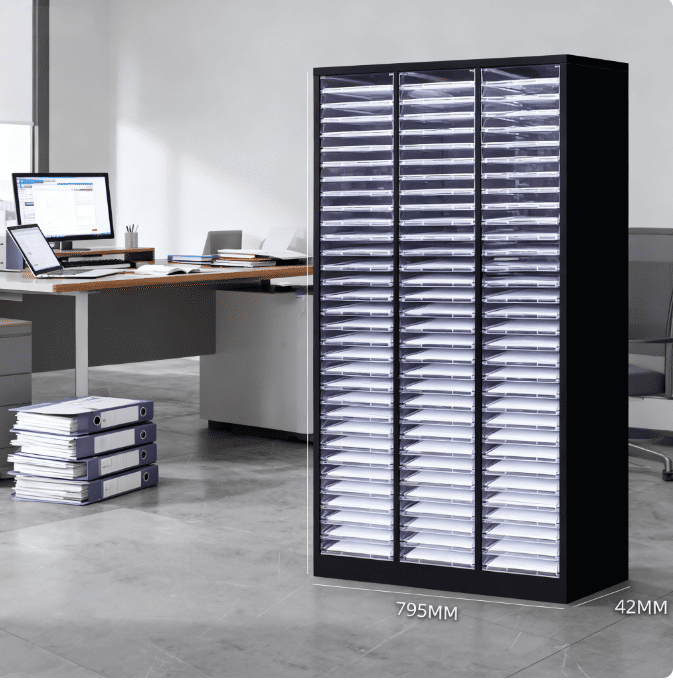
I once visited a client, a manager at a busy auto parts manufacturing plant. His office had piles of work orders, quality control reports, and shipping manifests covering every surface. He told me his team spent nearly an hour each day just looking for paperwork. It was a clear bottleneck. We introduced a system using several of our heavy-duty multi-drawer cabinets. We helped them categorize documents by stage: "Pending," "In-Process," and "Archived." Each drawer was clearly labeled. Within a month, the change was incredible. The piles were gone. More importantly, he reported that document retrieval was almost instant. This freed up his skilled team to focus on production and quality, not on being paper detectives. A simple change in storage hardware led to a measurable increase in plant efficiency and a significant drop in employee stress. That is the true power of an organized system.
How Do You Choose the Right Paper Storage Cabinet for Your Office?
Facing a sea of options and unsure which cabinet will truly solve your problem? Buying the wrong one means you'll be stuck with the same organizational issues, just in a new box.
To choose the right cabinet, you must first analyze your specific needs. Assess your document volume, workflow patterns, security requirements, and available space.12 This ensures you select a solution that fits your operations perfectly.
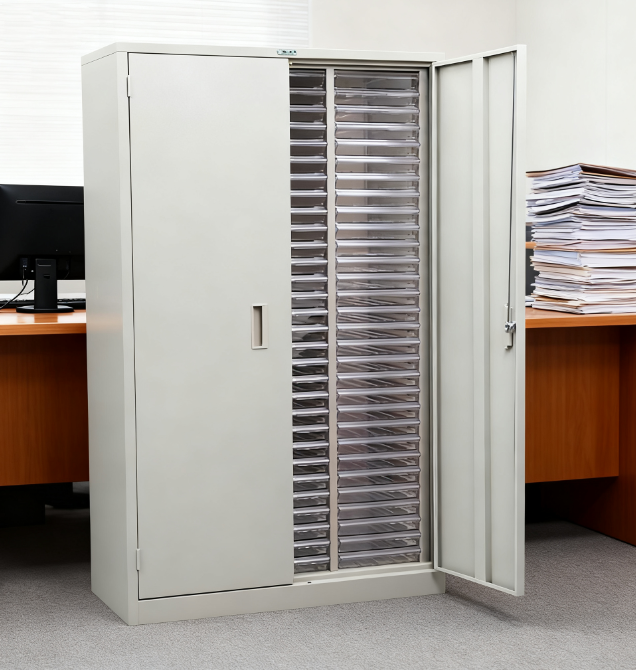
Choosing the right cabinet is a strategic decision. As a supplier, I always guide my clients through a simple evaluation process to avoid costly mistakes. Here’s the breakdown I recommend to every purchasing manager or office administrator.
Step 1: Assess Your Document Types and Volume
What are you storing? Standard A4 paper, larger blueprints, or small record cards? The size and type of your documents will determine the necessary drawer dimensions. Also, estimate your current volume and project your growth over the next five years. Buy a system that can grow with you.
Step 2: Analyze Your Workflow
How often do you need to access these documents? Are they for active daily use or long-term archival? For frequently accessed files, cabinets with smooth, full-extension drawers placed near the relevant workstations are essential. For archives, density and security might be more important.
Step 3: Evaluate Security and Durability Needs
Are the documents confidential? If so, a robust central locking system is non-negotiable. Consider the environment as well. In a workshop or factory, you need a heavy-gauge steel cabinet that can resist dust, moisture, and accidental impacts.
By thinking through these steps, you move from just buying a cabinet to investing in a tailored efficiency tool for your office.
Conclusion
Ultimately, the best paper storage cabinet is an investment in your company's efficiency. It streamlines workflows, reduces wasted time, and brings order to your most important documents.
"Psychology: Your Attention, Please | Princeton Alumni Weekly", https://paw.princeton.edu/article/psychology-your-attention-please. A peer-reviewed study on workplace clutter and attention can support the general proposition that disorganized physical environments impose cognitive and productivity costs. Evidence role: general_support; source type: paper. Supports: A messy office costs time and money.. Scope note: Such studies usually measure attention or task performance rather than directly calculating monetary office costs. ↩
"The Impact and Challenges of the Implementation of 5S ... - PMC - NIH", https://pmc.ncbi.nlm.nih.gov/articles/PMC11326763/. Research on workplace organization and lean/5S practices can substantiate that structured organization systems are associated with improved process efficiency and productivity. Evidence role: general_support; source type: paper. Supports: A document storage system can restore order and boost productivity.. Scope note: Evidence is generally strongest for structured operational settings and may not prove that any single cabinet independently increases productivity. ↩
"[PDF] Document Control and Records Management Process Description", https://international.anl.gov/training/materials/6H/Gilbert/PDG02%20Documents%20and%20Records%20Process%20Description.pdf. Records-management literature and workflow studies can support that standardized document control improves process consistency and can reduce errors caused by misfiling or missing information. Evidence role: mechanism; source type: institution. Supports: A suitable paper storage cabinet should enhance workflow and reduce errors.. Scope note: The support is contextual unless the source specifically evaluates paper storage cabinets rather than document-control systems more broadly. ↩
"Federal Records Management | National Archives", https://www.archives.gov/records-mgmt. Records-management guidance can support that usability, retrieval, and classification are central functions of a filing system, not merely storage capacity. Evidence role: expert_consensus; source type: government. Supports: The best cabinet prioritizes quick access and clear organization over sheer volume.. Scope note: The source would support the principle of records organization rather than rank specific cabinet features. ↩
"[PDF] Information Storage - ERIC", https://files.eric.ed.gov/fulltext/ED101694.pdf. Information-retrieval and records-management sources can show that well-indexed filing systems are designed to minimize retrieval time, providing contextual support for rapid document location. Evidence role: general_support; source type: paper. Supports: A system that allows employees to find any document in seconds is highly valuable.. Scope note: A source may not verify the specific benchmark of “seconds” for every office or document set. ↩
"The Benefits of Full Extension Drawer Slides - Amish Outlet Store", https://amishoutletstore.com/blogs/wood-furniture/benefits-of-full-extension-drawer-slides?srsltid=AfmBOop3QhaeZISQw8zyvQii75W0j982jUorbC2xYYUky4ZLQAdD9bni. Technical descriptions of drawer-slide mechanisms can verify that full-extension slides allow the drawer to open to its full length, enabling access to the rear of the drawer. Evidence role: definition; source type: other. Supports: Full-extension drawers provide total access to drawer contents.. Scope note: This supports the access mechanism, not a measured productivity improvement from using full-extension drawers. ↩
"What Material Lasts Longest For Outdoor Furniture?", https://www.edwardmartin.com/blogs/information/what-material-lasts-longest-for-outdoor-furniture?srsltid=AfmBOoqKsmQBV4yZSNKO_CrdA3c7mUyq79EX7qSvjEZw-iIGSqD_evan. Engineering or materials guidance on steel furniture and structural durability can support that stronger construction and appropriate material thickness improve resistance to deformation under repeated use. Evidence role: mechanism; source type: education. Supports: Robust construction contributes to cabinet longevity.. Scope note: The source would support the material principle, not the lifespan of a particular cabinet model. ↩
"[PDF] 3 Security Standards: Physical Safeguards - HHS.gov", https://www.hhs.gov/sites/default/files/ocr/privacy/hipaa/administrative/securityrule/physsafeguards.pdf. Government records-security guidance can support that physical safeguards, including locked storage, are used to protect confidential or sensitive paper records. Evidence role: expert_consensus; source type: government. Supports: A reliable locking mechanism supports document security.. Scope note: This supports the role of locking storage in document security, not the security rating of any specific lock. ↩
"Influence of Time Pressure on Successive Visual Searches - PMC", https://pmc.ncbi.nlm.nih.gov/articles/PMC12286290/. Human-factors research on visual search and information organization can support that visibility and organized access reduce search effort and retrieval time. Evidence role: mechanism; source type: paper. Supports: Visible and accessible drawer contents can speed document retrieval.. Scope note: The evidence would explain the mechanism generally and may not quantify the effect for filing cabinets specifically. ↩
"Your employees are spending hours looking for documents. Why?", https://www.crownrms.com/insights/your-employees-are-spending-hours-looking-for-documents-why/. Workplace information-management studies can document that employees spend measurable time searching for information and records, supporting the claim that misplaced paperwork can waste labor time. Evidence role: statistic; source type: paper. Supports: Employees waste valuable time searching for misplaced paperwork.. Scope note: Many studies include digital information as well as paper records, so the evidence may be broader than misplaced paperwork alone. ↩
"Records Storage Standards Toolkit | National Archives", https://www.archives.gov/records-mgmt/storage-standards-toolkit. Records-management standards can support that systematic classification, filing, and storage controls are intended to maintain records’ accessibility and prevent loss or unauthorized removal. Evidence role: expert_consensus; source type: institution. Supports: A well-designed paper storage cabinet can help prevent document loss.. Scope note: The source would support records-management controls generally, not prove that one cabinet alone prevents document loss. ↩
"Records Storage Standards Toolkit | National Archives", https://www.archives.gov/records-mgmt/storage-standards-toolkit. Records-management and facility-planning guidance can support that storage selection should be based on record volume, access frequency, security requirements, and physical space constraints. Evidence role: expert_consensus; source type: government. Supports: Choosing the right cabinet requires assessing document volume, workflow patterns, security requirements, and available space.. Scope note: The guidance may address records storage programs broadly rather than consumer selection of individual paper cabinets. ↩