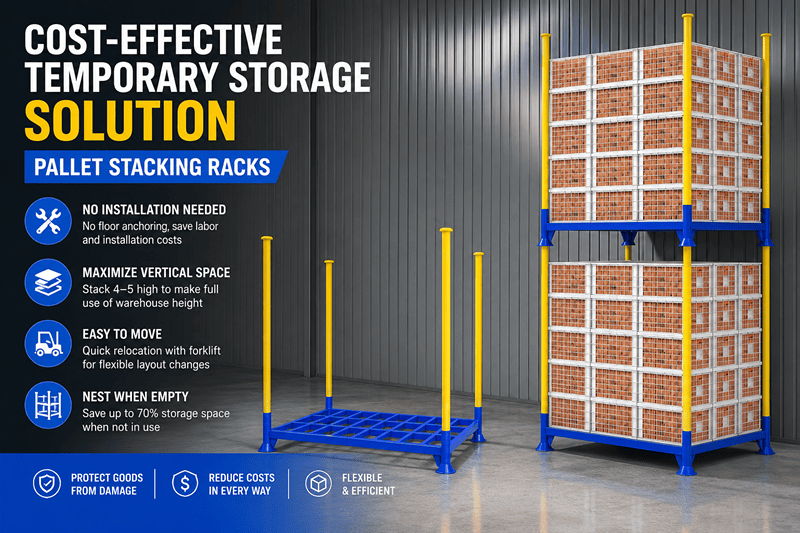
Struggling with temporary storage costs? Fixed racking in a short-term warehouse is often a waste of money and flexibility, locking you into a system that just doesn't adapt.
Pallet stacking racks are a cost-effective temporary storage solution because they eliminate the need for permanent installation1. They maximize vertical space2, can be easily moved, and nest together when not in use3, drastically cutting down on labor, space, and capital costs compared to fixed racking.
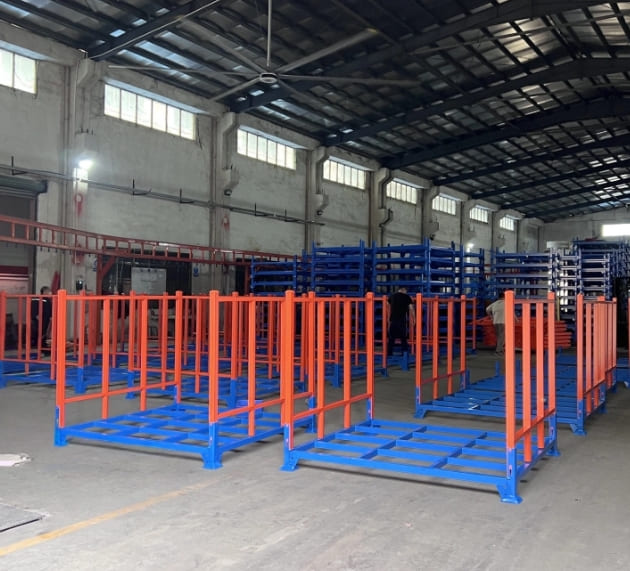
I've walked through countless warehouses where floor space is a constant battle, especially during seasonal peaks or for short-term projects. Clients often feel stuck, thinking their only option is to install permanent pallet racking, a costly and inflexible choice for a temporary need. But there's a better way. This is where I introduce them to the power of portable stacking racks. They are one of the simplest, yet most effective, tools for gaining control over your space and budget. Let's explore how they achieve this.
How Do Pallet Stacking Racks Reduce Temporary Warehouse Storage Costs?
Are the hidden costs of temporary storage eating into your profits? The expenses for installation, labor, and reconfiguration can add up fast, turning a temporary need into a long-term financial headache.
Stacking racks reduce costs by eliminating expensive floor anchoring and installation labor. They protect products from damage4, cutting down on inventory loss, and allow for quick layout changes without needing specialized teams5, saving both time and money.
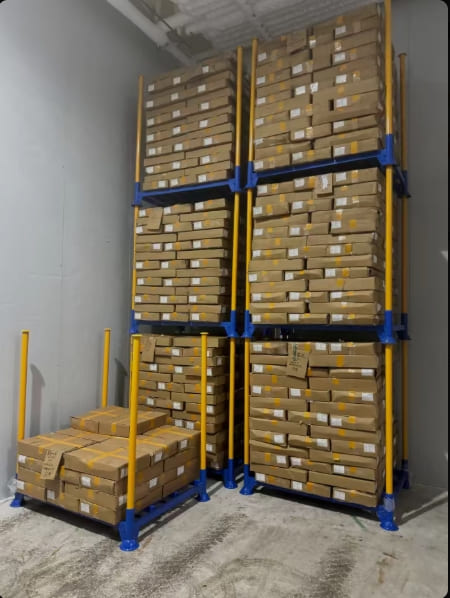
When I break down warehouse expenses for my clients, the costs associated with traditional racking often come as a surprise. It’s not just the price of the steel; it’s everything else that comes with it. Pallet stacking racks systematically dismantle these hidden costs. First, you completely avoid installation and decommissioning expenses. There's no need for specialized crews to bolt racks to the floor, no risk of damaging a leased facility's concrete6, and no cost to remove them. You simply place them with a forklift. Second, they maximize your cubic space. You can stack them 4 or 5 high7, using the vertical height you're already paying for. When the peak season is over, you don't have empty racks eating up valuable floor space. You just nest them in a corner. This dynamic use of space is a game-changer for businesses with fluctuating inventory.
| Cost Factor | Fixed Pallet Racking | Pallet Stacking Racks |
|---|---|---|
| Installation | High (Requires professional crew, floor anchoring) | Very Low (Placed by forklift, no anchoring) |
| Reconfiguration | High (Labor-intensive, requires unbolting) | Very Low (Easily moved with a forklift) |
| Space When Empty | High (Racks remain, consuming floor space) | Very Low (Racks nest together in a small footprint) |
| Product Protection | Moderate (Requires good palletizing) | High (Frame protects goods from crush damage) |
| Floor Damage | High Risk (Drilling and bolting required) | No Risk (Sits on top of the floor) |
When Are Pallet Stacking Racks Better Than Fixed Pallet Racking?
Choosing the wrong racking system can be a costly mistake. It locks you into an inefficient workflow and wastes valuable capital that could be used elsewhere in your business.
Stacking racks are superior for temporary or seasonal storage, handling fragile goods, and in facilities with changing floor plans. Their portability and protective structure offer flexibility that permanent, fixed racking simply cannot match in dynamic environments.
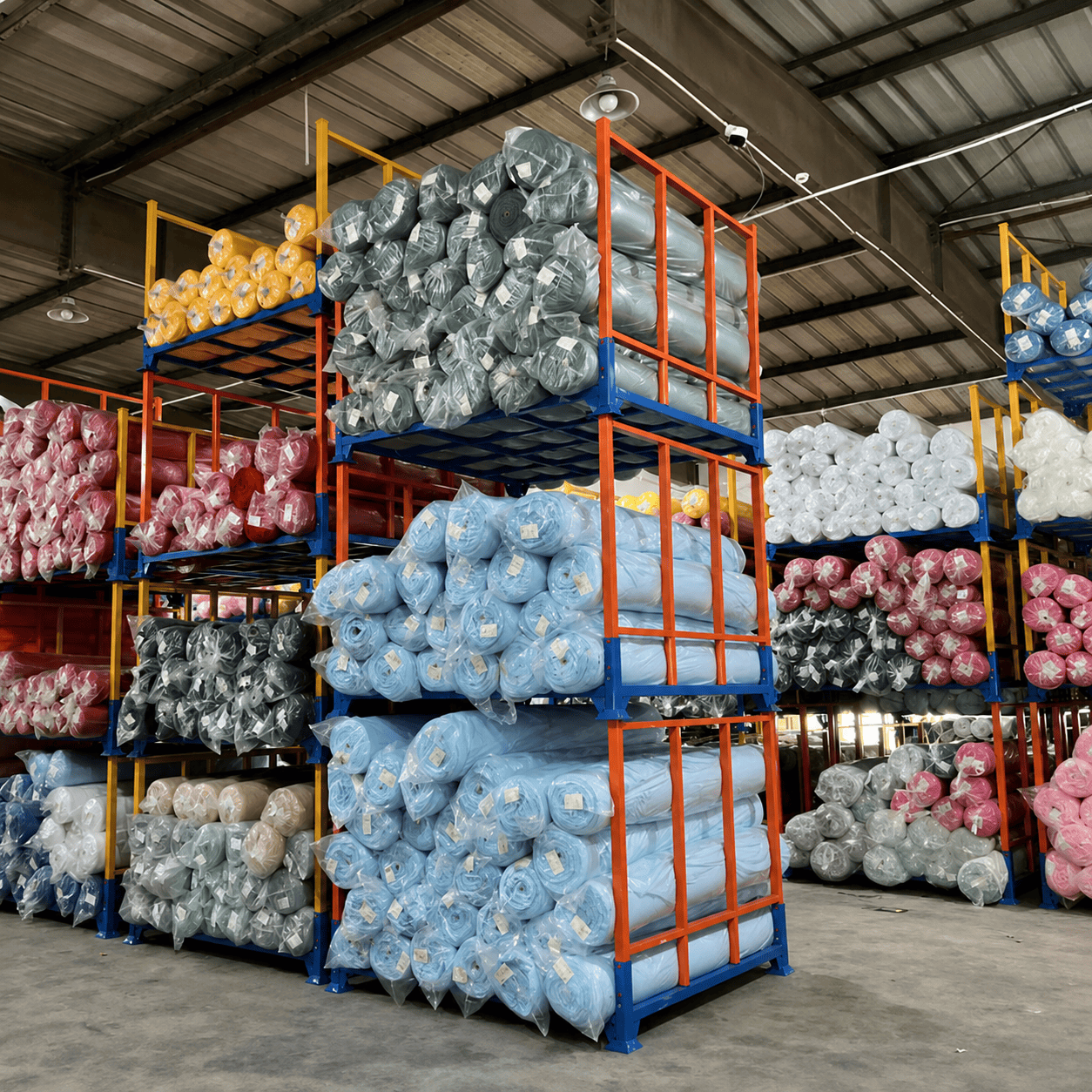
The choice between stacking racks and fixed pallet racking isn't about which one is "better" overall, but which one is right for a specific situation. In my experience, stacking racks win every time in three key scenarios. First, for businesses with seasonal or fluctuating inventory8. Think of an agricultural company during harvest or a 3PL provider gearing up for the holiday rush. They need massive storage capacity for a few months, but then that need vanishes. Installing permanent racks that sit empty for eight months is a huge waste. Stacking racks can be brought in for the peak and nested away afterward, freeing up the space. Second, they are essential for protecting crushable or irregularly shaped items. I’ve seen clients try to block-stack bags of plastic resin or large textile rolls, leading to significant product damage. A stacking rack acts like a personal pallet rack for each pallet load, creating a protective cage around the goods. Third, they are ideal for leased buildings or multi-purpose spaces. Many landlords don't allow tenants to drill into the concrete floor. Stacking racks bypass this issue completely.
| Scenario | Fixed Pallet Racking | Pallet Stacking Racks | Why Stacking Racks are Better |
|---|---|---|---|
| Seasonal Inventory Peak | Inefficient (Empty racks waste space off-season) | Ideal (Can be nested to free up floor space) | Adapts to fluctuating space needs. |
| Storing Fragile Goods | Risky (Relies on block stacking stability) | Ideal (Frame prevents crushing) | Reduces product damage and loss. |
| Leased Warehouse | Problematic (Requires floor drilling/landlord approval) | Ideal (No installation or floor damage) | Offers flexibility without permanent changes. |
| Changing Layouts | Difficult (Requires major labor to move) | Ideal (Easily moved by forklift) | Enables fast and easy workflow changes. |
What Industries Benefit Most from Pallet Stacking Racks for Temporary Storage?
You might be wondering if this flexible solution is the right fit for your specific industry. Making the wrong investment can hurt your operational efficiency and your bottom line.
Industries like Third-Party Logistics (3PL), agriculture, automotive, and manufacturing benefit most. They all face fluctuating inventory, handle non-stackable items, and require flexible warehouse layouts to manage seasonal demand or project-based storage needs effectively.
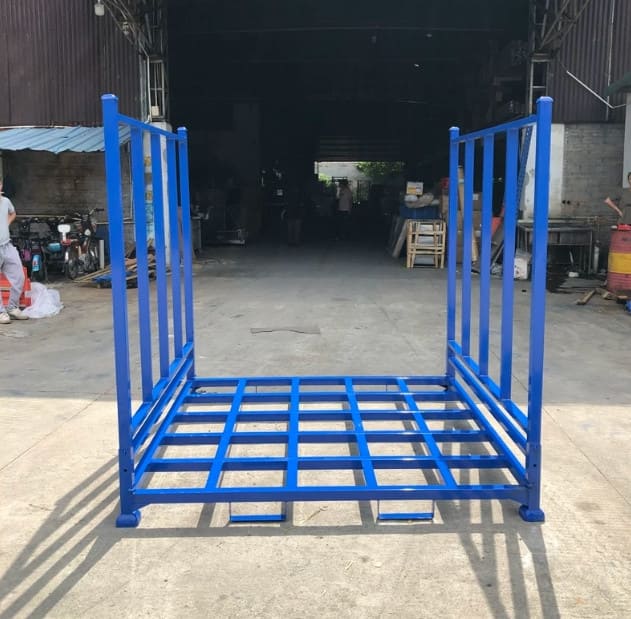
Over the years, I've supplied pallet stacking racks to a wide range of businesses, but a few industries consistently get the most value from them. The Third-Party Logistics (3PL) sector is a perfect example. A 3PL warehouse is constantly changing9. One month they might be storing pallets of bottled water for one client, and the next, they're handling bulky furniture for another. Stacking racks give them the chameleon-like ability to reconfigure their space on the fly to meet diverse client needs without the downtime or cost of re-installing fixed racking. The agriculture and food production industries are another key user. They deal with massive seasonal influxes10. A potato farmer, for example, needs to store thousands of bins for a few months post-harvest. Stacking racks are the perfect temporary solution that can be put away once the crop is shipped. Finally, the automotive and tire industry relies heavily on them. Tires are a classic example of a product that is difficult to store11. They are bulky, heavy, and can't be stacked high without a support structure. Specialized tire stacking racks solve this problem perfectly, allowing warehouses to store thousands of tires safely and efficiently.
Key Industry Applications:
- Third-Party Logistics (3PL): For handling diverse, short-term client contracts and adapting warehouse layouts quickly.
- Agriculture: For storing seasonal harvests like potatoes, onions, or fruit in large bins without product damage.
- Tire & Automotive: For safely storing bulky and non-stackable items like tires, mufflers, and other large parts.
- Manufacturing: For staging raw materials or finished goods for specific production runs or large orders.
- Carpet & Textile Rolls: For storing long, heavy rolls that would be crushed or damaged if stacked directly on top of each other.
Conclusion
For temporary storage, pallet stacking racks offer a superior mix of flexibility and cost-effectiveness, making them a smart, strategic investment for any dynamic warehouse or workshop operation.
"Portable Stack Racks | Carolina Material Handling Inc.", https://cmh-inc.com/pallet-rack-systems/portable-stack-racks/. Engineering guidance for portable or stackable pallet racks describes them as freestanding storage units that can be placed and removed without the permanent floor anchoring used for many fixed rack systems. Evidence role: mechanism; source type: institution. Supports: Pallet stacking racks can reduce temporary storage costs by avoiding permanent installation.. Scope note: The source would support the general installation distinction; individual rack designs and local code requirements may still impose site-specific restraints. ↩
"What Is Warehouse Cube Utilization? - BHS Industrial Equipment", https://na.bhs1.com/blog/post/what-is-warehouse-cube-utilization. Warehouse design literature explains that vertical storage systems increase usable cube utilization by using building height rather than only floor area, supporting the claim that stackable racks can improve vertical space use. Evidence role: mechanism; source type: education. Supports: Stacking racks can improve temporary warehouse efficiency by using vertical space.. Scope note: This supports the storage principle generally and does not quantify the gain for a particular warehouse layout. ↩
"1926.250 - General requirements for storage. - OSHA", http://www.osha.gov/laws-regs/regulations/standardnumber/1926/1926.250. Material-handling references describe nestable stack racks as portable racks that can be stacked with loads and nested when empty, supporting the stated space-saving characteristic. Evidence role: definition; source type: institution. Supports: Certain pallet stacking racks reduce off-season storage footprint by nesting when empty.. Scope note: The support applies to nestable stack-rack designs; not every pallet stacking rack model necessarily nests. ↩
"Warehousing and storage: A guide to health and safety - HSE", https://www.hse.gov.uk/pubns/books/hsg76.htm. Occupational safety and warehousing guidance notes that unstable or excessive stacking can damage goods and create hazards; this supports the rationale that rack structures can reduce crushing and instability compared with unsupported block stacking. Evidence role: mechanism; source type: government. Supports: Stacking racks can help protect products by preventing unsupported loads from crushing or destabilizing one another.. Scope note: The source would support the general damage-prevention mechanism, not a measured damage-reduction rate for a specific rack model. ↩
"Why Modular Warehouse Design Is the Key to Future-Proofing Your ...", https://www.tompkinsinc.com/post/why-modular-warehouse-design-is-the-key-to-future-proofing-your-fulfillment-network. Warehouse operations literature identifies mobile or modular storage equipment as a way to support rapid reconfiguration of storage layouts, giving contextual support to the claim that portable racks can reduce reconfiguration effort. Evidence role: general_support; source type: research. Supports: Portable stacking racks can make warehouse layout changes faster than fixed racking.. Scope note: This supports the operational principle but does not prove that no specialized labor is needed in every facility. ↩
"Commercial Alteration | Edmond, OK - Official Website", https://www.edmondok.gov/1934/Commercial-Alteration. Commercial leasing guidance commonly treats drilling, fixtures, and structural alterations as tenant improvements requiring landlord consent, supporting the claim that floor anchoring can be problematic in leased warehouse space. Evidence role: historical_context; source type: education. Supports: Anchoring fixed racking into a leased warehouse floor may require permission or create restoration obligations.. Scope note: Lease terms vary by jurisdiction and contract; the source would support the general legal context rather than every lease. ↩
"1926.250 - General requirements for storage. - OSHA", http://www.osha.gov/laws-regs/regulations/standardnumber/1926/1926.250. Rack safety standards and warehouse safety guidance emphasize that stack height must follow the rack’s rated capacity, load configuration, and stability limits, providing necessary safety context for claims about multi-high stacking. Evidence role: expert_consensus; source type: government. Supports: Multi-high stacking of pallet racks is possible only within rated capacity and stability limits.. Scope note: This does not establish that all pallet stacking racks can be stacked four or five high; permissible height is model- and load-specific. ↩
"Seasonal Demand Management in Warehouses - Productiv", https://getproductiv.com/blog/seasonal-demand-management. Supply-chain and warehousing research recognizes seasonality and demand variability as drivers of changing inventory levels and storage requirements, supporting the use-case framing for temporary storage equipment. Evidence role: general_support; source type: research. Supports: Seasonal or fluctuating inventory creates temporary warehouse storage needs.. Scope note: The evidence supports the existence of fluctuating storage demand, not the superiority of a specific rack type. ↩
"3PL Logistics: Meanings, examples, definition and more - ASCM", https://www.ascm.org/topics/3PL-logistics/. Logistics references define third-party logistics providers as firms that manage storage and distribution for multiple clients, a business model that can produce varied product mixes and changing warehouse requirements. Evidence role: definition; source type: encyclopedia. Supports: Third-party logistics warehouses often face changing client and product requirements.. Scope note: The source supports why 3PL operations may vary; it does not prove that every 3PL warehouse changes constantly. ↩
"USDA - National Agricultural Statistics Service Homepage", https://www.nass.usda.gov/. Agricultural statistics and postharvest literature document that crop production and storage volumes are concentrated around harvest periods, supporting the claim that agriculture can create large seasonal storage surges. Evidence role: statistic; source type: government. Supports: Agriculture and food production can experience large seasonal storage surges after harvest.. Scope note: The magnitude of the influx depends on crop, region, and market conditions. ↩
"Fire Protection Challenges in Tire Storage Facilities | Sparx Blog", https://www.sparx-fire.com/blog/tire-storage-fire-protection/. Fire-safety and warehousing guidance for tire storage describes tires as high-volume products with specific stacking, access, and fire-risk considerations, supporting the claim that they require specialized storage practices. Evidence role: expert_consensus; source type: government. Supports: Tires present distinctive warehouse storage challenges because of their size, stacking behavior, and safety requirements.. Scope note: This supports tire-storage complexity generally, not a quantified comparison between tire racks and other storage systems. ↩