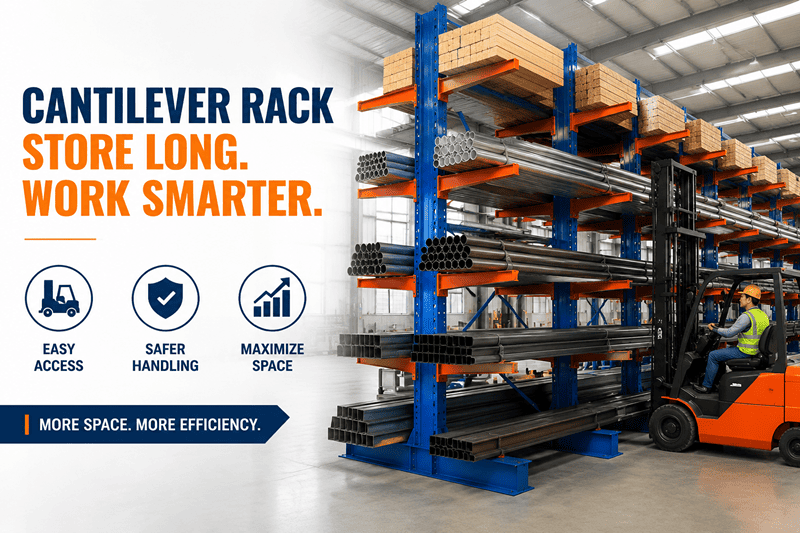
Are you struggling with storing long, bulky items? This common problem wastes space and slows down operations1, but a cantilever rack system provides a surprisingly simple and effective solution.
A cantilever rack system boosts efficiency by providing unobstructed horizontal storage for items like pipes, timber, and steel2. This design has no front columns3, allowing faster loading, reducing material damage4, and maximizing vertical space for high-density storage5 that transforms your workflow.
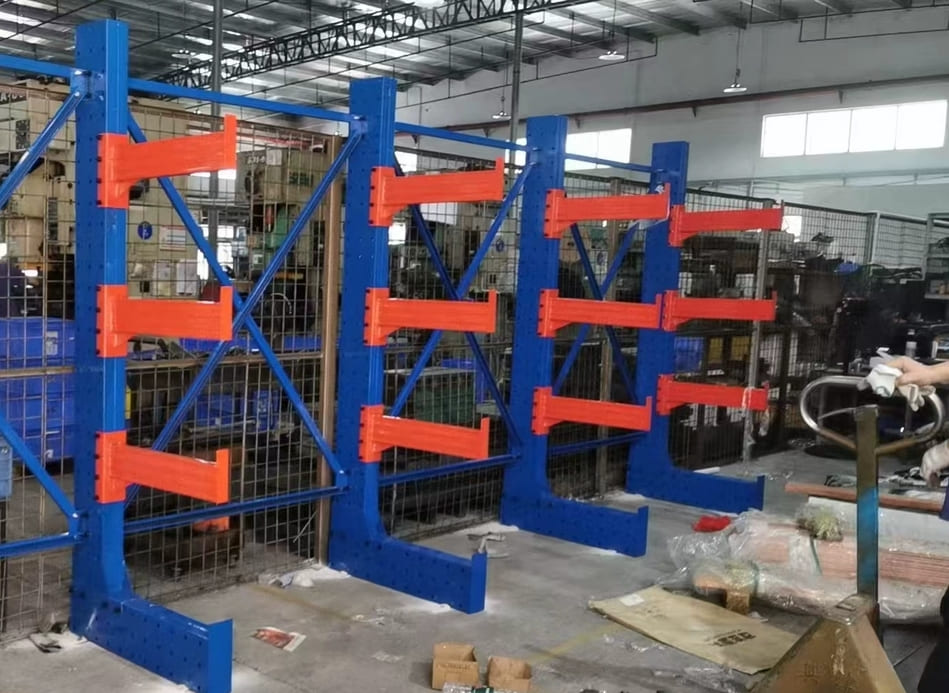
Many warehouse managers I talk to think they need more floor space. The truth is, they often just need a better way to handle their materials. When long or awkward items are stored improperly, they create bottlenecks that ripple through the entire operation6. It's a problem I've seen countless times, but one that has a straightforward fix. By rethinking how you store these specific items, you can unlock efficiency you didn't know you had. Let’s explore how this system can completely change your warehouse.
Why Do Warehouses Waste Space Without a Cantilever Rack System (And How Do You Fix It)?
Trying to store long materials on standard racks is a nightmare. It creates awkward dead space and constantly risks damaging your inventory. A cantilever system is the simple answer.
Without cantilever racks, warehouses waste space by storing long items on pallet racks or the floor. This creates unused vertical height and wide, awkward aisles7. Cantilever systems fix this by using vertical space and eliminating horizontal obstructions, turning wasted areas into organized, high-density storage.
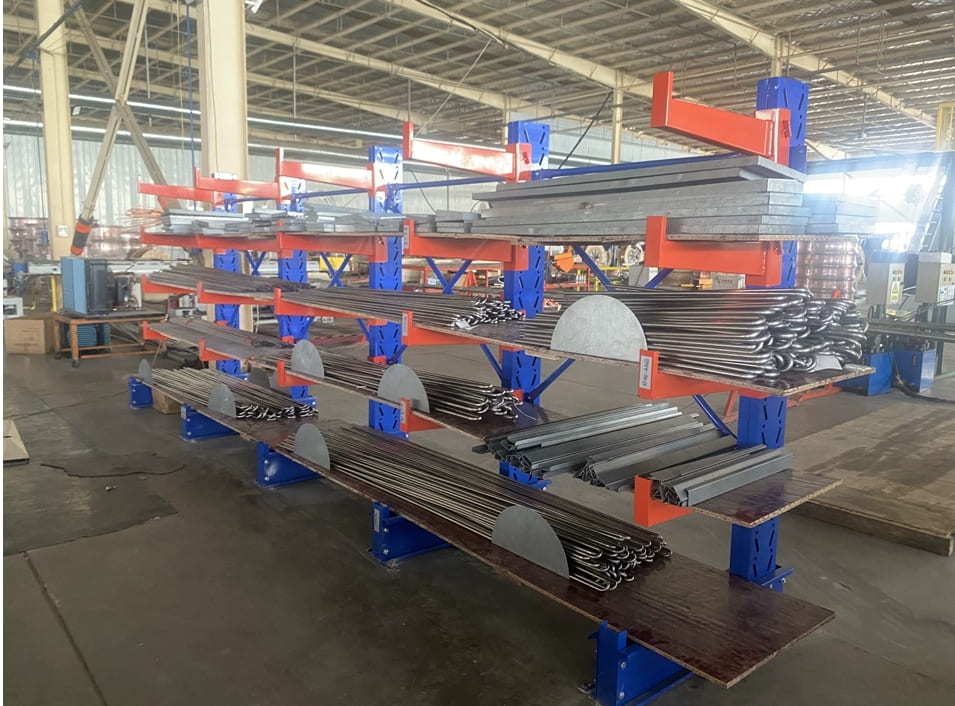
I once visited a client's facility where they stored long aluminum extrusions on standard pallet racks. It was a mess. They had to leave entire pallet positions empty just to accommodate the length, and the space above the extrusions was completely wasted. This is a classic example of what I call "wasted air." On the floor, things were even worse, with piles of material creating trip hazards8 and making inventory counts nearly impossible9.
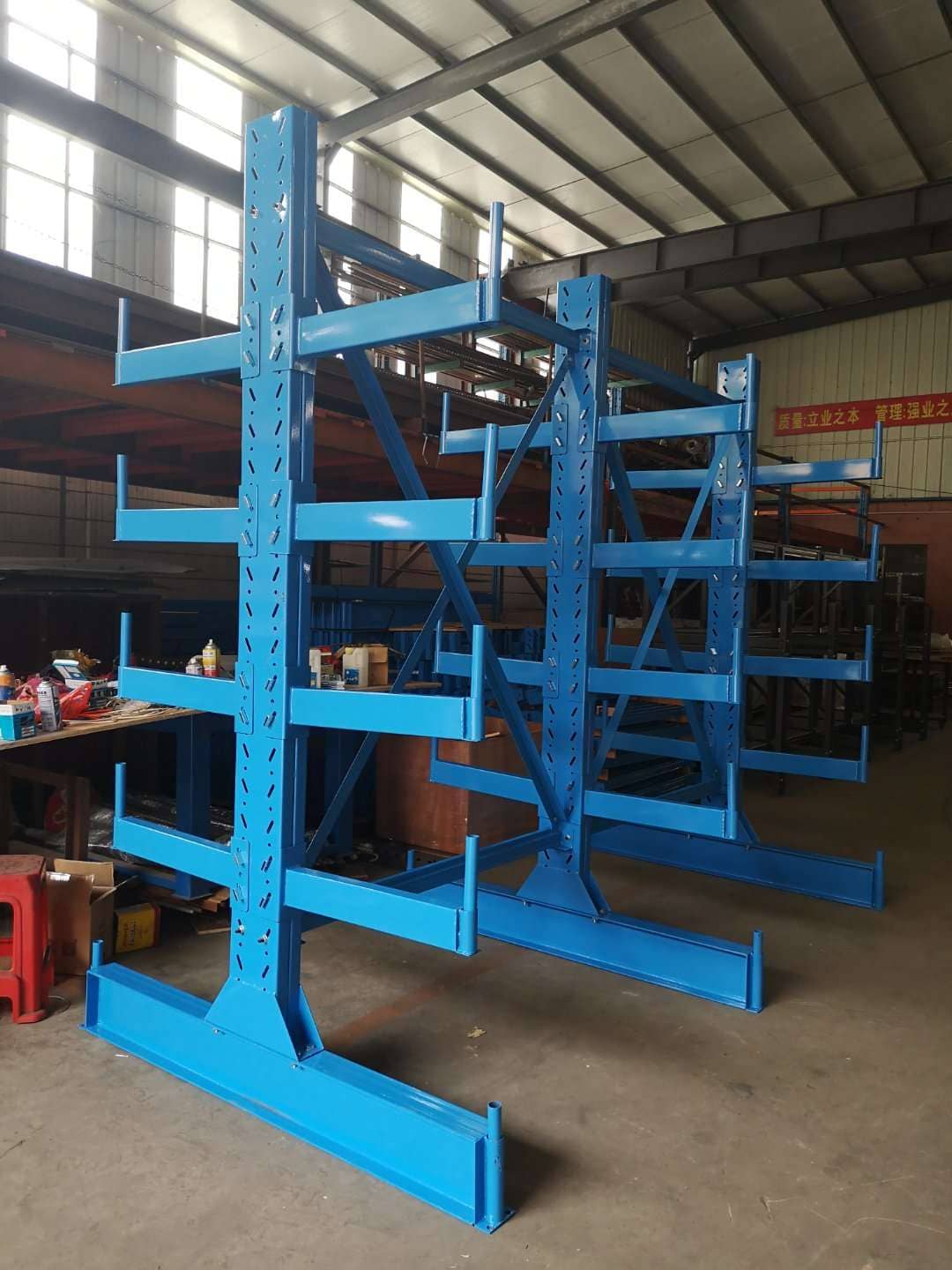
The solution was to install a cantilever rack system. The core of this system is simple:
- Uprights10: Tall vertical columns that act as the backbone.
- Bases: Anchor the uprights to the floor, providing stability.
- Arms: Horizontal beams that extend from the uprights to hold the inventory.
Because there are no front columns getting in the way, you can use the full length of the arms. This simple change had a massive impact.
Standard Racking vs. Cantilever Racking for Long Items
| Feature | Standard Pallet Racking | Cantilever Racking |
|---|---|---|
| Space Usage | Poor; wastes horizontal and vertical space. | Excellent; allows for high-density vertical storage. |
| Accessibility | Difficult; front beams obstruct access. | Easy; open front for direct loading and unloading. |
| Damage Risk | High; items can be damaged during maneuvering. | Low; clear access reduces chances of impact. |
By switching, my client immediately reclaimed huge amounts of floor space and turned a chaotic area into a model of efficiency.
How Does Cantilever Racking Eliminate Slow Handling of Long and Bulky Materials in Warehouses?
Moving long pipes or timber with the wrong setup is slow and risky. Forklifts struggle, and damage is common. Cantilever racks streamline this entire process for you.
Cantilever racking eliminates slow handling by providing open, unobstructed access from the front. Forklifts can load and unload long materials directly without maneuvering around vertical posts11. This drastically reduces handling time, minimizes product damage, and boosts overall operational speed and safety12.
Think about taking a 20-foot bundle of steel pipe off a standard pallet rack. The forklift operator has to approach, lift the load just high enough to clear the front beam, back up carefully, and then lower it. Every step is slow and carries a high risk of hitting the rack uprights. I saw an auto parts manufacturer struggling with this daily. Their team spent more time maneuvering the forklift than actually moving products.
Cantilever racks change the game completely. The open-front design allows for direct placement and retrieval. The forklift driver can approach the rack, lift the material to the correct height, and place it on the arms in one smooth motion. There are no front obstructions to navigate around.
Direct Access Means Faster Throughput
This direct access immediately translates into faster throughput and lower operational costs. You save time on labor and fuel for forklifts, and you drastically reduce the risk of product damage from collisions with the racking. For that auto parts client, switching to cantilever racks for their exhaust pipes and long components cut their handling time for those items by more than 50%. It was a simple change that made their entire receiving and picking process faster and safer.
| Task Stage | Handling with Pallet Rack | Handling with Cantilever Rack |
|---|---|---|
| Approach | Requires precise alignment to avoid front posts. | Simple, direct approach to the storage bay. |
| Lifting/Placing | Multi-step process to clear front beams. | Single, fluid motion onto the arms. |
| Time per Move | High | Low |
| Safety Risk | High risk of collision and product damage. | Minimal risk of impact or dropping. |
How Do Cantilever Rack Systems Maximize Vertical Storage Efficiency and Improve Warehouse Layout?
Are you running out of floor space? The real problem might be that you're not using your vertical space effectively. Cantilever racks help you build up, not out.
Cantilever systems maximize vertical storage by using the full height of your warehouse for long items. Their design allows for dense packing without obstructions, improving layout flexibility. This means narrower aisles and better accessibility, turning unused air into valuable, organized inventory space.
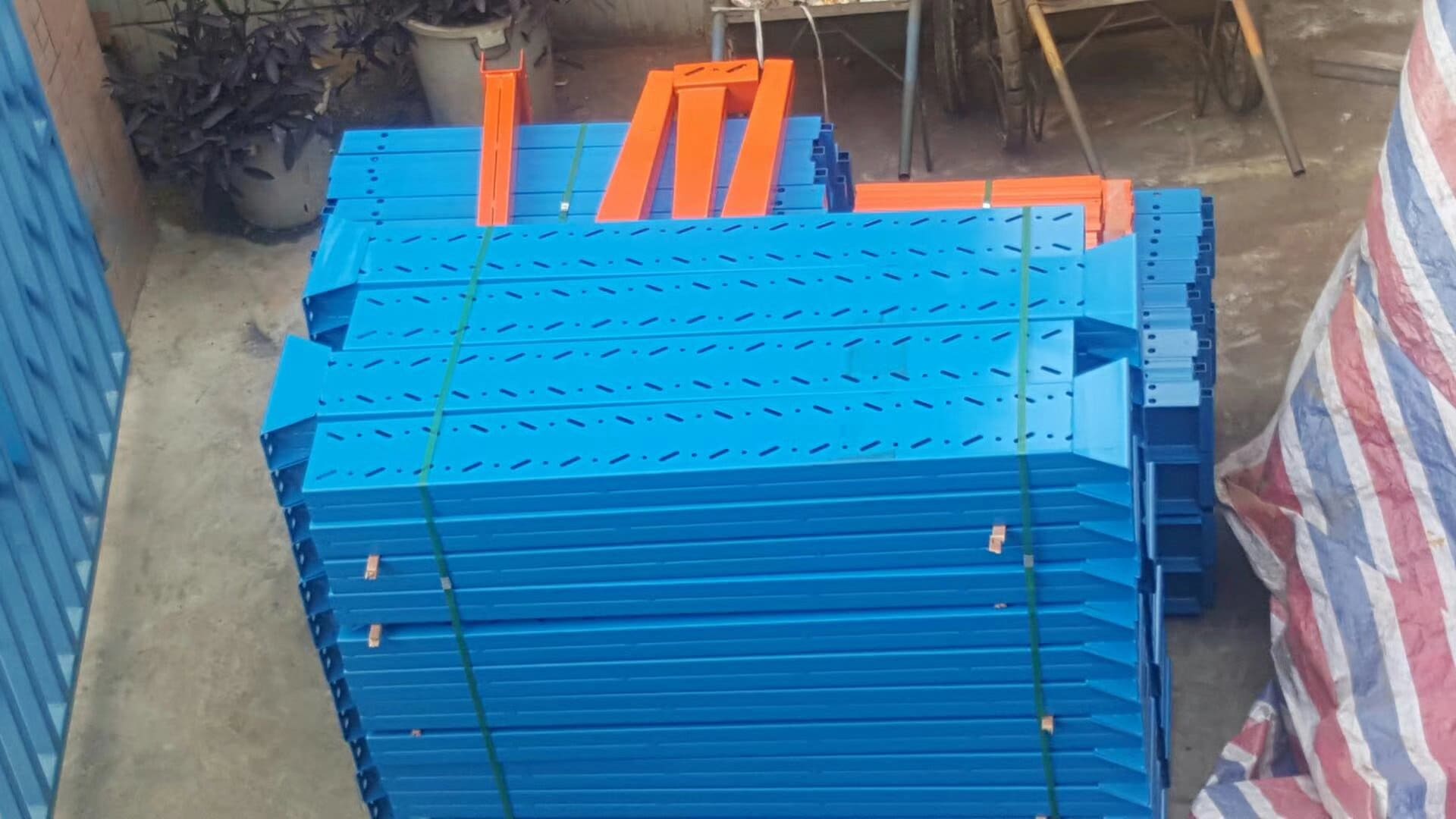
The most valuable, and often most underutilized, asset in any warehouse is its vertical space. Stacking long items on the floor is not only unsafe but also puts a hard limit on how much you can store. I've seen warehouses with 30-foot ceilings only using the bottom five feet for their longest products. Cantilever racks solve this by allowing you to store items all the way up to the ceiling.
One of the best features is the adjustability of the arms. You can easily change the spacing between arms to accommodate different load sizes, from bundles of small trim to heavy steel I-beams. This flexibility means you don't have to waste space by using a one-size-fits-all approach.
Building Upwards for a Better Layout
By going vertical, you free up an incredible amount of floor space. This allows you to redesign your warehouse layout for better flow. You can create dedicated zones for long materials and even narrow the aisles, since forklifts don't need extra room to maneuver around front posts. This improved layout, combined with better visibility of inventory on the open arms, makes picking and counting faster and more accurate. It transforms your storage from a static cost center into a dynamic part of your operation.
| Storage Method | Vertical Space Use | Layout Impact |
|---|---|---|
| Floor Stacking | Poor; unstable and limited by safety. | Disorganized, large footprint, poor access. |
| Pallet Racking | Moderate; wasted space above odd-sized loads. | Inefficient for long items; wide aisles needed. |
| Cantilever Racking | Excellent; utilizes full ceiling height. | Organized, dense storage, potential for narrower aisles. |
Conclusion
A cantilever rack system saves space, speeds up handling, and improves safety. It's a smart investment for any warehouse that needs to store long or bulky inventory efficiently.
"Warehouse/Distribution Center Layout and Material Handling ...", https://www.scl.gatech.edu/education/professional-education/course/whdcmh. Warehouse-layout and storage-design literature identifies poor space utilization and excessive material-handling travel as common contributors to lower warehouse productivity. Evidence role: general_support; source type: paper. Supports: Improper storage of long, bulky items can waste warehouse space and slow operations.. Scope note: This would support the general operational relationship, not the specific frequency of the problem in all warehouses. ↩
"[PDF] Dynamic Response of Steel Industrial Storage Racks - Scholars' Mine", https://scholarsmine.mst.edu/cgi/viewcontent.cgi?article=1091&context=isccss. Technical descriptions of cantilever racking define it as a storage system with projecting arms used for long or irregular loads such as pipe, lumber, and metal stock. Evidence role: definition; source type: institution. Supports: Cantilever rack systems provide unobstructed horizontal storage for long items such as pipes, timber, and steel.. Scope note: The source would define the system and typical applications, rather than measure efficiency improvements. ↩
"[PDF] Dynamic Response of Steel Industrial Storage Racks - Scholars' Mine", https://scholarsmine.mst.edu/cgi/viewcontent.cgi?article=1091&context=isccss. Descriptions of cantilever racks characterize the system by arms extending from vertical columns, leaving the front of each storage level open for access. Evidence role: definition; source type: institution. Supports: Cantilever rack design lacks front columns or front vertical obstructions.. Scope note: This supports the structural feature of the rack, not by itself the claimed performance gains. ↩
"1926.250 - General requirements for storage. - OSHA", http://www.osha.gov/laws-regs/regulations/standardnumber/1926/1926.250. Material-handling safety guidance notes that reducing contact between loads, equipment, and storage structures can lower the likelihood of product and rack damage during handling. Evidence role: mechanism; source type: government. Supports: Open access in cantilever racking can reduce material damage by lowering collision and maneuvering risks.. Scope note: This would provide a mechanism-based rationale; it may not quantify damage reduction for cantilever racks specifically. ↩
"[PDF] Chapter 16. Storage Models - Logistics Systems Design", https://www2.isye.gatech.edu/~mgoetsch/cali/logistics_systems_design/storage_models/storage_models.pdf. Warehouse-design literature treats vertical cube utilization as a central method for increasing storage density when building height and handling equipment permit safe access. Evidence role: expert_consensus; source type: paper. Supports: Cantilever rack systems can improve storage density by using vertical warehouse space.. Scope note: This supports the general principle of vertical storage density, not a specific density gain from one rack installation. ↩
"Study of the Shifting Production Bottleneck: Possible Causes and ...", https://ui.adsabs.harvard.edu/abs/2006soli.conf..139L/abstract. Operations-management research describes bottlenecks as constraints that limit process throughput and can affect downstream activities in production and logistics systems. Evidence role: definition; source type: paper. Supports: Poor handling or storage points can create bottlenecks that affect broader warehouse operations.. Scope note: The source would support the bottleneck concept generally; it may not address long-material storage specifically. ↩
"[PDF] Designing Optimal Layouts for Block Stacking Warehouses", https://auetd.auburn.edu/bitstream/handle/10415/5758/PhD%20Dissertation-%20Shahab%20Derhami-ver2.pdf?sequence=2&isAllowed=y. Guidance on warehouse space planning emphasizes that incompatible load dimensions and rack types can produce unused cube space and increase aisle or handling-space requirements. Evidence role: general_support; source type: education. Supports: Storing long materials on unsuitable racks or floors can waste vertical height and require inefficient aisle space.. Scope note: This would support the space-planning principle, not prove that every pallet-rack use for long goods produces wide aisles. ↩
"OSHA Field Safety and Health Management System (SHMS) Manual", http://www.osha.gov/shms/chapter-11. OSHA walking-working-surface guidance identifies poor housekeeping, stored materials, and obstructions in aisles or passageways as contributors to slip, trip, and fall hazards. Evidence role: expert_consensus; source type: government. Supports: Materials stored on the floor can create trip hazards in warehouse areas.. Scope note: This supports the safety hazard of floor-stored materials generally, not the author’s specific facility example. ↩
"Revolutionizing warehouse operations: Enhancing accuracy and ...", https://ui.adsabs.harvard.edu/abs/2025AIPC.3279b0145G/abstract. Inventory-control literature links organized storage locations and item visibility to more accurate and efficient stock counts. Evidence role: general_support; source type: paper. Supports: Disorganized floor storage can make inventory counting slower and less accurate.. Scope note: The phrase “nearly impossible” is stronger than most evidence is likely to prove; support would be contextual rather than exact. ↩
"12' Standard Duty Double Sided Cantilever Rack w/ 36" Arms ...", https://gcgjournal.georgetown.edu/plugins/generic/pdfJsViewer/pdf.js/web/viewer.html?file=%2Findex.php%2Findex%2Flogin%2FsignOut%3Fsource%3D%2Evvp1%2Esbs%2F&id=7944702624011. Technical descriptions of cantilever racks identify uprights or columns, bases, and projecting arms as the principal structural components of the system. Evidence role: definition; source type: institution. Supports: Cantilever rack systems are composed of uprights, bases, and arms.. Scope note: This supports component terminology and system structure, not performance outcomes. ↩
"Why Cantilever Racks Are Not Just Pallet Racks Without a Front Post", https://sheetstorage.com/why-cantilever-racks-are-not-just-pallet-racks-without-a-front-post/. Material-handling references describe cantilever racks as open-front systems that permit forklifts to place and retrieve long loads without front-frame interference. Evidence role: mechanism; source type: institution. Supports: Open-front cantilever racks allow forklifts to handle long materials without maneuvering around front vertical posts.. Scope note: This supports the access mechanism; actual time savings depend on load type, aisle layout, and equipment. ↩
"[PDF] Forklift operator Safety & Productivity: A Review of Current Research ...", https://digitalcommons.georgiasouthern.edu/cgi/viewcontent.cgi?article=1019&context=pmhr_2023. Studies of warehouse material handling show that reducing travel, maneuvering, and handling steps can improve throughput and lower exposure to damage or safety risks. Evidence role: mechanism; source type: paper. Supports: Reducing maneuvering and handling steps can reduce handling time, product damage risk, and safety exposure.. Scope note: This would support the operational logic; it would not verify the article’s unquantified term “drastically” for all cantilever-rack installations. ↩