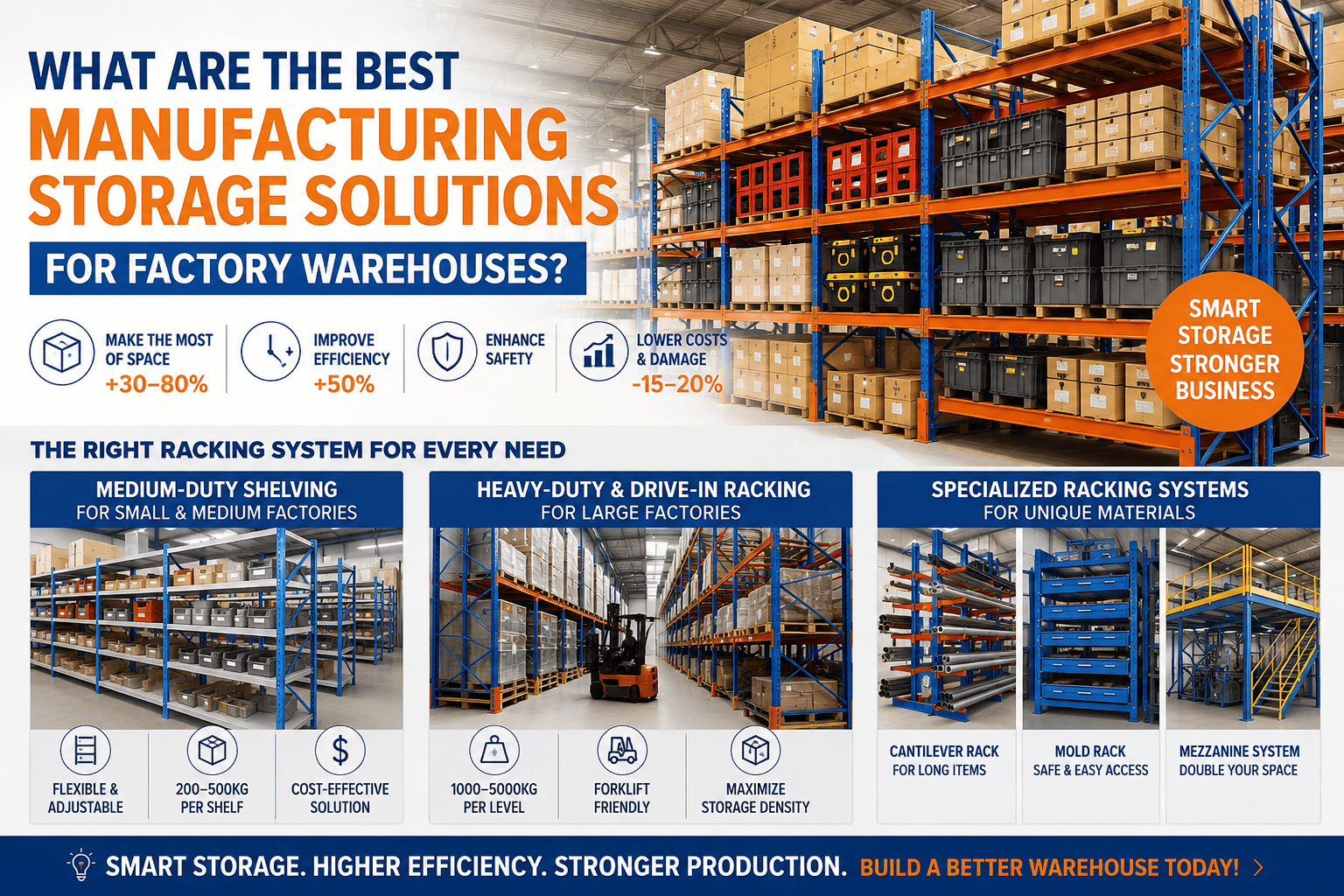
Is your factory warehouse a chaotic mess? This disorganization costs you time, money, and efficiency.1 The right storage system is the key to fixing it for good.
The best manufacturing storage solutions involve matching the right racking system to your specific needs. This means using medium-duty shelving for lighter, varied parts, heavy-duty pallet racking for bulk goods, and specialized systems like cantilever or mold racks for unique materials to maximize space and efficiency.
Choosing the right racking system can completely transform your factory's operations. It’s not just about adding more shelves; it's about creating a smart, efficient system that supports your entire production line. A well-planned warehouse can boost productivity, reduce material damage, and make your workplace safer.2 Let's dive into how you can solve your storage problems and find the perfect solution for your factory.
Why Do Many Factory Warehouses Run Out of Space and Lose Efficiency?
Feeling cramped in your own warehouse? This lack of space is likely slowing down your entire operation and costing you money in delays and wasted potential.
Many factories run out of space because of poor vertical storage, inefficient material handling, and using the wrong racks. Simply piling items on the floor wastes most of your building's volume3, while a disorganized system makes finding anything a time-consuming chore, leading to production bottlenecks.4
In my experience visiting countless facilities, the problem is rarely a lack of floor space, but a failure to use the space you have effectively. It leads to a chain reaction of problems that can cripple an otherwise productive factory. Before you can find the right solution, you have to understand the core issues that lead to this inefficiency.
Common Warehouse Pain Points
The most common issues I see are poor space utilization and low handling efficiency. For example, a 1,000 square meter warehouse might only be using half its potential capacity because everything is stacked on the floor. This wastes valuable vertical space and often forces companies to rent expensive off-site storage. When materials are piled up without clear organization, workers waste precious time searching for parts that are technically in stock but impossible to find.5 This directly leads to production delays.
Safety and Special Materials
Another major concern is safety. Using light-duty shelving for heavy machine parts is a recipe for disaster, risking rack collapse, damaged goods, and employee injury.6 On the other hand, over-specifying racks for light items is a waste of your budget. Finally, special materials present their own unique challenges. Long items like steel pipes or bulky molds simply don't fit on standard pallet racks, leading to unsafe and inefficient storage.
| Challenge | Consequence |
|---|---|
| Poor Space Utilization | Wasted vertical space, unnecessary rental costs |
| Low Handling Efficiency | Production delays, increased labor costs |
| Incorrect Load Capacity | Safety hazards, equipment damage, wasted budget |
| Special Material Storage | Increased risk of product damage, inefficient use of space |
What Are the Best Storage Racking Solutions for Different Manufacturing Facilities?
Using a one-size-fits-all racking system just doesn't work. The wrong choice can lead to damaged goods, slow down your workflow, and create safety risks.
The best solution depends on your factory's needs. Small factories thrive with flexible medium-duty shelving. Large facilities need robust heavy-duty pallet racking for heavy loads or drive-in racking for bulk storage. Specialized cantilever or mold racks are essential for safely storing unique materials.
Every factory is different, and your storage system should reflect that. The size of your warehouse, the type of materials you handle, and your daily operational flow all play a role in determining the ideal setup. Let’s break down the most common scenarios I encounter and the racking solutions that work best for each one. Matching the right system to your needs is the fastest way to improve efficiency.
For Small to Medium Factories: Medium-Duty Shelving
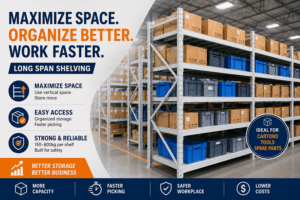
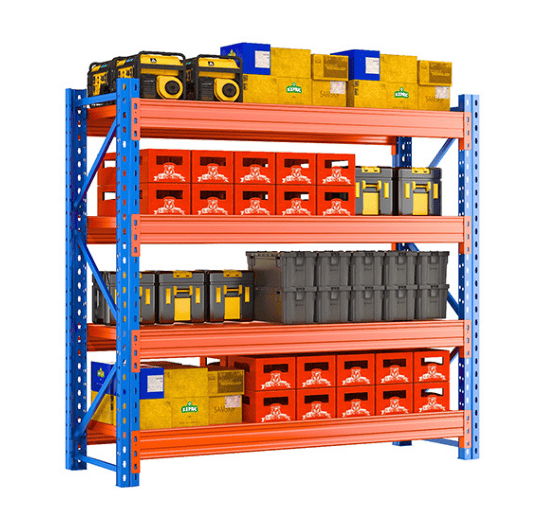
For smaller workshops or factories dealing with a wide variety of parts like screws, tools, and components, medium-duty shelving is a perfect fit. It allows you to organize items on multiple levels, with each shelf typically holding 200-500 kg.7 This provides more than enough strength for most light manufacturing needs without the high cost of heavy-duty systems. The best part is its flexibility. You can easily adjust shelf heights as your product dimensions or storage needs change over time. This makes it ideal for electronics manufacturers, spare parts warehouses, and small machinery workshops.
For Large Factories: Heavy-Duty and Drive-In Racking
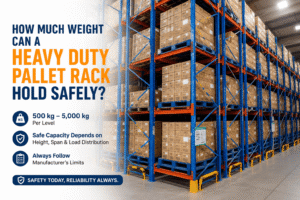
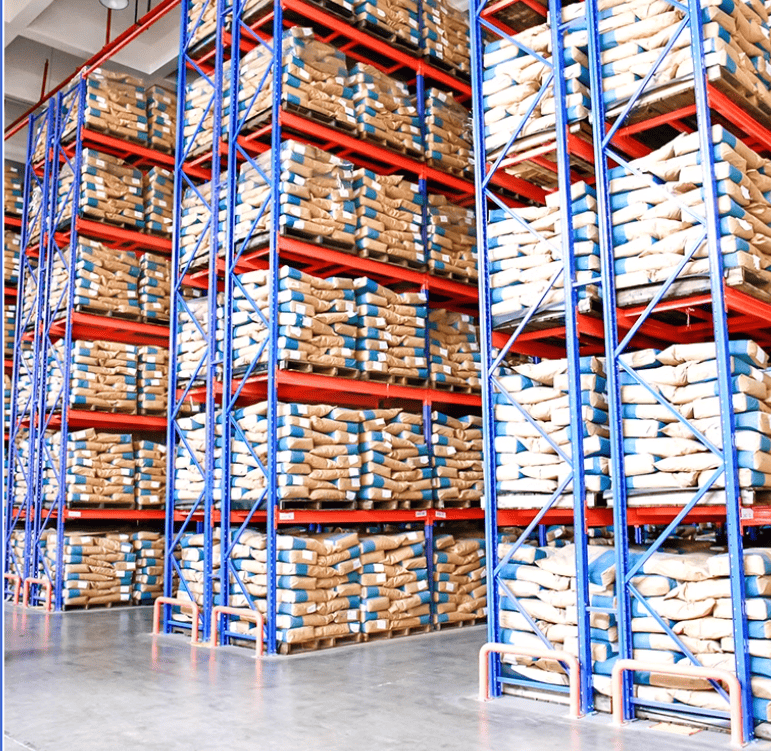
When you're dealing with heavy machinery, molds, or large volumes of palletized goods, you need a more robust solution. Heavy-duty pallet racking is the go-to choice. Each level can support 1,000–5,000 kg8, and it’s designed for easy access with a forklift, dramatically speeding up loading and unloading. For facilities focused on bulk storage of uniform products, drive-in racking is a space-saving champion. It eliminates aisles by allowing forklifts to drive directly into the rack structure, increasing storage density by up to 30%.9
For Special Materials: Customized Racking
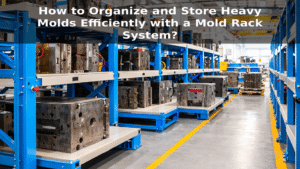
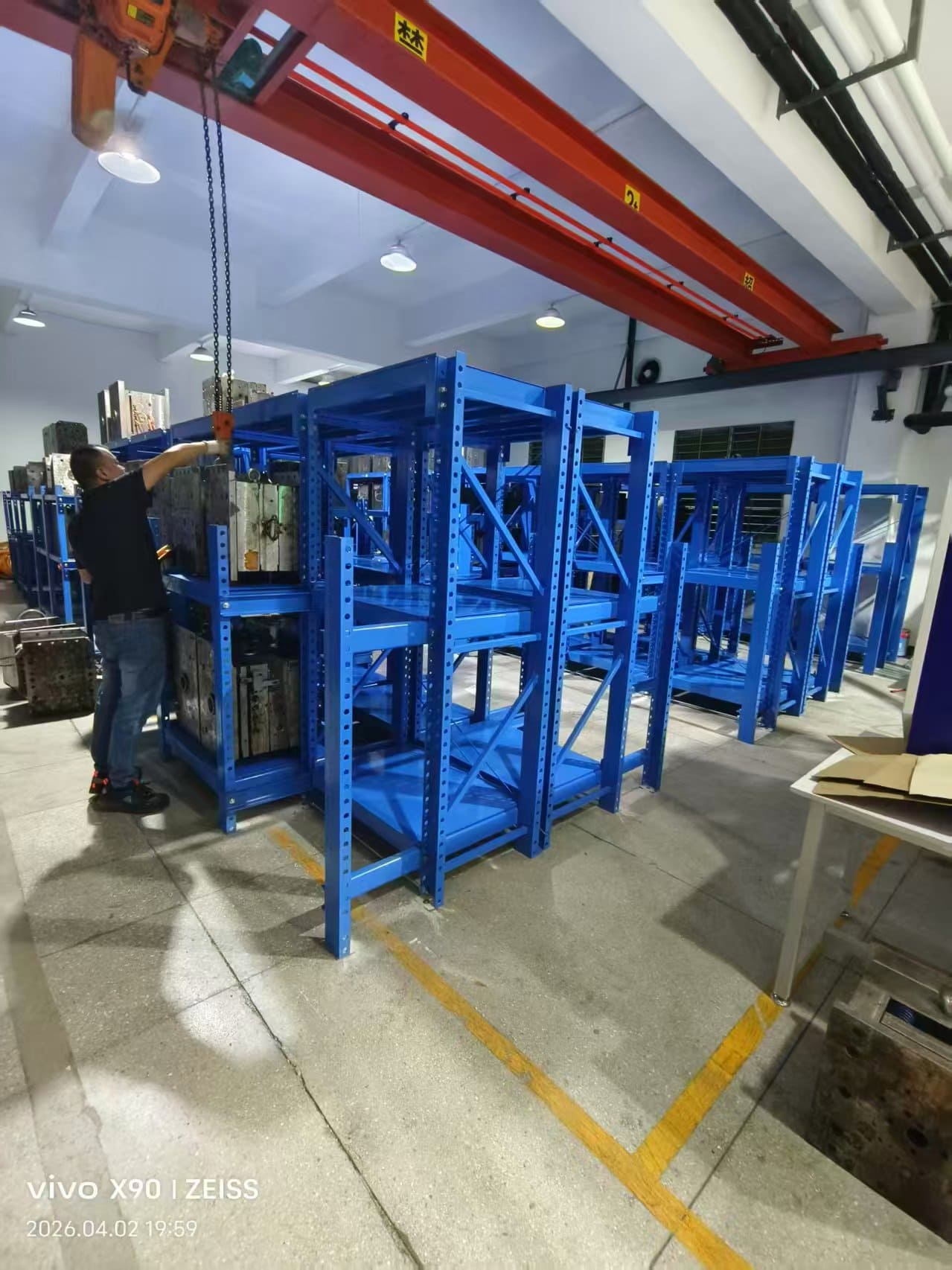
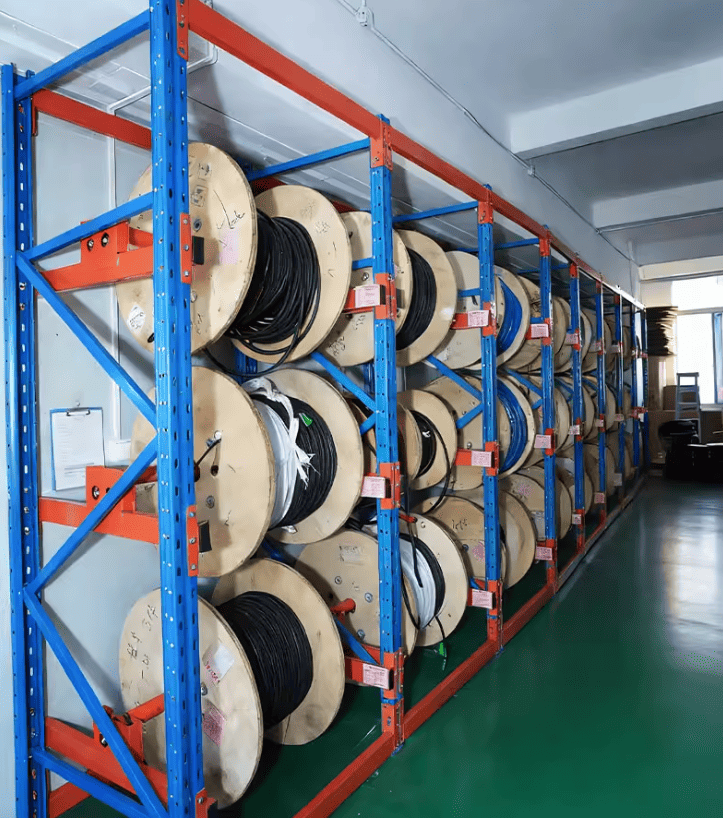
Standard racks just can't handle everything. For long, bulky items like steel pipes, lumber, or aluminum profiles, cantilever racking is the perfect solution. Its open-front design provides unobstructed access.10 For valuable and heavy items like injection molds or precision tooling, mold storage racks are essential. These drawer-type racks allow for safe, easy access and protect expensive assets from damage during handling.
| Scenario | Recommended Racking | Key Benefit |
|---|---|---|
| Small/Medium Factory | Medium-Duty Shelving | Flexibility and Cost-Effectiveness |
| Large Factory (Heavy Loads) | Heavy-Duty Pallet Racking | High Load Capacity and Forklift Access |
| Large Factory (Bulk Storage) | Drive-In Racking | Maximum Storage Density |
| Long or Bulky Materials | Cantilever Racking | Unobstructed Access for Long Items |
| Heavy Molds & Dies | Mold Storage Racks | Safe and Easy Retrieval |
How Do You Choose the Right Warehouse Storage System for Your Factory?
Are you worried about making a costly mistake when buying new racks? Choosing the wrong system can easily disrupt your workflow and waste your investment.
To find your perfect fit, you just need to answer three simple questions. This process helps you avoid common pitfalls and ensures you get a system that truly works for you.
I always guide my clients through a simple evaluation before they make a purchase. It’s not about finding the most expensive or heaviest-duty rack; it’s about finding the smartest solution for your specific operation. By thinking through your materials, your workflow, and your physical space, you can confidently select a storage system that will pay for itself in increased efficiency and safety. Let's walk through the three critical questions you need to ask.
1. What Is the Maximum Weight of Your Materials?
This is the most important question for safety. You must know the weight of your heaviest pallet or item. Once you have that number, always choose a rack with a load capacity that is at least 20% higher.11 This safety margin accounts for uneven loading, minor impacts from forklifts, and future changes in inventory. Underestimating your load requirements is one of the most dangerous and costly mistakes you can make. It puts your products, equipment, and, most importantly, your employees at risk.
2. How Frequently Are Materials Accessed?
Your inventory turnover rate should directly influence your racking choice. If you need to access a wide variety of SKUs frequently, selective pallet racking is your best bet. It provides direct access to every pallet.12 However, if you store large quantities of the same product with less frequent access, a high-density system like drive-in racking might be better. It sacrifices some accessibility for a massive increase in storage capacity. Thinking about access frequency prevents you from creating a warehouse where half your inventory is buried.
3. What Is Your Warehouse Height?
Don't forget to look up! Vertical space is your most valuable, and often most underutilized, asset. If your warehouse ceiling is under 4 meters, medium-duty shelving can be a great option. For warehouses with ceiling heights above 5 meters, you should consider heavy-duty pallet racking or a mezzanine system to double your usable space. A mezzanine can create an entire second floor for lighter storage, assembly work, or even office space, without the cost of expanding your building.
| Question | Why It Matters | Recommended Action |
|---|---|---|
| What is your max weight? | Prevents rack failure and ensures safety. | Choose a rack with at least a 20% safety margin. |
| How often are items accessed? | Determines the balance between density and access. | Use selective racking for high turnover, drive-in for bulk. |
| What is your warehouse height? | Maximizes use of vertical storage space. | Use multi-level racking or mezzanines for high ceilings. |
Conclusion
Choosing the right racking system is a critical investment. It directly improves storage efficiency, enhances safety, and helps you make the most of your available factory space.
"Warehouse/Distribution Center Layout and Material Handling ...", https://www.scl.gatech.edu/education/professional-education/course/whdcmh. Empirical warehouse-operations research links poor layout, congestion, and search time to increased labor effort and reduced order-picking or material-handling productivity. Evidence role: general_support; source type: paper. Supports: Warehouse disorganization causes losses in time, money, and operational efficiency.. Scope note: The evidence is likely to support the general operational effect of disorganization rather than quantify the specific costs for this factory context. ↩
"[PDF] Design and Development of a Lean Material Handling System at a ...", https://repository.stcloudstate.edu/cgi/viewcontent.cgi?referer=&httpsredir=1&article=1003&context=mme_etds. Warehouse-design and occupational-safety literature shows that planned storage layouts, clear aisles, and appropriate material-handling systems are associated with improved handling productivity and reduced damage and safety hazards. Evidence role: expert_consensus; source type: institution. Supports: A well-planned warehouse can improve productivity, reduce material damage, and improve safety.. Scope note: This supports the relationship in general terms; actual productivity, damage, and safety outcomes depend on implementation and site conditions. ↩
"[PDF] An optimization model for multi-deep storage Francesc Bou Manobens", https://upcommons.upc.edu/server/api/core/bitstreams/f081a3ff-ae01-4202-a339-e09e10ad92f5/content. Warehouse-space planning references explain that floor stacking uses mainly floor area and limited stack height, while racking systems exploit vertical cube utilization to increase storage capacity. Evidence role: mechanism; source type: education. Supports: Floor storage can waste vertical building volume compared with racked storage.. Scope note: The phrase “most” is context-dependent and would vary with ceiling height, product stackability, and fire-code restrictions. ↩
"Development of an improvement framework for warehouse ... - PMC", https://pmc.ncbi.nlm.nih.gov/articles/PMC10112039/. Research on warehouse order picking and material retrieval identifies search time, travel time, and poor slotting as contributors to longer handling cycles and downstream delays. Evidence role: mechanism; source type: paper. Supports: Disorganized storage increases retrieval time and can contribute to production bottlenecks.. Scope note: The source would explain the mechanism for delays but may not specifically measure production bottlenecks in manufacturing warehouses. ↩
"Point-of-use hospital inventory management with inaccurate usage ...", https://pmc.ncbi.nlm.nih.gov/articles/PMC8342273/. Inventory-management and warehouse-operations studies document that inaccurate location control and poor inventory visibility increase search time even when inventory records indicate stock availability. Evidence role: general_support; source type: paper. Supports: Poor organization causes workers to spend time searching for parts that are in stock but not readily locatable.. Scope note: This evidence supports the phenomenon generally; it does not establish that parts are literally “impossible” to find in every disorganized warehouse. ↩
"1926.250 - General requirements for storage. - OSHA", http://www.osha.gov/laws-regs/regulations/standardnumber/1926/1926.250. Occupational-safety guidance requires storage racks and shelves to be capable of supporting imposed loads, and identifies unstable or overloaded storage as a hazard for collapse, falling objects, and worker injury. Evidence role: expert_consensus; source type: government. Supports: Using shelving below the required load capacity for heavy parts creates risks of collapse, product damage, and injury.. Scope note: The source would substantiate the safety principle, not the article’s rhetorical wording or a specific probability of collapse. ↩
"Medium Duty Longspan Shelving System Manufacturers and ...", https://www.kingmoreracking.com/medium-duty-shelving/china-medium-duty-longspan-shelving-system.html. Industrial shelving specifications and storage-system standards commonly classify medium-duty shelving by rated shelf loads in the low hundreds of kilograms, providing context for the stated 200–500 kg range. Evidence role: definition; source type: institution. Supports: Medium-duty shelving commonly has shelf load ratings around 200–500 kg.. Scope note: Exact capacities vary by manufacturer, shelf span, beam design, decking, and installation; a neutral source may support the range only as typical rather than universal. ↩
"Understanding Beam and Frame Load Ratings in Pallet Racks", https://www.sjf.com/resources/articles/understanding-pallet-rack-load-ratings?srsltid=AfmBOooD6dPj7ZNuK3HUIM7IgPEo0rRnfu9nRFFazsrIE2wBXXoaRIlX. Pallet-rack technical references describe beam-level capacities in the tonne range and emphasize that rated capacity depends on beam length, upright configuration, anchorage, and load distribution. Evidence role: definition; source type: institution. Supports: Heavy-duty pallet racking can support level loads in the 1,000–5,000 kg range depending on design.. Scope note: The 1,000–5,000 kg range is plausible for many systems but cannot be treated as universal without specifying rack design and load configuration. ↩
"How to Choose Between Selective, Pushback & Drive-In Racking", https://ecseco.com/blog/how-to-choose-between-selective-pushback-and-drive-in-racking/. Warehouse-design references describe drive-in racking as a high-density storage system in which forklifts enter storage lanes, reducing aisle requirements and increasing pallet positions per unit area compared with selective racking. Evidence role: mechanism; source type: education. Supports: Drive-in racking reduces aisle space and can materially increase storage density.. Scope note: The “up to 30%” figure depends on facility dimensions, pallet size, aisle widths, and comparison baseline; supporting evidence may be contextual rather than a universal benchmark. ↩
"What Is Cantilever Racking? Systems, Types & Uses | SJF", https://www.sjf.com/what-is-cantilever-racking.html?srsltid=AfmBOoqWlSTxmZ16CTW3yh6qDSv89oZDW20fheBMfS1-JFGg3r6UuBlF. Material-handling references define cantilever racks as storage systems with arms projecting from vertical columns and no front uprights, a configuration used for unobstructed placement and retrieval of long loads. Evidence role: definition; source type: institution. Supports: Cantilever racking provides open-front access suitable for long or bulky materials.. Scope note: The source supports the design principle; actual access depends on aisle width, load length, handling equipment, and rack configuration. ↩
"1926.250 - General requirements for storage. - OSHA", http://www.osha.gov/laws-regs/regulations/standardnumber/1926/1926.250. Rack-safety standards and guidance emphasize that storage systems must be designed, installed, and used within rated load capacities, with engineering safety factors applied during design. Evidence role: expert_consensus; source type: government. Supports: Rack selection should include a safety margin above expected maximum loads.. Scope note: This supports the need for a load margin and adherence to rated capacity, but may not directly validate a universal 20% margin; the exact margin should follow applicable codes and engineering calculations. ↩
"[PDF] Pallet Rack Layout Design Templates - extnag.tacc.utexas.edu", https://extnag.tacc.utexas.edu/filedownload.ashx/s25125/243246/Pallet%20Rack%20Layout%20Design%20Templates.pdf. Warehouse-system references characterize selective pallet racking as a storage method that offers direct access to each pallet position, in contrast to higher-density systems that trade selectivity for capacity. Evidence role: definition; source type: education. Supports: Selective pallet racking provides direct access to individual pallet locations.. Scope note: Direct access assumes standard single-deep selective racking and adequate aisle access; variants such as double-deep racking reduce selectivity. ↩