How Do Industrial Pallet Racks Improve Warehouse Storage Efficiency?Is your warehouse feeling cramped and chaotic? This disorganization costs you money in wasted time and slow operations. Industrial pallet racks1 are the key to transforming your space, boosting efficiency, and cutting costs.
The best way industrial pallet racks2 improve warehouse efficiency is by converting unused vertical space into organized, accessible storage. This systematic approach reduces picking times3, minimizes product damage4, and allows for clear inventory management, which directly lowers labor costs and increases your warehouse's overall throughput.
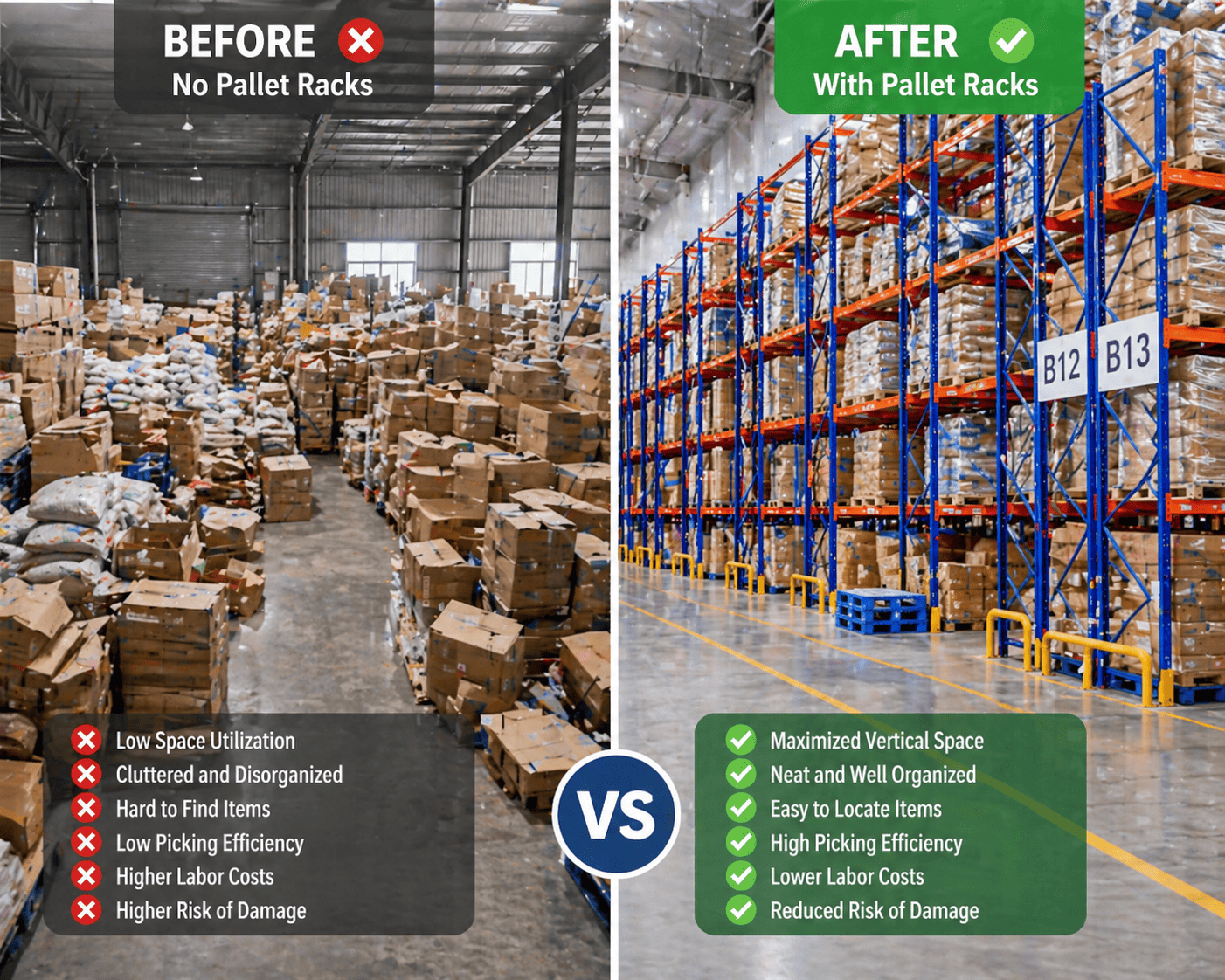
The real value of pallet racking5 isn't just about holding more stuff. It’s about creating a system that makes your entire operation faster, safer, and more scalable. By designing a layout that works for you, you can unlock efficiency you didn't know you had. Let’s explore exactly how these systems make such a big difference.
How Do Industrial Pallet Racks Maximize Warehouse Space and Storage Capacity?
Is your warehouse floor completely full while the space above is empty? This wasted vertical area is a huge missed opportunity, limiting your capacity and forcing you to think about expensive expansions. Pallet racking turns that empty air into valuable, structured storage.
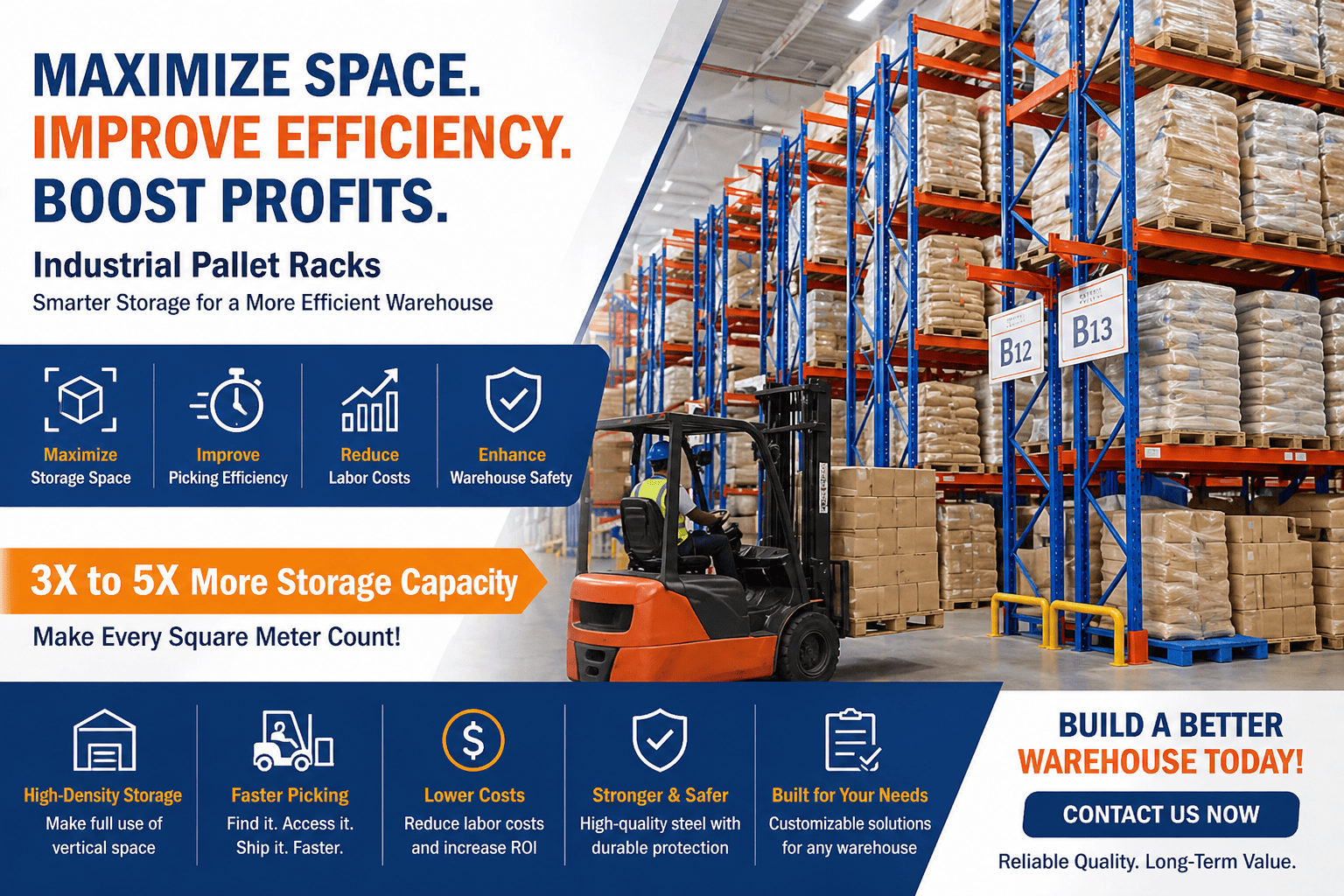
Pallet racks maximize warehouse space by building storage levels upward. A multi-level design can increase your storage capacity by 3 to 5 times without changing your building's footprint. This high-density solution makes use of vertical space that would otherwise be completely wasted, dramatically increasing inventory capacity.
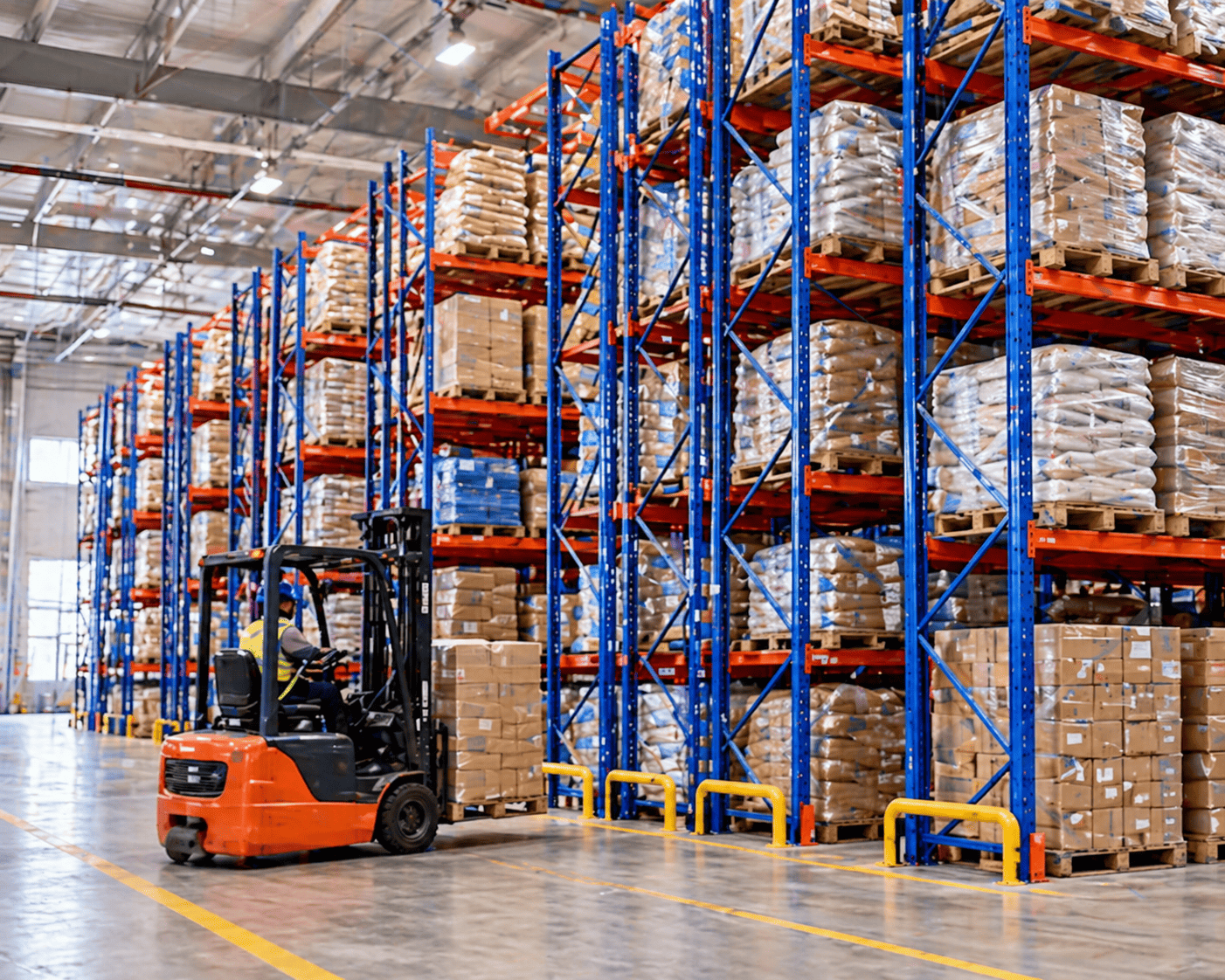
When I first started helping clients with warehouse layouts, the most common problem I saw was a reliance on floor stacking6. This method only uses the ground level, leaving a massive amount of open air completely unused. Industrial pallet racks change this by creating a strong, stable framework to store goods vertically. The core of this system consists of upright frames and horizontal beams. We manufacture these components from high-strength Q235 steel to ensure they can handle heavy loads safely. Beams connect to the uprights, forming a secure level to place pallets on. By stacking these levels, you effectively multiply your storage footprint. For example, a single pallet spot on the floor becomes four or five spots in the same footprint with a racking system7. This is how you achieve high-density storage and make every square meter of your warehouse work for you.
| Storage Method | Space Utilization | Capacity Potential |
|---|---|---|
| Floor Stacking | Low (Ground Level Only) | Very Limited |
| Pallet Racking | High (Vertical) | 3x to 5x Increase |
How Do Pallet Racking Systems8 Reduce Labor Costs and Improve Picking Efficiency9?
Does your team spend too much time searching for items in a disorganized warehouse? That wasted time adds up, increasing your labor costs and slowing down order fulfillment for every single order. A well-organized pallet rack system makes finding and picking goods fast and simple.
Pallet racking systems create a specific, designated location for every pallet, which allows for clear and simple inventory management. This organization helps forklift operators and warehouse staff find and retrieve goods much faster, which drastically cuts down on picking times and boosts overall warehouse throughput.
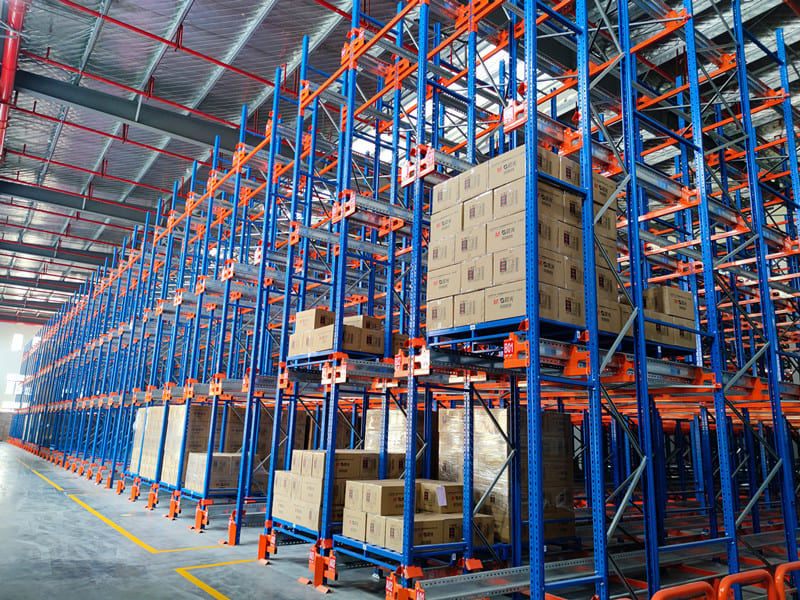
I once visited a facility where pickers were spending nearly half their day just locating the right products. After we installed a selective pallet rack system, their picking times were cut by more than 60%. The reason is simple: organization. When every pallet has a home, you eliminate the guesswork. Your warehouse management system (WMS)10 can direct an operator to a precise location—aisle C, bay 4, level 3—and the pallet is right there. This streamlined process allows for much faster handling. It also reduces the risk of product damage that often happens when staff have to move multiple pallets just to get to the one they need. This efficiency gain isn't just a minor improvement; it directly translates into lower labor costs per order and a higher number of orders shipped per day. Your team becomes more productive, and your customers get their orders faster.
| Task Stage | Without Pallet Racks | With Pallet Racks |
|---|---|---|
| Locate Item | 5-10 minutes (search) | < 1 minute (directed) |
| Access Item | 3-5 minutes (move others) | < 2 minutes (direct access) |
| Total Picking Time | High | Low |
What Factors Should You Consider When Choosing Industrial Pallet Racks for Your Warehouse?
Choosing the wrong pallet rack for your warehouse can be a very expensive mistake. An unsuitable system can create safety hazards, use your space inefficiently, and force you to replace it much sooner than planned. Taking the time to consider a few key factors ensures you get the right solution.
When choosing industrial pallet racks11, you must consider your warehouse height, pallet dimensions, required load capacity, and forklift aisle width. You should also evaluate material durability and surface treatments, like powder coating, for a longer service life. Getting these details right from the start ensures a safe, efficient, and cost-effective system.
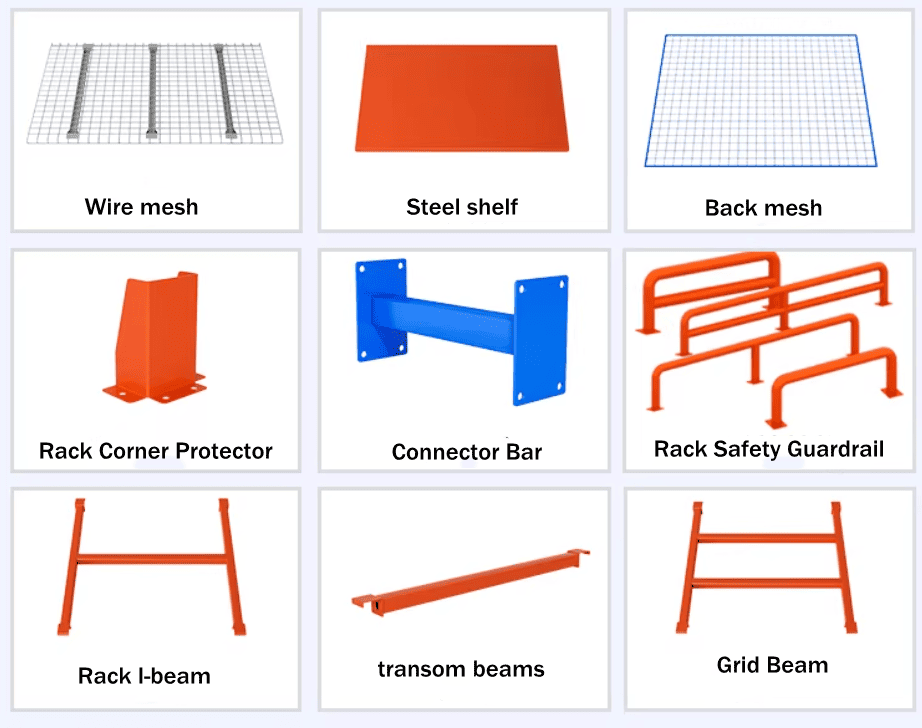
I always advise my clients to think of pallet racking as a long-term investment in their infrastructure. To get it right, we need to look at the details. First, load capacity is critical. Our systems can be designed to hold up to 3-5 tons per level, but you need to know the weight of your heaviest pallets. Second, think about durability. For humid or corrosive environments, a standard paint finish won't cut it; you'll want a powder-coated or hot-dip galvanized finish to prevent rust. Third, consider your equipment. The aisle width must be large enough for your forklifts to operate safely and efficiently, typically no less than 2.5 meters. Finally, always plan for safety. The floor must be level, and the system should be installed professionally to ensure the uprights are perfectly vertical. Following a simple checklist can help you cover all your bases and avoid costly errors.
Pallet Rack Selection Checklist
- Load Requirements: What is the maximum weight of your pallets?
- Pallet Size: Are you using standard 1200x1000mm pallets or something else?
- Warehouse Height: How high can you safely build your racks?
- Aisle Width: Do you have enough room for your forklifts to maneuver?
- Environment: Is your warehouse dry, humid, or temperature-controlled?
- Seismic Zone: Does your location require special seismic bracing?
Conclusion
Industrial pallet racks are a powerful investment for any warehouse. They transform your facility into an efficient, organized, and profitable operation by maximizing space, cutting labor costs, and boosting overall productivity.
"Maximizing space utilization in unit-load warehouses. - ThinkIR", https://ir.library.louisville.edu/etd/3140/. A neutral warehousing or logistics reference should document that pallet racking systems store palletized loads in vertical tiers with defined storage locations, thereby increasing space utilization and improving material-handling efficiency. Evidence role: general_support; source type: education. Supports: Industrial pallet racks are a powerful investment for warehouses because they maximize storage space, improve organization, reduce labor inefficiencies, and boost productivity.. Scope note: Evidence may support the general efficiency benefits of pallet racking, but exact gains in capacity, picking speed, or labor cost will vary by warehouse layout, SKU profile, equipment, and operating procedures. ↩
"[PDF] A Proposal to Optimise the Space Utilisation of a Manufacturing ...", https://journals.sta.uwi.edu/ojs/index.php/iemj/article/download/10340/8204/18807. A warehouse design or logistics reference explaining pallet racking as a vertical storage system would substantiate the claim that industrial pallet racks improve space utilization, organization, and operational efficiency in warehouses. Evidence role: general_support; source type: institution. Supports: Industrial pallet racks help transform warehouse space by improving organization, storage efficiency, and operational performance.. Scope note: Support may establish the general efficiency benefits of pallet racking, but exact cost savings or throughput gains depend on warehouse layout, inventory profile, equipment, and management practices. ↩
"The Storage Location Assignment and Picker Routing Problem - arXiv", https://arxiv.org/html/2407.13570v1. Research on warehouse order picking identifies travel and search time as major contributors to picking time and shows that organized storage-location assignment can reduce these activities, providing contextual support for the claim that racking can reduce picking times. Evidence role: mechanism; source type: paper. Supports: A systematic pallet rack layout can reduce picking times.. Scope note: The evidence typically supports organized storage and location assignment broadly, not pallet racks alone in every facility. ↩
"Protecting Your Warehouse Racks from Impact Damage", https://www.crown.com/en-us/blog/articles/fleet-management/protecting-warehouse-racks-from-impact-damage.html. A warehousing or materials-handling safety source describes pallet racks as systems that store pallets off the floor in defined locations and reduce unnecessary handling, which contextually supports the claim that racking can reduce damage associated with stacking and repeated movement. Evidence role: mechanism; source type: institution. Supports: Pallet racks can help minimize product damage by reducing disorganized stacking and unnecessary handling.. Scope note: Damage reduction depends on rack design, load condition, forklift practices, and compliance with safety procedures. ↩
"[PDF] WAREHOUSE & DISTRIBUTION SCIENCE Release 0.94", https://www.scl.gatech.edu/sites/default/files/downloads/gtscl-warehouse_science_bartholdi.pdf. Warehousing and logistics-engineering sources describe pallet racking as a multi-level storage system for palletized unit loads that uses vertical building space to increase storage density and keep inventory organized for retrieval. Evidence role: mechanism; source type: paper. Supports: Pallet racking turns unused vertical warehouse space into structured storage, increasing warehouse storage capacity and operational efficiency compared with floor stacking.. Scope note: The source may support the general space-efficiency mechanism but not the article’s specific numerical claim of a 3–5× capacity increase unless it provides measured comparisons. ↩
"Block Stacking & Floor Stacking - When to use them? | Arker LLC", https://arkerwarehouse.com/block-stacking-floor-stacking/. A materials-handling reference defines floor stacking or block stacking as placing palletized loads directly on the warehouse floor, which supports the contrast between floor-level storage and vertical rack storage. Evidence role: definition; source type: institution. Supports: Floor stacking primarily uses ground-level warehouse space rather than multi-level racked storage.. Scope note: The definition does not by itself quantify the efficiency loss from floor stacking. ↩
"[PDF] Chapter 16. Storage Models - Logistics Systems Design", https://www2.isye.gatech.edu/~mgoetsch/cali/logistics_systems_design/storage_models/storage_models.pdf. An authoritative warehousing or industrial-engineering source explaining that pallet racks store palletized loads on multiple vertical levels would substantiate the claim that a single floor-level pallet position can be multiplied within the same footprint. Evidence role: mechanism; source type: institution. Supports: A single pallet spot on the floor becomes four or five spots in the same footprint with a racking system.. Scope note: The exact multiplier, such as four or five pallet positions, depends on ceiling height, pallet height, load limits, rack design, aisle requirements, and handling equipment. ↩
"Two-stage storage assignment to minimize travel time and ...", https://researchconnect.suny.edu/en/publications/two-stage-storage-assignment-to-minimize-travel-time-and-congesti/. A peer-reviewed warehousing or operations-management study on storage assignment and order-picking should substantiate that assigning products to defined storage locations reduces search and travel time in warehouses, thereby improving picking efficiency and throughput. Evidence role: mechanism; source type: paper. Supports: Pallet racking systems create a specific, designated location for every pallet, enabling clearer inventory management and faster retrieval, which reduces picking time and improves warehouse throughput.. Scope note: The magnitude of labor-cost reduction depends on warehouse layout, SKU mix, storage policy, equipment, and warehouse management system implementation. ↩
"[PDF] WAREHOUSE & DISTRIBUTION SCIENCE Release 0.97", https://www2.isye.gatech.edu/~jjb/wh/book/editions/wh-sci-0.97.pdf. A logistics or warehousing research source should substantiate that assigning fixed storage locations and using racking/WMS-directed locations reduces search and travel time in order picking, thereby improving picking efficiency and throughput. Evidence role: mechanism; source type: paper. Supports: Pallet racking systems create designated pallet locations that help warehouse staff locate and retrieve goods faster, reducing picking times and improving warehouse throughput.. Scope note: The magnitude of improvement depends on warehouse layout, SKU mix, order profile, equipment, and management system implementation. ↩
"System-Directed Picking - Key Industry Terms - Helm WMS", https://helmwms.com/glossary/system-directed-picking. A logistics or information-systems source defines warehouse management systems as software used to manage inventory locations, receiving, put-away, picking, and shipping, supporting the claim that a WMS can direct operators to specific storage locations. Evidence role: definition; source type: education. Supports: A WMS can direct warehouse staff to precise storage locations such as aisle, bay, and level.. Scope note: The citation would establish WMS functionality generally, not the performance of any particular WMS implementation. ↩
"[PDF] WAREHOUSE & DISTRIBUTION SCIENCE Release 0.94", https://www.scl.gatech.edu/sites/default/files/downloads/gtscl-warehouse_science_bartholdi.pdf. A scholarly source on warehouse storage systems and order-picking operations can substantiate that pallet racking improves warehouse efficiency by enabling dense, organized pallet storage and reducing handling/search time. Evidence role: general_support; source type: paper. Supports: Industrial pallet racks improve warehouse efficiency by converting vertical space into organized, accessible pallet storage, which can reduce handling and picking time and improve throughput.. Scope note: The source may support the general efficiency mechanisms rather than quantify cost savings for every warehouse configuration. ↩