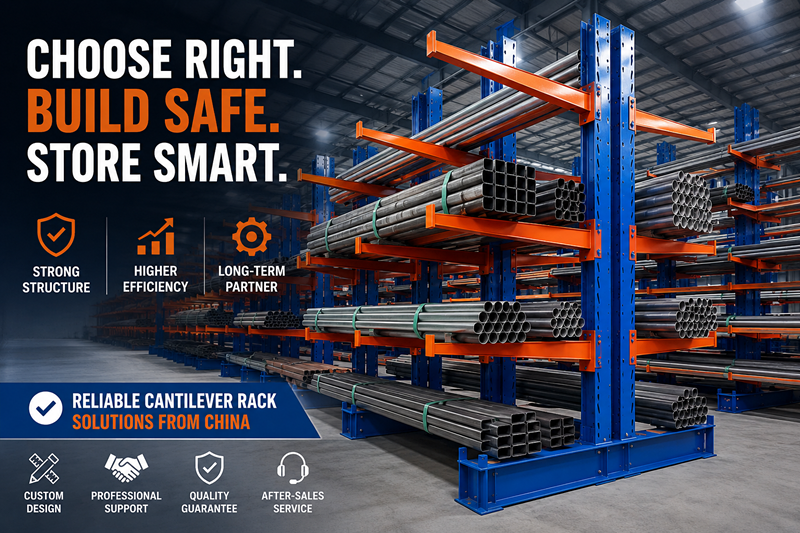
How to Choose a Reliable Cantilever Rack Manufacturer in China? Choosing a cantilever rack supplier is risky. A bad choice can lead to structural failures and costly downtime1. I will show you how to identify a truly reliable partner.
A reliable cantilever rack manufacturer in China must demonstrate technical strength, offer comprehensive services, and have proven industry experience. You should look for suppliers who provide material certifications, detailed engineering drawings2, and complete support from design and installation to after-sales maintenance.
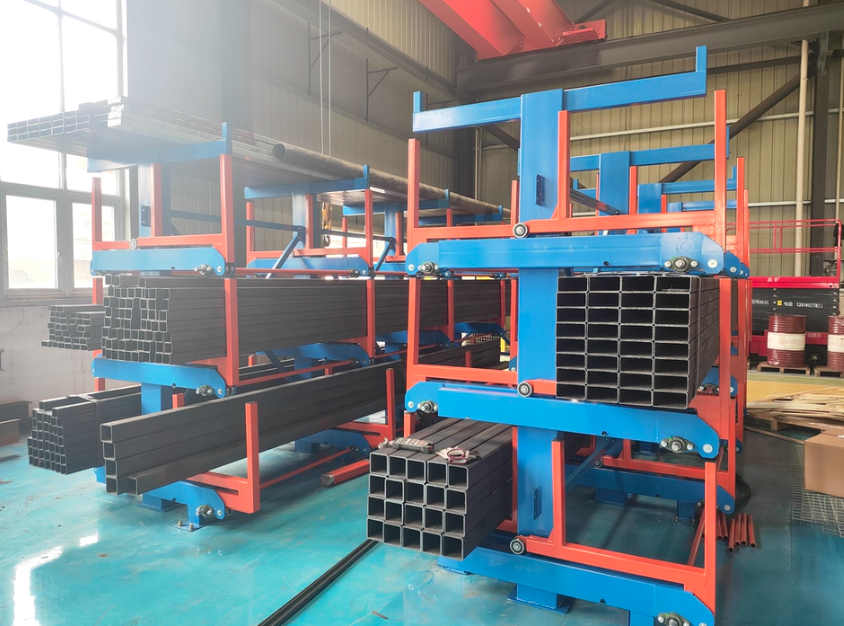
Choosing the right supplier for cantilever racks is about more than just finding the lowest price. It is about investing in a long-term partnership that guarantees the safety and efficiency of your warehouse. A poor decision can lead to constant problems, but a great one can transform your operations for years to come. In this article, I will walk you through the exact steps to find a manufacturer you can trust.
What Should You Check Before Choosing a Cantilever Rack Manufacturer in China?
It can be difficult to tell a quality supplier from a cheap one from just a quote. Making a mistake here can be expensive and dangerous. Let's look at the checklist.
You must check their technical strength, service capability, and real-world industry experience3. Ask for material specifications, load calculation reports4, 3D layouts, and customer references. A professional supplier will gladly provide this information to prove their value.
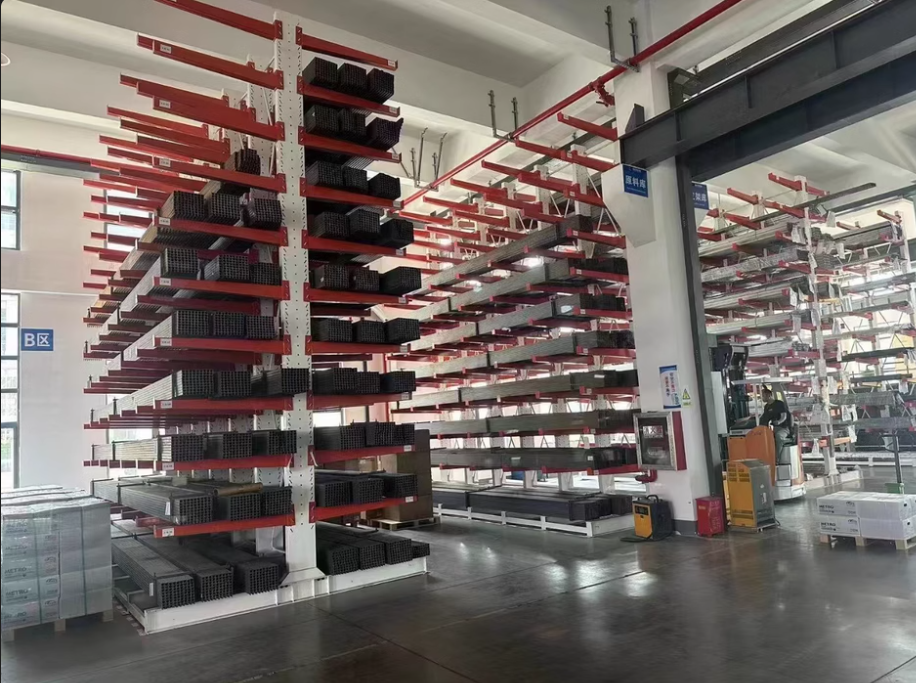
When I evaluate a potential manufacturing partner, I go much deeper than the price on a quotation sheet. The real value is in the details that ensure safety and longevity. You need to look for a partner who is transparent and proud of their engineering and service quality. Here is what we look for when we build our systems.
Technical and Service Checklist
The difference between a professional and a low-cost supplier is clear when you know what to ask for. A reliable manufacturer will not just sell you a product; they will provide a complete, engineered solution. They should provide detailed drawings and stand by their load calculations. In our experience, a supplier who hides these details is often hiding poor quality. Here’s a simple comparison of what you should expect.
| Feature | Professional Manufacturer | Low-Cost Supplier |
|---|---|---|
| Material Certificates | Provides Q235B steel certs5 | Vague or no info |
| Load Calculations | Included with design | "Standard capacity" |
| 3D Warehouse Layout | Yes, for optimization | No, just sells racks |
| Welding & Coating | Certified and tested | Unverified quality |
| After-Sales Support | Clear plan and parts | Limited or no support |
Why Do Cheap Cantilever Racks Cause Safety Risks and Higher Long-Term Costs?
A low price for cantilever racks is always tempting. But these "savings" often hide poor quality that leads to bending, rust, and serious safety hazards down the line.
Cheap cantilever racks often use thinner steel, poor-quality welding6, and inadequate surface coatings7. This leads to structural weakness, bending under load8, and rapid corrosion. The long-term costs from repairs, product damage, and potential accidents always outweigh the initial savings.
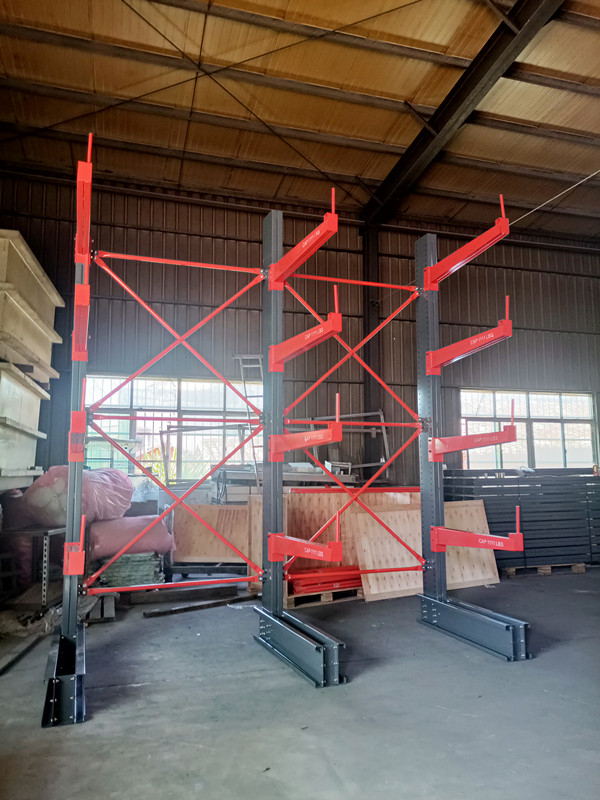
I have seen it happen too many times. A company tries to save a few thousand dollars on their initial purchase, only to spend ten times that amount over the next few years. They face constant downtime for repairs, lose valuable inventory to damage when a rack fails, and worst of all, put their employees at risk. The true cost of a rack system is not its purchase price, but its total cost of ownership over its lifetime9.
The Hidden Costs of Low Quality
A cheap rack is not a bargain; it is a liability. For example, a manufacturer might use a slightly thinner grade of steel to cut costs. To the naked eye, it looks the same, but under a heavy load, it will start to bend and fail. Poor welding is another major issue. It creates weak points that can snap without warning. Over time, these small compromises add up to big problems.
| Cost Factor | Cheap Rack Supplier | Professional Rack Supplier |
|---|---|---|
| Initial Purchase Cost | $20,000 | $28,000 |
| Repair & Replacement (5 Yrs) | $8,000+ | $0 |
| Downtime & Damage Cost (5 Yrs) | $15,000+ | $0 |
| Total Cost Over 5 Years | $43,000+ | $28,000 |
As you can see, the "cheaper" option ends up being far more expensive. Investing in quality from the start protects your people, your products, and your bottom line.
How Can a Professional Cantilever Rack Supplier Improve Warehouse Efficiency and Storage Capacity?
Your warehouse feels cramped and your operations are slow. Wasted vertical space and inefficient workflows are costing you money every single day. A professional supplier can fix this.
A professional supplier acts as a storage partner. They analyze your workflow, product dimensions, and forklift access10 to design a custom layout. This optimization can increase storage capacity by over 40%11 and improve operational speed.
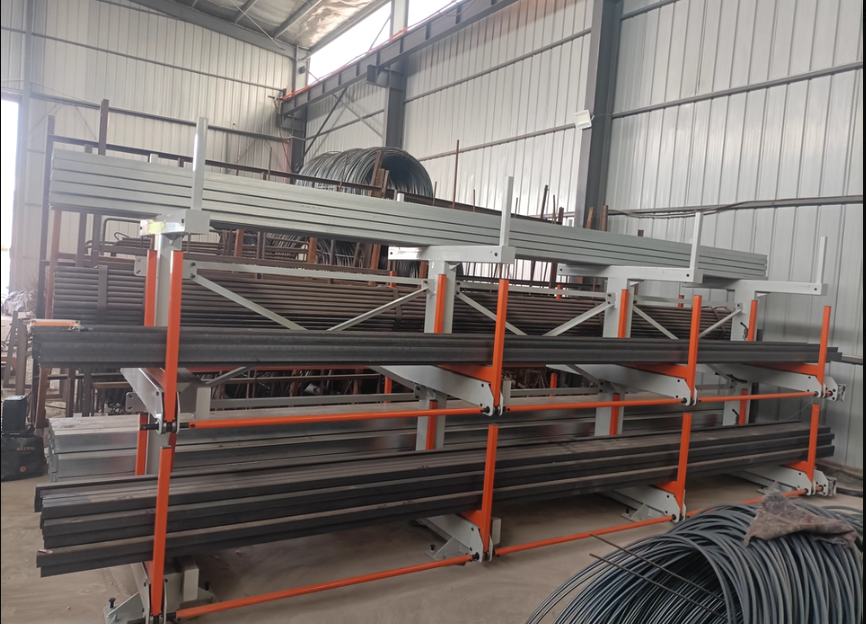
A great supplier doesn't just sell you steel; they sell you a better warehouse. I remember working with an automotive parts company that was struggling with space. We didn't just deliver racks. We went to their site, measured everything, and analyzed how their team picked and stored long components. We then designed a complete system with custom arm lengths and optimized aisle widths for their forklifts. The result was a total transformation of their space.
Beyond Racks: A Full Warehouse Solution
The goal is to make your entire operation run smoother. A professional supplier achieves this by looking at the big picture. We consider how your forklifts move, how high they can reach, and the specific size and weight of your longest or bulkiest products. This allows us to design a system that maximizes every square meter of your facility, both on the floor and vertically. For the automotive client, this detailed planning was the key.
Here’s a look at the real-world impact of a professionally designed system:
| Metric | Before Professional Design | After Professional Design |
|---|---|---|
| Storage Utilization | 60% (Wasted Space) | >95% (Fully Optimized) |
| Picking Speed | Slow & Difficult | Fast & Easy |
| Product Damage Rate12 | 3-5% | <0.3% |
| Warehouse Capacity | Felt too small | Increased by 40% |
This is what we mean by a one-stop solution. It's not just about the product, but about the result. By partnering with an expert, you get a safer, more efficient, and more productive warehouse.
Conclusion
Choosing a cantilever rack supplier is a decision about long-term safety and efficiency, not just price. A reliable partner delivers a quality system that creates lasting value for your warehouse.
"1926.250 - General requirements for storage. - OSHA", http://www.osha.gov/laws-regs/regulations/standardnumber/1926/1926.250. Industrial racking safety guidance identifies collapse or instability of storage racks as a workplace hazard that can damage goods, interrupt operations, and endanger workers. Evidence role: general_support; source type: government. Supports: A bad choice can lead to structural failures and costly downtime.. Scope note: The source would support the general risk relationship, not the article’s specific supplier-selection scenario. ↩
"[PDF] Specification for the Design, Testing, and Utilization of Industrial ...", https://scholarsmine.mst.edu/cgi/viewcontent.cgi?referer=&httpsredir=1&article=1000&context=ccfss-rmi. Rack design standards and warehouse safety guidance commonly require that storage systems be designed, documented, and matched to rated loads, supporting the relevance of material documentation and engineering drawings in supplier evaluation. Evidence role: expert_consensus; source type: institution. Supports: Reliable cantilever rack suppliers should provide material certifications and detailed engineering drawings.. Scope note: The evidence would establish accepted documentation practices, not prove that every reliable Chinese manufacturer provides these documents. ↩
"Evaluation of supplier capability and performance: A method for ...", https://www.sciencedirect.com/science/article/abs/pii/S1478409206000665. Procurement and quality-management literature treats supplier technical capability, service capacity, and prior performance as core dimensions of supplier evaluation. Evidence role: expert_consensus; source type: paper. Supports: Buyers should check technical strength, service capability, and real-world industry experience before choosing a cantilever rack manufacturer.. Scope note: This supports the general evaluation framework rather than a cantilever-rack-specific checklist. ↩
"1926.250 - General requirements for storage. - OSHA", http://www.osha.gov/laws-regs/regulations/standardnumber/1926/1926.250. Industrial storage rack standards emphasize that rack systems should be engineered for specified loads and that load ratings should be available for safe use. Evidence role: mechanism; source type: institution. Supports: A professional cantilever rack supplier should provide load calculation reports.. Scope note: The source would support the need for engineered load ratings, not a particular report format used by any manufacturer. ↩
"Q235B steel丨Equivalent materials & Mechanical Properties - LinkedIn", https://www.linkedin.com/pulse/q235b-steel%E4%B8%A8equivalent-materials-mechanical-properties-phoebe-bbn. Chinese structural-steel specifications identify Q235B as a common carbon structural steel grade with defined mechanical and chemical requirements, which explains why certificates for this material grade can be relevant to rack procurement. Evidence role: definition; source type: institution. Supports: Professional manufacturers can provide Q235B steel certificates as material documentation.. Scope note: This supports what Q235B certification refers to; it does not establish that Q235B is suitable for every cantilever rack design. ↩
"[PDF] FRACTURE AND LOSS IN DUCTILITY DUE TO PRESENCE OF ...", https://hammer.purdue.edu/articles/thesis/FRACTURE_AND_LOSS_IN_DUCTILITY_DUE_TO_PRESENCE_OF_DEFECTS_IN_CJP_WELDS/23917815/1/files/41962368.pdf. Welding engineering references describe weld discontinuities and inadequate weld quality as potential causes of reduced joint strength and structural failure. Evidence role: mechanism; source type: education. Supports: Poor-quality welding can create weak points in cantilever racks.. Scope note: The source would explain the engineering mechanism; it would not verify the welding quality of any rack supplier discussed in the article. ↩
"Insights into the Development of Corrosion Protection Coatings - PMC", https://pmc.ncbi.nlm.nih.gov/articles/PMC12158252/. Corrosion-control literature explains that protective coatings reduce steel corrosion by limiting exposure to moisture, oxygen, and corrosive agents. Evidence role: mechanism; source type: research. Supports: Inadequate surface coatings can contribute to rapid corrosion of steel cantilever racks.. Scope note: This supports the protective role of coatings generally, not the performance of any specific rack coating process. ↩
"BEAM DEFLECTION FORMULAS", https://home.engineering.iastate.edu/~shermanp/STAT447/STAT%20Articles/Beam_Deflection_Formulae.pdf. Structural mechanics sources explain that beams and cantilever members deflect under load, with deflection depending on load, span, geometry, and material stiffness. Evidence role: mechanism; source type: education. Supports: Thinner or under-designed cantilever rack components are more likely to bend under load.. Scope note: This supports the physical mechanism of bending; rack-specific allowable deflection limits would require a relevant rack-design standard. ↩
"Total cost of ownership factors in procurement and ... - NASA ADS", https://ui.adsabs.harvard.edu/abs/2024E3SWC.48401022P/abstract. Operations and asset-management literature defines total cost of ownership as including acquisition, operation, maintenance, downtime, and end-of-life costs across an asset’s life cycle. Evidence role: definition; source type: paper. Supports: The true cost of a rack system should be evaluated by total cost of ownership over its lifetime, not only purchase price.. Scope note: This supports the cost-accounting framework; it does not validate the article’s example dollar amounts. ↩
"Warehouse and Forklift Aisle Width Guide | FLC", https://www.forkliftcertification.com/determining-warehouse-aisle-width/?srsltid=AfmBOop_4bqQog590UrliogRHKoUqVYTEReE__drOgJPAvL6yfVC7u8a. Warehouse design guidance states that aisle widths and rack layouts must account for material-handling equipment dimensions, turning radius, and operating clearances. Evidence role: expert_consensus; source type: education. Supports: A professional supplier should consider forklift access when designing a cantilever rack layout.. Scope note: This supports the need to consider forklift access in layout design, not the performance of any specific supplier’s design service. ↩
"Optimization of Warehouse Layout for the Minimization of Operation ...", https://www.academia.edu/88702925/Optimization_of_Warehouse_Layout_for_the_Minimization_of_Operation_Times. Warehouse layout and storage-system studies show that redesigned layouts and appropriate storage equipment can materially increase space utilization, providing contextual support for capacity gains from professional design. Evidence role: general_support; source type: paper. Supports: Professional layout optimization can increase warehouse storage capacity by over 40%.. Scope note: A neutral source may support substantial utilization improvements, but the specific “over 40%” figure would need a directly comparable case study or documented project data. ↩
"Breakage and damage in grocery warehouses and retail ...", https://ageconsearch.umn.edu/record/313396/files/mrr652.pdf. Warehousing and logistics research recognizes that storage design, handling methods, and picking processes influence product damage and handling errors. Evidence role: general_support; source type: paper. Supports: Professional warehouse design can reduce product damage rates.. Scope note: This would support the direction of the relationship only; the table’s exact 3–5% and <0.3% rates require project-specific data. ↩