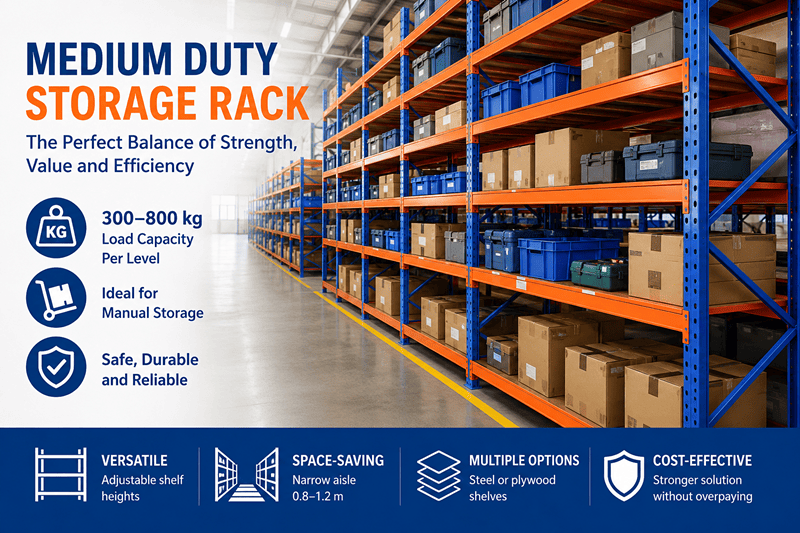
What Is a Medium Duty Storage Rack and How Much Weight Can It Hold? Are your warehouse shelves sagging under the weight of heavy boxes? You need a stronger solution, but heavy-duty pallet racking seems like overkill and is too expensive.
A medium duty storage rack is designed to hold between 300 kg and 800 kg of weight per level1. It's the perfect middle ground between light-duty shelving and heavy-duty pallet racking2, making it ideal for storing heavy cartons, parts, and tools that are loaded by hand.
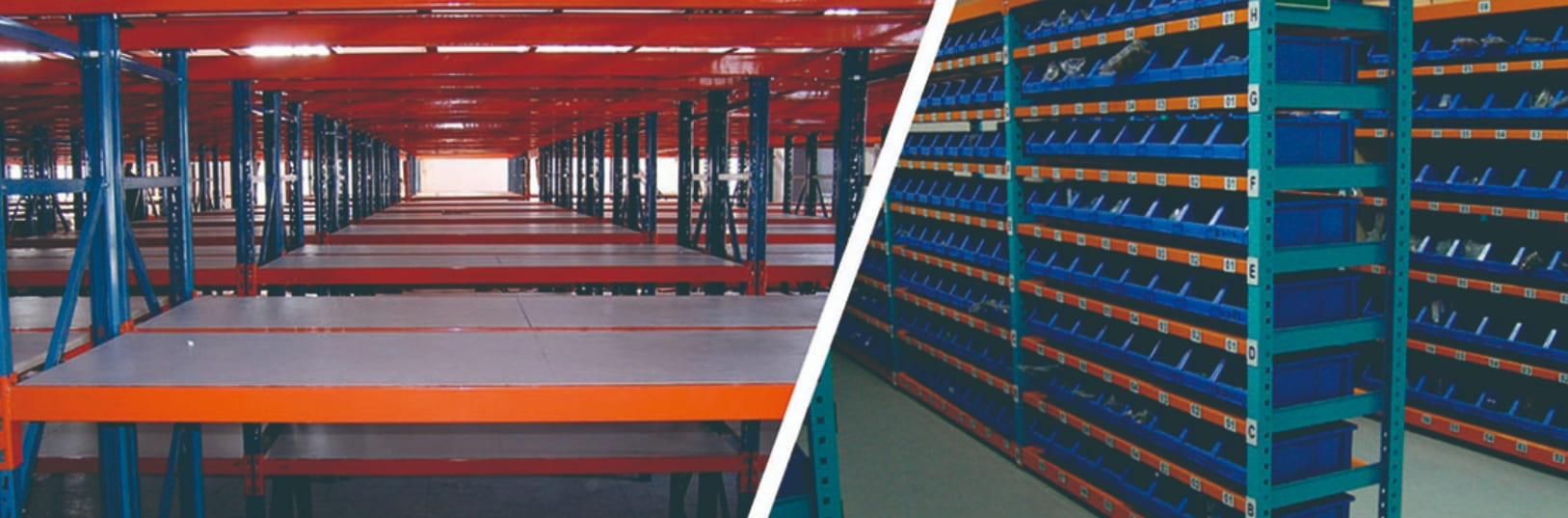
This simple definition is just the beginning. The real benefit comes from understanding how this specific type of racking can transform your storage space, making it safer and more efficient. Many businesses I work with are surprised to learn how much they can improve their operations just by choosing the right shelf. Let's dig into the details so you can see if it’s the right fit for you.
How Much Weight Can a Medium Duty Storage Rack Hold Safely in Warehouse Use?
Are you constantly worried that your shelves might buckle or even collapse? This uncertainty puts your products and, more importantly, your team at risk every single day.
A medium duty rack can safely hold its rated capacity of 300–800 kg per level, but only if the load is distributed evenly3. Safety is guaranteed by using all components correctly, especially the support bars under the shelf panels, which prevent sagging and maintain structural integrity4.
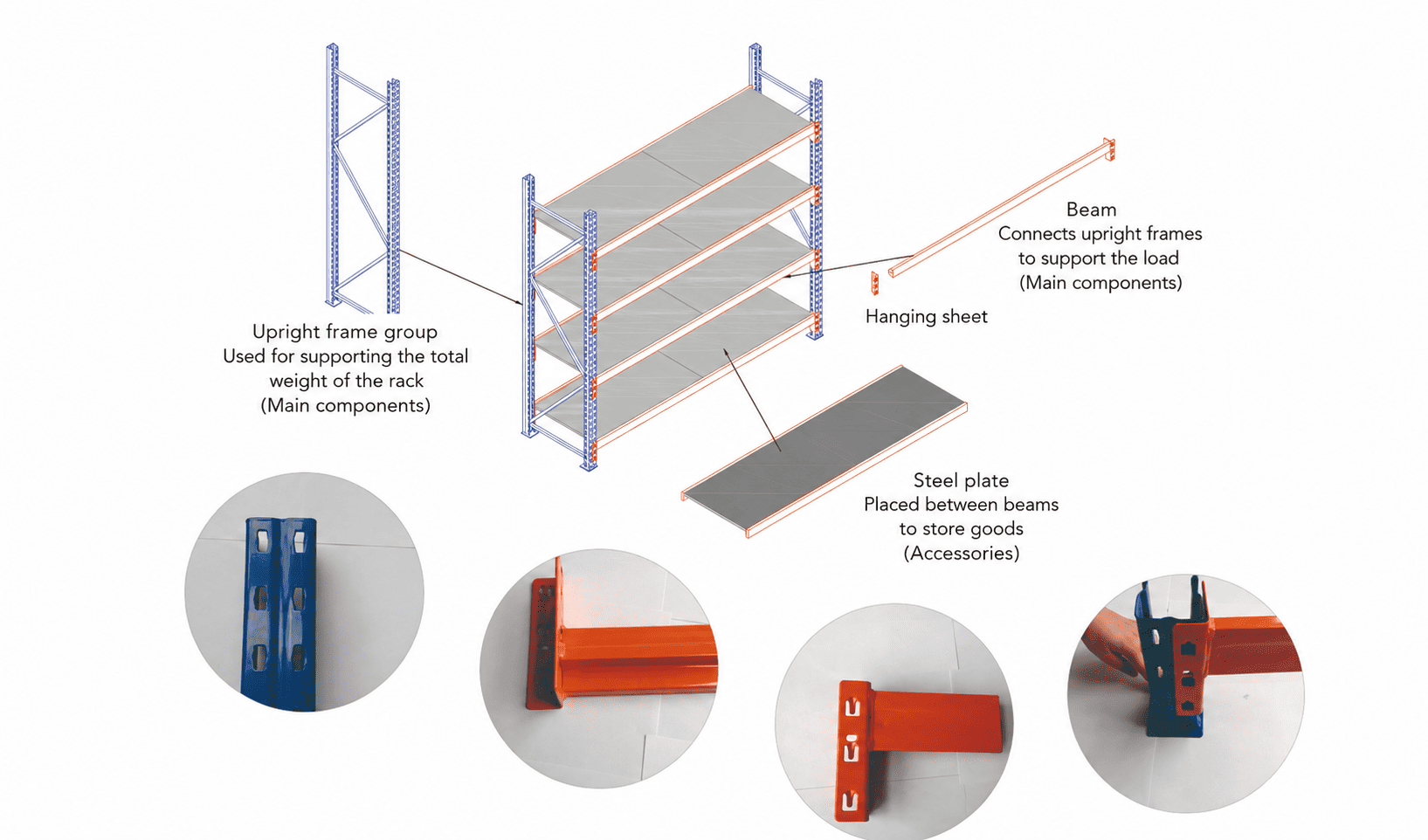
When we talk about safety, it's not just about a single number. It's about how the entire system is engineered to handle stress. The load capacity is a promise, but that promise is kept by the quality of the components and how they work together. For example, our upright frames use a robust diamond-hole pattern with 50 mm or 75 mm spacing, allowing for secure connections. The beams lock tightly into these uprights. But the unsung hero of safety is the support bar. These are square tubes we place under the shelf panels. They stop the shelf from bending in the middle, which is the most common point of failure I see in poorly designed systems. Overloading is strictly forbidden, as it compromises this entire engineered system5.
Here’s a quick breakdown of how each part contributes to safety:
| Component | Role in Safety |
|---|---|
| Upright Frames | Provide the vertical structure and foundation for the entire bay. |
| Beams | Carry the horizontal load and transfer the weight to the uprights. |
| Support Bars | Prevent shelf panels from sagging and distribute weight to the beams. |
| Shelf Panels | Provide the flat surface for goods but rely on support bars for strength. |
Proper maintenance is also key. Keeping the racks clean and dry prevents corrosion that can weaken the steel over time6. A simple wipe-down with a dry cloth is all it takes to protect your investment and ensure long-term safety.
Why Are More Warehouses Choosing Medium Duty Storage Rack Instead of Heavy-Duty Pallet Racking?
Are you spending a fortune on massive pallet racks for items that your team just loads by hand? That's a common mistake that wastes a lot of money and space.
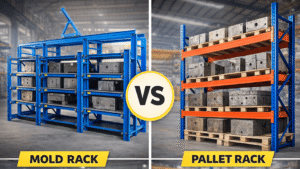
Warehouses are choosing medium duty racks because they are a much more cost-effective solution for manual storage. They offer serious strength without the high price and large footprint of pallet racking, which is designed for forklifts7 and requires much wider aisles8, saving both money and space.
I've visited hundreds of facilities, and a frequent issue I see is a mismatch between storage equipment and actual use. Many companies buy heavy-duty pallet racking thinking "stronger is better," but they don't need it. Their inventory consists of heavy boxes, spare parts, or tools—items that are picked by hand, not by a forklift. This is where medium duty racking shines. It’s built specifically for this purpose. Because you don't need a forklift, you can design your layout with much narrower aisles, typically between 0.8 and 1.2 meters9. This simple change can dramatically increase your storage capacity within the same floor space10. You can fit more rows of shelving and better organize your inventory. It’s about working smarter, not just buying bigger.
Let’s compare them directly:
| Feature | Medium Duty Storage Rack | Heavy-Duty Pallet Racking |
|---|---|---|
| Handling Method | Manual (by hand) | Mechanical (Forklift, Pallet Jack) |
| Typical Load | Individual cartons, tools, parts | Full pallets of goods |
| Aisle Width | 0.8–1.2 meters | 3–4 meters or more |
| Cost | Lower | Higher |
| Best For | E-commerce, workshops, parts storage | Distribution centers, bulk storage |
By choosing medium duty racking, you are investing in a system that is perfectly tailored to your operational needs. You get the strength required for heavy items without paying for a forklift-rated capacity you'll never use.
How Do You Choose the Right Medium Duty Storage Rack for Different Storage Needs?
Is your storeroom a chaotic mix of different-sized boxes, tools, and spare parts? Using the wrong type of rack makes your space messy and slows down daily operations.
To choose the right rack, first assess your inventory's weight and size11. For items up to 800 kg per shelf, medium duty is perfect. Then, select shelf panels—steel for durability or plywood for economy—and configure the dimensions to fit your space and allow for easy manual access.
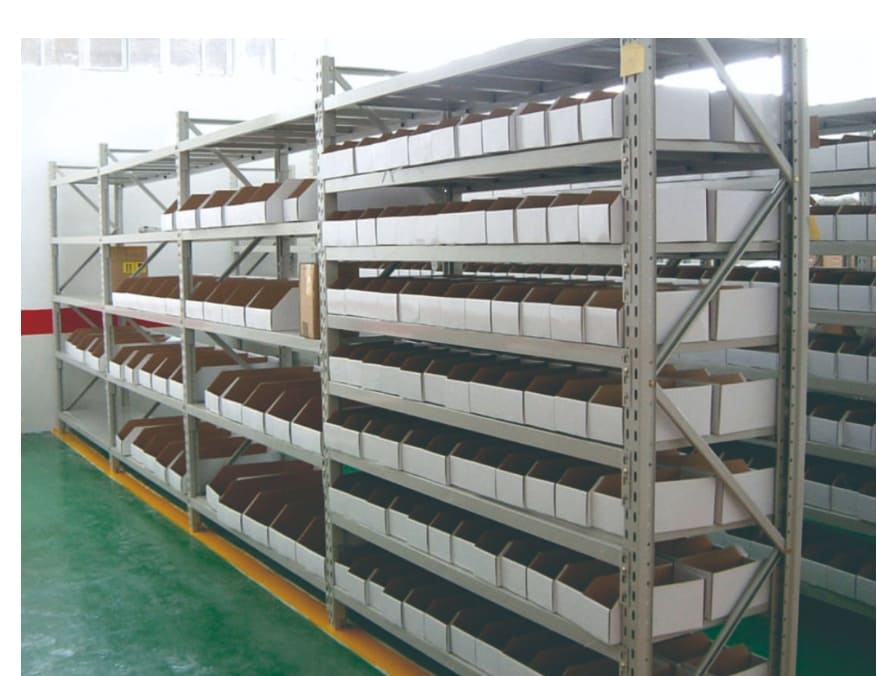
Choosing the right rack is a straightforward process when you break it down. I always guide my clients through a few key steps to ensure they get a system that works for them now and in the future. First, identify the heaviest items you plan to store on a single shelf. This determines your required load capacity. Next, measure your products to decide on the shelf depth and length. Our racks are typically under 2.5 meters long and between 0.5 to 0.8 meters deep, which is ideal for manual access. If you need a wider shelf, we recommend a three-upright frame for added stability. Then, you need to choose your shelf material.
Here's a guide to help you select the right components:
| Storage Need | Recommended Shelf Panel | Recommended Beam Type |
|---|---|---|
| Heavy tools, metal parts | Steel Shelf Panel | Step Beam or Square Tube Beam |
| Boxed inventory, supplies | Plywood Shelf | Step Beam |
| General purpose storage | Either Steel or Plywood | Step Beam |
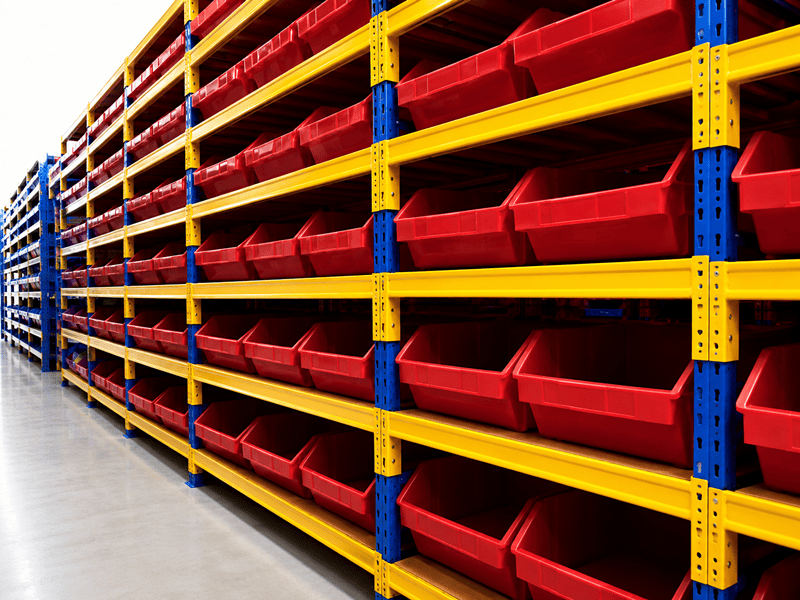
Finally, plan your layout. Racks placed against a wall should be in a single row. If you have a larger space, arranging racks back-to-back doubles your storage density12. We can even customize the colors—our standard is blue uprights and orange-red beams, but we can match your company's branding. By thinking through these details, you create a storage system that is not just strong, but also organized, efficient, and tailored to your exact needs.
Conclusion
Medium duty storage racks provide a safe, versatile, and budget-friendly solution for many warehouses. Choosing the right system helps you boost efficiency and safety without overspending on unnecessary equipment.
"1926.250 - General requirements for storage. - OSHA", http://www.osha.gov/laws-regs/regulations/standardnumber/1926/1926.250. A warehouse-racking design or safety standard can support that shelf systems are rated by maximum load per level and must be used within declared load limits; if used here, it would contextualize rather than independently verify the article’s specific 300–800 kg medium-duty range. Evidence role: general_support; source type: institution. Supports: A medium duty storage rack is designed to hold between 300 kg and 800 kg of weight per level.. Scope note: The exact 300–800 kg range may be an industry or manufacturer classification rather than a universally standardized definition. ↩
"Pallet racking", https://en.wikipedia.org/wiki/Pallet_racking. An institutional overview of industrial shelving and pallet-rack systems can support the distinction between manually accessed shelving and pallet racking used for heavier unit loads; it would provide classification context rather than prove a single universal category called medium duty. Evidence role: definition; source type: institution. Supports: Medium duty storage racks occupy a functional middle ground between light-duty shelving and heavy-duty pallet racking.. Scope note: Storage-equipment terminology varies by country, supplier, and standard-setting body. ↩
"Warehouse shelving and racking safety", https://www.tdi.texas.gov/tips/safety/warehouse.html. Rack-safety guidance commonly states that rated capacities assume proper loading conditions, including loads applied as specified by the rack design; this supports the need for even distribution but does not validate any specific rack model’s rating. Evidence role: mechanism; source type: institution. Supports: A medium duty rack can safely hold its rated capacity only if the load is distributed evenly.. Scope note: The source would support the general engineering principle, not the tested capacity of the particular rack described. ↩
"[PDF] BEAM DEFLECTION FORMULAS", https://home.engineering.iastate.edu/~shermanp/STAT447/STAT%20Articles/Beam_Deflection_Formulae.pdf. Engineering references on beams and shelf supports explain that intermediate supports reduce span deflection and transfer load to structural members; this supports the mechanism by which support bars reduce shelf sagging, although it is not direct evidence for every rack design. Evidence role: mechanism; source type: education. Supports: Support bars under shelf panels help prevent sagging and maintain structural integrity.. Scope note: The source would explain the structural principle rather than test the exact product configuration. ↩
"Citation 1529215.015/01001 | Occupational Safety and Health ...", https://www.osha.gov/ords/imis/generalsearch.citation_detail?id=1529215.015&cit_id=01001. Occupational safety guidance for storage racks states that racks should not be loaded beyond their rated capacity and that damaged or overloaded racks may present collapse hazards; this supports the safety rationale without assessing the article’s specific rack design. Evidence role: expert_consensus; source type: government. Supports: Overloading storage racks compromises the safety of the engineered rack system.. Scope note: The evidence would be general workplace-safety guidance, not a product-specific engineering report. ↩
"A Review of Trends in Corrosion-Resistant Structural Steels ... - PMC", https://pmc.ncbi.nlm.nih.gov/articles/PMC10179958/. Materials-science or occupational-safety sources describe corrosion as a process that degrades steel and can reduce the effective cross-section and strength of structural members; this supports the need to prevent corrosion in steel racks, though the rate of weakening depends on environment and coating. Evidence role: mechanism; source type: education. Supports: Corrosion can weaken steel storage-rack components over time.. Scope note: The degree of weakening depends on humidity, chemical exposure, coating condition, and maintenance practices. ↩
"Pallet racking", https://en.wikipedia.org/wiki/Pallet_racking. Warehouse and material-handling references define pallet racking as a storage system for palletized loads that are typically placed and retrieved by forklifts or other mechanical handling equipment; this supports the handling distinction but does not imply all pallet-rack use requires forklifts. Evidence role: definition; source type: institution. Supports: Heavy-duty pallet racking is designed for palletized loads handled by forklifts or similar mechanical equipment.. Scope note: Some pallet-rack applications may use pallet jacks, stackers, or other handling equipment rather than conventional forklifts. ↩
"eTool : Powered Industrial Trucks (Forklift) - Narrow Aisles - OSHA", http://www.osha.gov/etools/powered-industrial-trucks/workplace/narrow-aisles. Forklift and warehouse-design guidance provides minimum aisle-width requirements based on truck type, load size, and turning radius; this supports the claim that forklift-served pallet racking generally requires wider aisles than hand-access shelving. Evidence role: general_support; source type: government. Supports: Forklift-served pallet racking generally requires wider aisles than manual storage racks.. Scope note: Actual aisle width varies by lift-truck model, pallet dimensions, rack layout, and local safety rules. ↩
"[PDF] Ergonomic Guidelines for Manual Material Handling", https://www.dir.ca.gov/dosh/dosh_publications/mmh.pdf. Ergonomic and workplace-access guidance on pedestrian aisles can support that hand-picking aisles may be substantially narrower than forklift aisles; it would contextualize the 0.8–1.2 m range rather than establish it as a universal standard. Evidence role: general_support; source type: government. Supports: Manual picking layouts can use narrower aisles, typically around 0.8–1.2 meters in the article’s example.. Scope note: Minimum aisle width depends on local regulation, traffic direction, emergency egress, and the size of items being carried. ↩
"Complete Guide to Warehouse Aisles: How to Calculate Width", https://www.shipbob.com/blog/warehouse-aisle/. Warehouse-layout research shows that aisle width and rack arrangement affect storage density and space utilization; this supports the general relationship between narrower aisles and increased storage capacity, though the magnitude depends on the facility layout. Evidence role: mechanism; source type: paper. Supports: Reducing aisle width can increase storage capacity within the same warehouse floor area.. Scope note: The word “dramatically” is layout-dependent and would require a facility-specific calculation to quantify. ↩
"Complete Guide to Warehouse Pallet Rack Layout Planning", https://conesco.com/warehouse-pallet-rack-layout-planning-guide/. Warehouse safety and storage-planning guidance identifies load weight, dimensions, and handling method as basic inputs for selecting storage equipment; this supports the article’s selection process as general best practice. Evidence role: expert_consensus; source type: government. Supports: Selecting the right rack should begin by assessing inventory weight and size.. Scope note: The guidance would support the planning principle, not any single supplier’s rack specifications. ↩
"Push-Back Racking | High-Density LIFO Storage | Apex", https://www.apexwarehousesystems.com/push-back-racking/. Warehouse-layout references describe double-row or back-to-back rack arrangements as a way to reduce aisle frontage per rack row and increase storage density; this supports the general density benefit, though exact doubling depends on aisle widths and rack dimensions. Evidence role: mechanism; source type: research. Supports: Arranging racks back-to-back can increase storage density compared with single rows.. Scope note: Back-to-back placement does not always literally double usable capacity because aisles, clearance, access rules, and column spacing affect the final layout. ↩