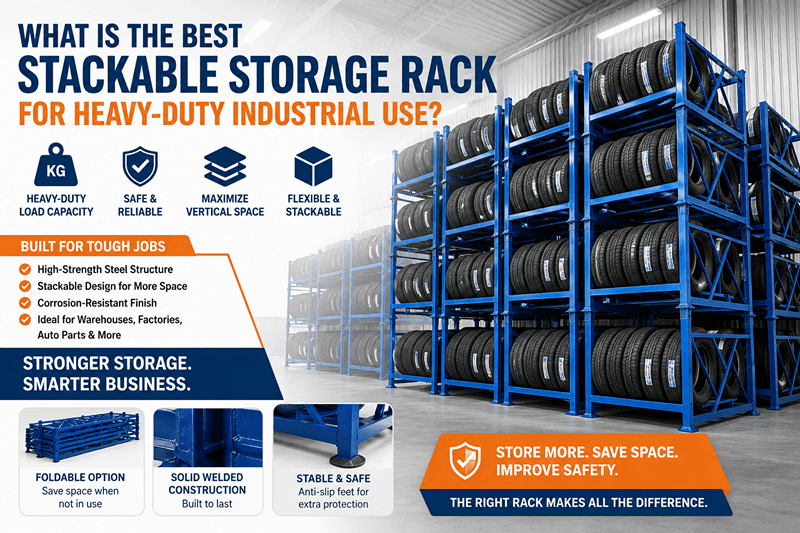
How to Choose a Tire Storage Rack?Struggling with messy, unsafe tire piles1? They waste valuable space and can damage your tires. A proper storage rack brings order and safety back to your workspace.
To choose a tire rack, first determine your load needs—passenger car tires need about 200 kg capacity per level2, while truck tires need 300 kg or more3. Then, match the rack's material and number of levels to your environment, like a garage or warehouse, for optimal durability.
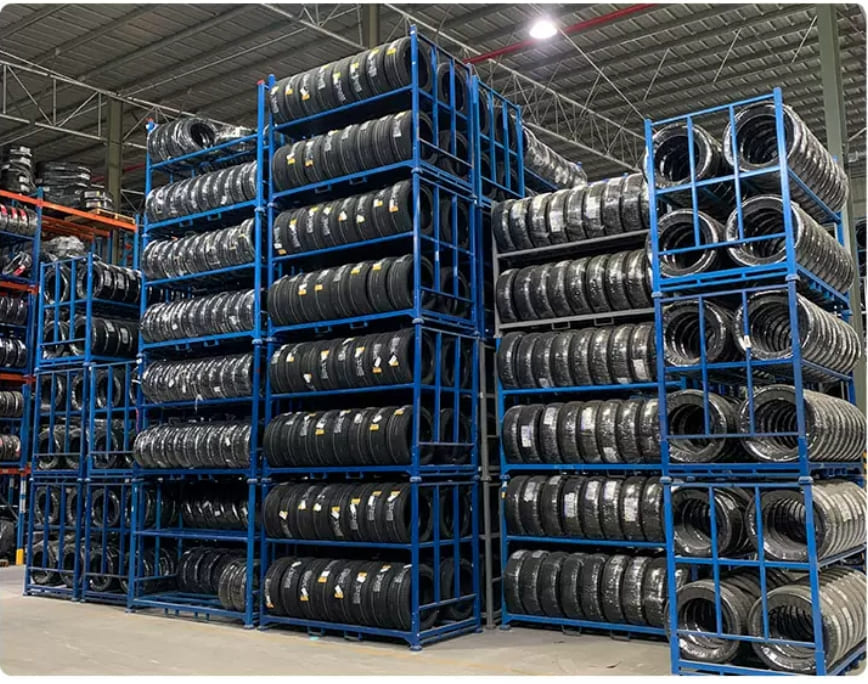
Choosing the right rack seems simple, but the details really matter. I've seen many people get it wrong, which leads to wasted money and continued clutter. Over my years in this business, I've learned what works. Let's break down exactly what you need to look for, step by step, so you can make the perfect choice for your needs.
How to Choose the Right Tire Storage Rack Based on Load Capacity and Tire Size?
Worried your rack will buckle under the weight? Choosing the wrong load capacity is a dangerous and costly mistake. I'll help you match the rack to your tires perfectly.
For standard passenger car tires, a rack with at least 200 kg capacity per level is a safe bet. For heavier truck or off-road tires, you need a minimum of 300 kg per level. Also, ensure the shelf spacing is at least 25-30 cm to prevent tire friction4.
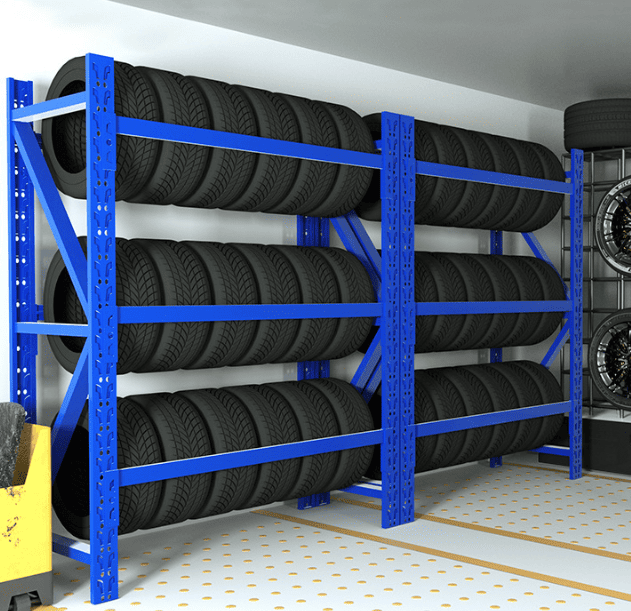
When I help clients select a rack, the first two questions are always about load and size. These parameters determine safety and usability. If the load capacity is too low, the frame can deform over time, creating a serious risk of tires falling. You must check if the manufacturer provides test reports for their load ratings5. Be wary of exaggerated claims.
Beyond weight, physical dimensions are critical for a good fit.
Key Dimensions to Check
- Width: Standard racks are often 50-60 cm wide. If you store wider tires, like off-road tires over 275 mm, you will need to request a custom, wider rack.
- Layer Height: The height between levels must be greater than the tire's diameter. For a common 17-inch tire with a diameter around 40-45 cm, you should have at least 5 cm of extra clearance. This prevents the tire from getting jammed.
- Spacing: The space between levels should be at least 25 cm. For thicker tires, like winter tires, I recommend increasing this to over 30 cm to avoid any rubbing against the upper frame.
Here is a simple table I use to guide my customers:
| Tire Type | Recommended Load Capacity (per level) | Recommended Spacing |
|---|---|---|
| Passenger Car | 200 kg | 25 cm |
| SUV / Light Truck | 300 kg | 30 cm |
| Heavy Truck / Off-Road | 300 kg+ | 30 cm+ |
What Is the Best Tire Storage Rack for Garages, Auto Repair Shops, and Warehouses?
Is a garage rack different from a warehouse one? Yes. Using the wrong type causes inefficiency and frustration. Let's find the best fit for your specific space.
For home garages, a 2-3 level powder-coated rack works well. Auto repair shops need durable, 4-level hot-dip galvanized steel racks. For large warehouses, modular and adjustable racks are best for maximizing space and adapting to different tire batches. Mobile racks with wheels6 are great for high-frequency use.
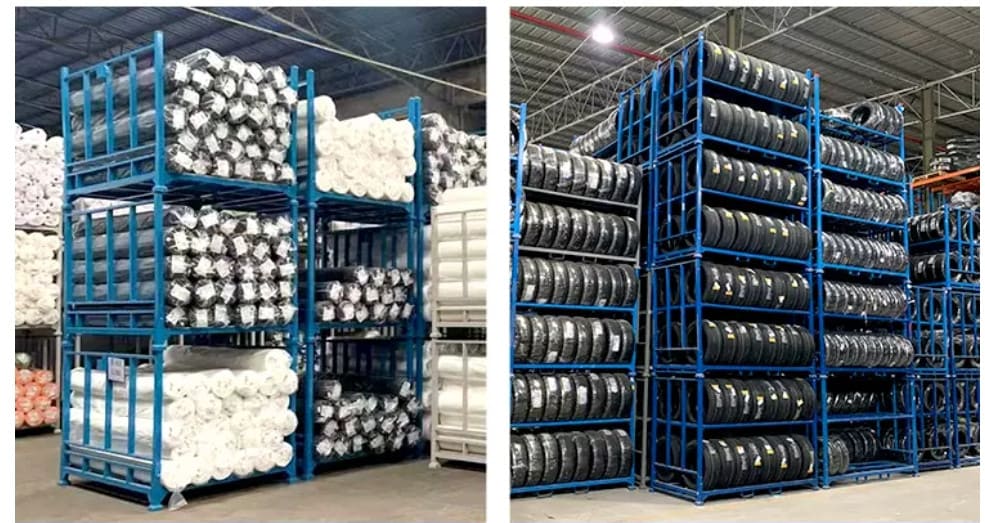
The ideal rack depends entirely on where and how you'll use it. A solution for a home garage is very different from what a busy logistics center needs. Over the years, I've equipped every type of facility, and I can tell you that matching the rack to the environment is the key to satisfaction. Don't just buy the cheapest or biggest option. Think about your daily workflow.
Racks for Auto Repair Shops / 4S Dealerships
These are high-frequency environments, so durability is the top priority. I always recommend a 4-level rack made from hot-dip galvanized steel with a load capacity of at least 300 kg per level7. This setup is strong enough for both passenger car and truck tires and resists the wear and tear of daily use. Models with wheels and brakes are a huge plus here, as they allow you to move tires around the workshop easily.
Racks for Tire Wholesale Warehouses
In a large warehouse, space utilization is everything. Modular racks with adjustable levels8 are the best choice. This flexibility allows you to reconfigure the racks to store different sizes and batches of tires efficiently. A modular design also means you can expand your storage system as your business grows without replacing everything.
Racks for Home Garages
For a small home garage, you need something practical that also looks good. A 2 or 3-level powder-coated steel rack is usually perfect. The powder coating adds rust resistance and comes in colors like black or gray to match your space. Just make sure you measure your garage height first.
Which Tire Rack Material and Structure Offer the Best Durability and Space Efficiency?
Confused by steel types and rack designs? Choosing a weak material means rust and early replacement costs. I'll explain which options offer the best long-term value and strength.
Hot-dip galvanized steel offers the best durability and rust resistance9, making it ideal for professional use. For home garages, powder-coated steel is a cost-effective choice. Structurally, multi-layer vertical racks maximize space, while foldable or mobile types offer flexibility for different needs.
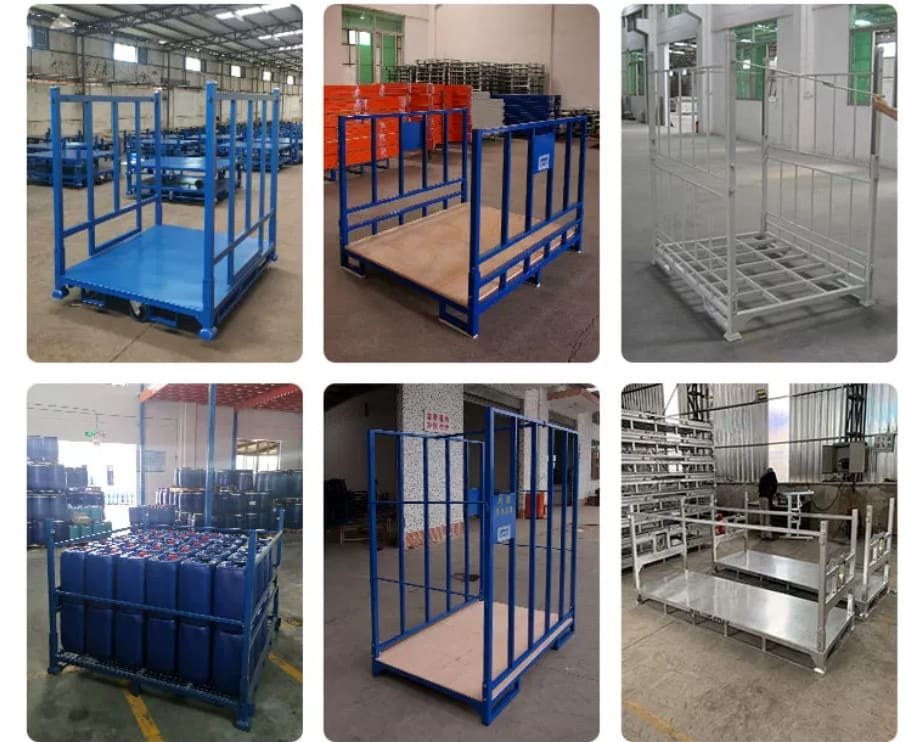
The material and structure of your tire rack directly impact its lifespan and how well it uses your space. I've seen cheap racks rust out in less than a year in a humid workshop. It's much better to invest in the right material from the start.
Choosing the Right Material
The environment is the biggest factor here. A dry indoor garage has different needs than a damp warehouse or an outdoor storage area.
| Material | Best For | Pros | Cons |
|---|---|---|---|
| Powder-Coated Steel | Dry, indoor environments (e.g., home garages) | Affordable, good appearance | Prone to rust if scratched10 |
| Hot-Dip Galvanized Steel | Humid workshops, warehouses, outdoor use | Excellent rust resistance, very durable | Higher initial cost |
| 304 Stainless Steel11 | Harsh chemical or coastal environments | Superior corrosion resistance, long lifespan | Most expensive option |
Choosing the Right Structure
The structure should match your workflow and space limitations.
- Multi-Layer Vertical Racks12: This is the most common type for workshops and warehouses. It makes the most of vertical space, allowing you to store many tires in a small footprint. Look for designs with 2 to 4 levels.
- Mobile Racks with Wheels: If you move tires frequently, a rack with casters is a game-changer. It improves efficiency and reduces physical strain. Just ensure the wheels have brakes for safety.
- Foldable Racks: These are great for situations where storage needs change. When the rack is empty, you can fold it up and store it away, freeing up valuable floor space.
Conclusion
Choosing the right tire rack is simple when you focus on load, application, and material. This ensures your space is safe, organized, and efficient for years to come.
"1926.250 - General requirements for storage. - OSHA", http://www.osha.gov/laws-regs/regulations/standardnumber/1926/1926.250. An occupational safety or tire-storage guidance source can substantiate that unsecured stacked tires present falling-object and handling hazards and that organized storage reduces these risks. Evidence role: general_support; source type: government. Supports: Unorganized tire piles can create unsafe conditions in a workspace.. Scope note: Such guidance would support the safety rationale generally, but may not quantify risk for every garage or warehouse layout. ↩
"1926.250 - General requirements for storage. - OSHA", http://www.osha.gov/laws-regs/regulations/standardnumber/1926/1926.250. A neutral source on typical passenger-vehicle tire weights, combined with industrial shelving load-safety guidance, can contextualize why a rack level should be rated well above the combined tire load. Evidence role: general_support; source type: institution. Supports: Passenger car tire racks should have about 200 kg capacity per level.. Scope note: This would support the calculation logic rather than prove that 200 kg is a universal requirement for all rack designs. ↩
"Truck Size and Weight Enforcement Data", https://data.transportation.gov/Roadways-and-Bridges/Truck-Size-and-Weight-Enforcement-Data/mt5m-skz3. A transportation or engineering reference on truck-tire weights and rack-load safety can support the need for higher rated capacity when storing heavier commercial tires. Evidence role: general_support; source type: government. Supports: Truck-tire storage racks should be rated at 300 kg or more per level.. Scope note: The source may justify higher capacity generally, but the exact 300 kg threshold depends on tire count, tire type, and rack geometry. ↩
"1926.250 - General requirements for storage.", http://www.osha.gov/laws-regs/regulations/standardnumber/1926/1926.250. A tire-storage guideline or engineering source discussing clearance, deformation, and handling access would support the need for adequate spacing between rack levels. Evidence role: general_support; source type: institution. Supports: Tire rack shelf spacing should be at least 25–30 cm to reduce friction and contact.. Scope note: It may support the principle of clearance and reduced contact, while not independently validating the exact 25–30 cm range. ↩
"1926.250 - General requirements for storage. - OSHA", http://www.osha.gov/laws-regs/regulations/standardnumber/1926/1926.250. Industrial storage-rack safety standards and occupational guidance commonly require racks to be designed, rated, and marked for allowable loads, supporting the need to verify manufacturer load claims. Evidence role: expert_consensus; source type: government. Supports: Buyers should verify manufacturer evidence for rack load ratings.. Scope note: Such standards may require load ratings and documentation but may not specifically use the phrase “test reports” for every consumer tire rack. ↩
"[PDF] Ergonomic Guidelines for Manual Material Handling - CDC", https://www.cdc.gov/niosh/media/pdfs/Ergonomic-Guidelines-for-Manual-Material-Handling_2007-131.pdf. Ergonomics guidance on material-handling carts and wheeled equipment supports that mobile storage can reduce manual carrying and improve movement of heavy items within a workplace. Evidence role: mechanism; source type: government. Supports: Mobile tire racks with wheels are useful in high-frequency handling environments.. Scope note: This supports the ergonomic rationale for wheeled racks but does not measure productivity gains for tire racks specifically. ↩
"Warehouse shelving and racking safety", https://www.tdi.texas.gov/tips/safety/warehouse.html. A corrosion-engineering source on hot-dip galvanized steel and rack-safety guidance on rated loads can support the use of corrosion-resistant, high-capacity racks in intensive workshop environments. Evidence role: general_support; source type: research. Supports: Auto repair shops should use durable hot-dip galvanized steel racks with substantial per-level load capacity.. Scope note: The evidence would support material durability and load-rating principles, not prove that every auto repair shop specifically requires four levels or 300 kg per level. ↩
"The Shift Toward Modular Warehousing: Flexibility for a Rapidly ...", https://www.tompkinsinc.com/post/the-shift-toward-modular-warehousing-flexibility-for-a-rapidly-changing-market. Warehouse-design literature on adjustable pallet-rack and modular storage systems can support that reconfigurable storage improves accommodation of varied inventory sizes. Evidence role: mechanism; source type: paper. Supports: Modular racks with adjustable levels are useful for warehouses handling changing tire sizes and batches.. Scope note: The source would support modular adjustability in warehousing generally, not necessarily tire inventories specifically unless the study addresses tires. ↩
"[PDF] How Zinc Metal Coatings, Including Hot-Dip Galvanizing Can ...", https://www.waru.edu/sites/default/files/Migrated/CopDocuments/How%20Zinc%20Metal%20Coatings%2C%20Including%20Hot-Dip%20Galvanizing%20Can%20Protect%20and%20Extend%20the%20Life%20and%20Durability%20of%20Steel.pdf. Corrosion references explain that hot-dip galvanizing protects steel through a zinc coating and sacrificial corrosion behavior, supporting its use where long-term rust resistance is needed. Evidence role: mechanism; source type: education. Supports: Hot-dip galvanized steel provides strong durability and corrosion resistance for tire racks.. Scope note: The word “best” is comparative and context-dependent; stainless steel or specialized coatings may outperform galvanizing in some chemical or marine exposures. ↩
"Improving the Corrosion Performance of Organically Coated Steel ...", https://pmc.ncbi.nlm.nih.gov/articles/PMC10934472/. A materials or corrosion source can show that organic coatings protect steel as a barrier and that scratches exposing the substrate can allow localized corrosion to begin. Evidence role: mechanism; source type: education. Supports: Powder-coated steel can rust if the protective coating is scratched.. Scope note: The severity of rust after scratching depends on coating thickness, pretreatment, humidity, and maintenance. ↩
"Corrosion Behavior of Sensitized AISI 304 Stainless Steel in Acid ...", https://pmc.ncbi.nlm.nih.gov/articles/PMC9740934/. Metallurgical references describe 304 stainless steel as an austenitic stainless steel with chromium-nickel composition that provides general corrosion resistance, supporting its use in more corrosive environments than plain carbon steel. Evidence role: definition; source type: research. Supports: 304 stainless steel offers higher corrosion resistance than ordinary steel for demanding environments.. Scope note: 304 stainless steel is not immune to chloride pitting, so the evidence may qualify its suitability in severe coastal or high-chloride settings. ↩
"Do More With Less: How High-Density Storage Is Reshaping ...", https://www.inboundlogistics.com/articles/do-more-with-less-how-high-density-storage-is-reshaping-warehouse-efficiency/. Warehousing and facility-layout sources explain that vertical storage systems increase storage density by using building height rather than additional floor area. Evidence role: mechanism; source type: paper. Supports: Multi-layer vertical racks make better use of limited floor space.. Scope note: This supports the space-efficiency principle generally; actual gains depend on ceiling height, aisle width, tire size, and handling equipment. ↩