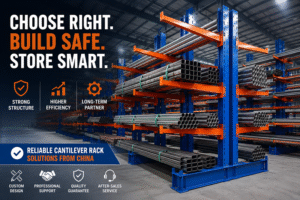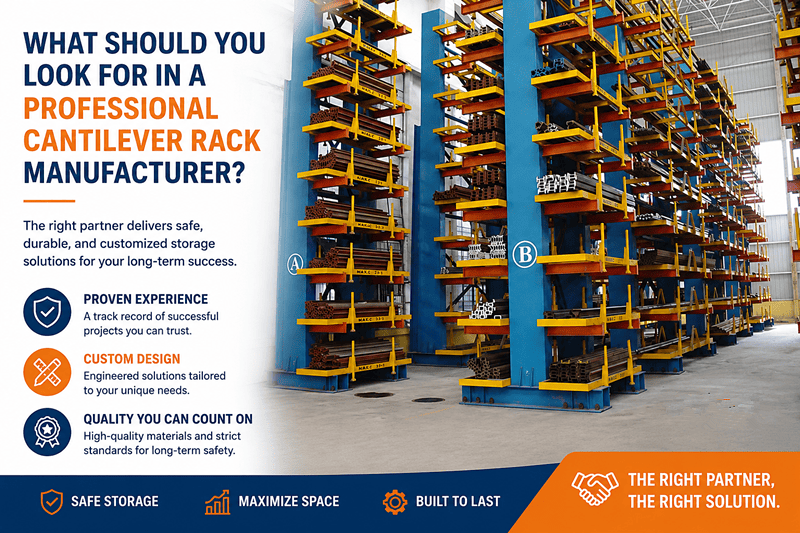
Struggling to store long, bulky items like lumber, pipe, or furniture1? Choosing the wrong manufacturer can lead to an unsafe warehouse2 and wasted money, a risk you can't afford.
Look for a manufacturer with proven experience, custom design capabilities, and high-quality materials. Verify their project history and ensure they can tailor a solution to your specific load and space requirements. The right partner delivers a safe, durable, and cost-effective storage solution.
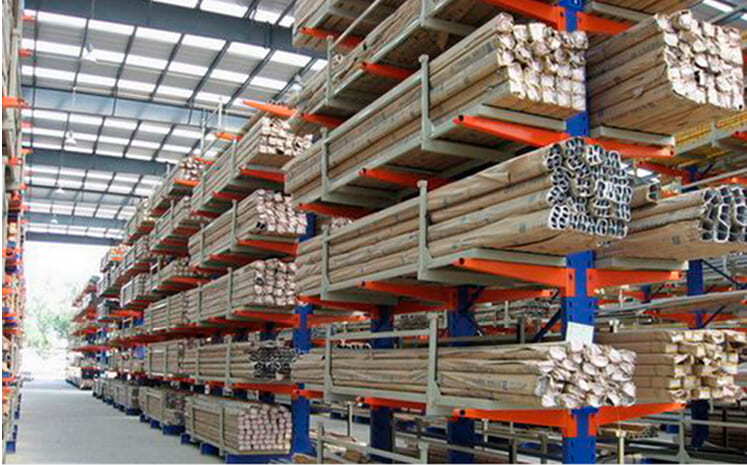
Choosing the right partner is one of the most important decisions you'll make for your warehouse. It's about much more than just buying a steel rack; it's about investing in a long-term storage solution that protects your products, your people, and your bottom line. Over my years in this industry, I've seen the dramatic difference between a supplier and a true partner. A partner asks the right questions and builds a solution, not just a product. Let's walk through what you should be looking for so you can find a partner you can trust for years to come.
How Can You Identify an Experienced Cantilever Rack Manufacturer?
Many suppliers claim to be experts, making it hard to know who to trust. Choosing a manufacturer without proven experience is a gamble that can lead to costly mistakes and unsafe storage.
Identify an experienced manufacturer by reviewing their project portfolio and asking for case studies or client references. Look for a long history, industry certifications like ISO 90013, and clear evidence of handling projects with storage challenges similar to yours.
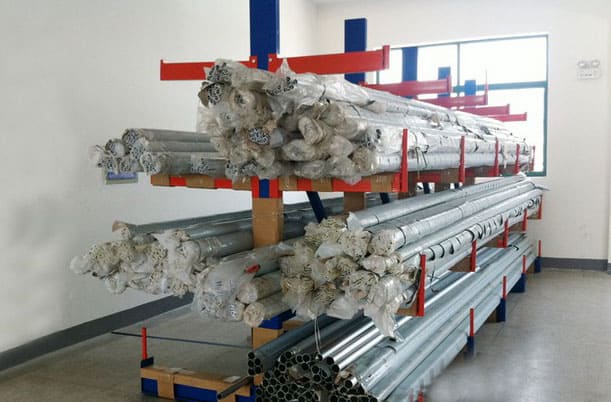
Experience isn't just about how many years a company has been in business, although that is a good sign of stability. True experience is shown in the quality and complexity of the work they've done. I remember a client who came to us after a nightmare situation. They had chosen a new, low-cost supplier for their cantilever racks to store heavy steel bars. Within a year, the arms on the racks were visibly sagging. The supplier had used inferior steel and had no real engineering experience. The client had to replace the entire system at a huge cost. This is why vetting a manufacturer's background is not a step you can skip. An experienced manufacturer will proudly showcase their past projects. They should be able to provide you with detailed case studies that show how they solved a problem for a customer in an industry like yours. Don't be afraid to ask for a list of past clients you can speak to. A confident, experienced manufacturer will have a long list of happy customers.
Here is a simple checklist to help you verify a manufacturer's experience:
| Verification Method | What You Should Look For |
|---|---|
| Project Portfolio | High-quality photos and detailed descriptions of projects similar to yours. |
| Client References | Willingness to connect you with past customers for honest feedback. |
| Industry Certifications | Proof of quality management, like an ISO 9001 certification. |
| In-House Engineering | A dedicated team of engineers who design the systems, not just a sales team. |
| Years in Operation | At least a decade of experience suggests stability and product reliability. |
Can the Manufacturer Design a Cantilever Rack That Meets Your Storage Needs?
Your storage needs are unique, whether it's oddly shaped materials or a tricky warehouse layout. A standard, off-the-shelf rack might not work, leading to wasted space and potential safety hazards.
A professional manufacturer must offer custom design services. They should perform a detailed analysis of your product dimensions, weight, warehouse layout, and material handling equipment. The final design should be a perfect, engineered fit for your operation.
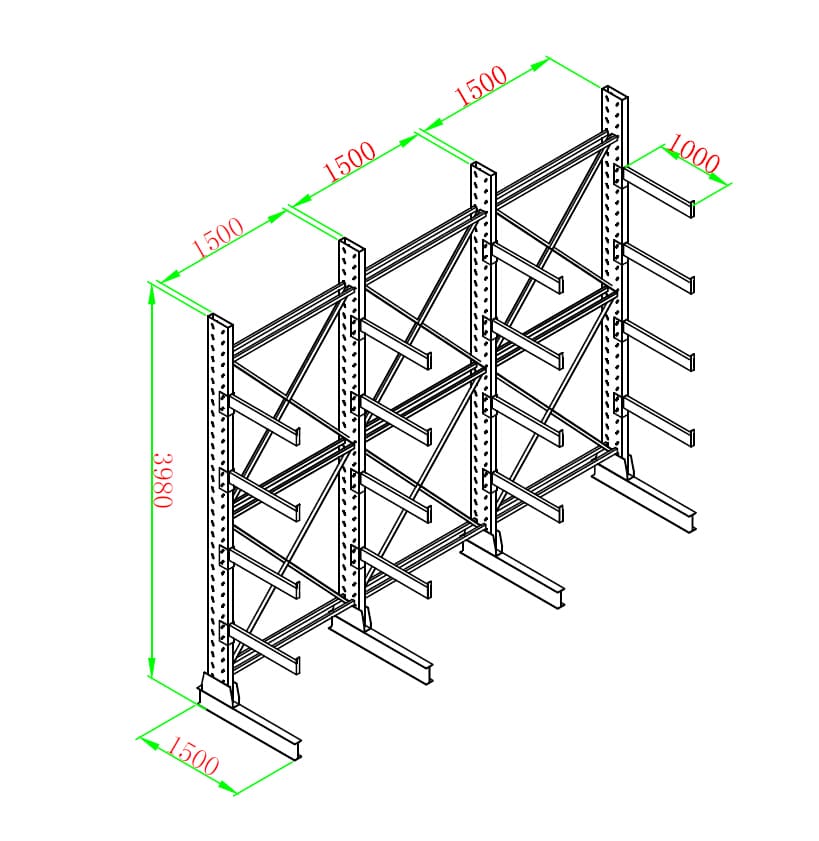
A true manufacturing partner doesn't just sell you a rack; they design a solution. The design process should start with a deep dive into your specific needs. If a potential supplier's first question is "How many racks do you want?" instead of "What are you trying to store?", that's a major red flag. A professional consultation involves asking many detailed questions to ensure the final product is both safe and efficient. We always start by understanding the product. Is it flexible like PVC pipe, or rigid like steel beams? How is it loaded and unloaded—with a forklift, a side-loader, or an overhead crane? All these factors influence the final design. We provide detailed CAD drawings for every custom project, showing every dimension, load capacity, and component. The customer must approve these drawings before we even think about manufacturing. This process eliminates guesswork and ensures the system we deliver is exactly what the customer needs to operate safely and efficiently for years.
Here are the key factors a good manufacturer will consider in their design:
| Design Factor | Why It Is Crucial for Your Operation |
|---|---|
| Load Capacity4 | The design must safely support the maximum weight of your products. This includes the capacity of the arms, columns, and the base. |
| Product Dimensions | The arm length, column height, and spacing between uprights must be optimized for the length, depth, and height of your items. |
| Handling Equipment | The aisle width and rack height must be compatible with your existing forklifts5 or other material handling equipment to ensure safe operation. |
| Warehouse Layout | The design should maximize your storage density6 while considering building columns, doorways, and workflow. |
| Future Expansion | A good design considers your future needs, making it easy to add more racking as your business grows. |
How Do You Compare Price Without Sacrificing Quality?
You have a budget, and every dollar counts. But simply choosing the cheapest quote for cantilever racking can be a disastrous long-term decision7, leading to equipment failure and safety risks.
Compare quotes based on overall value, not just the final number8. Carefully analyze the technical specifications, including steel grade9, powder coating thickness, and certified load ratings10. A higher initial price for better materials often means a much lower total cost of ownership.
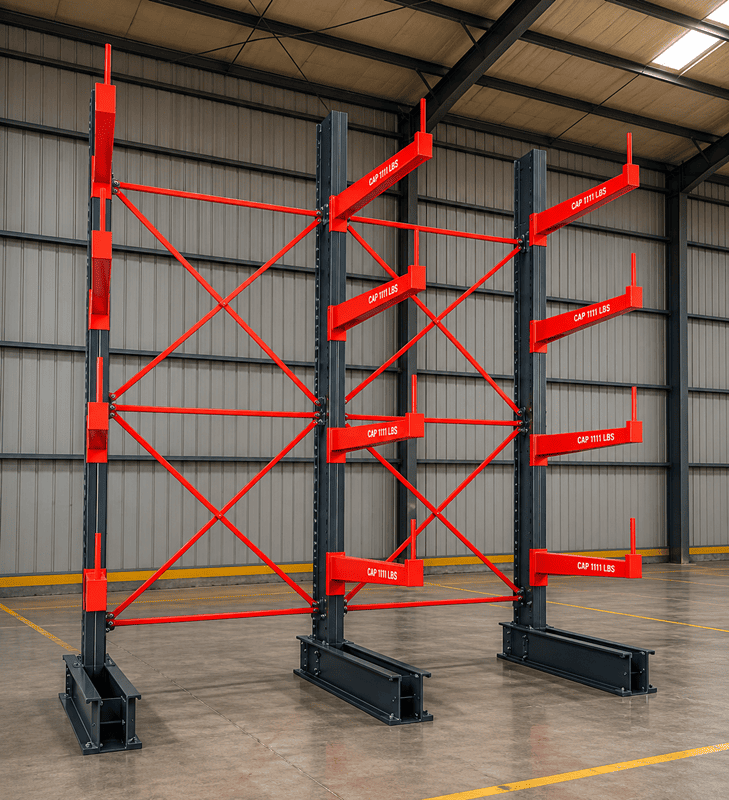
There's an old saying: "Price is what you pay; value is what you get." This is especially true for industrial racking. A low price often hides compromises in material quality, engineering, and safety. A quote that is significantly lower than others should be examined very carefully. Ask the supplier to justify their price. What grade of steel are they using? What is their manufacturing process? What kind of warranty do they offer? A reputable manufacturer will be transparent about these details. They are proud of the quality they deliver and can explain why their product provides better long-term value. For example, using high-strength Q355 steel instead of standard Q235 steel can dramatically increase load capacity and durability11, justifying a higher price. Similarly, a thick, durable powder coat finish will prevent rust and damage for years12, while cheap spray paint will chip and flake away in months. Investing a little more upfront for a well-engineered, high-quality system will save you from the enormous costs of replacement, downtime, and potential accidents down the road.
Use this table to help you analyze and compare quotes from different manufacturers:
| Feature | Manufacturer A (Low Price) | Manufacturer B (Value Price) | What to Look For |
|---|---|---|---|
| Steel Grade | Often unspecified or lower grade (e.g., Q235) | Specifies high-strength steel (e.g., Q355) | Higher grade means more strength and durability. |
| Load Capacity | Vague claims, not certified | Stamped, certified, and backed by engineering calculations | Insist on certified load ratings for safety. |
| Finish | Thin spray paint | Thick, durable epoxy powder coat | Powder coating offers far superior rust and scratch resistance. |
| Warranty | 1 year or less | 5+ years | A longer warranty shows the manufacturer's confidence in their product. |
| Design | Standard, one-size-fits-all | Custom-engineered for your specific needs | A custom design ensures optimal safety and efficiency. |
Conclusion
Choosing the right manufacturer means checking their experience, design skills, and quality. This ensures you get a safe, efficient, and valuable long-term storage solution for your business's future.
"Rugged Cantilever Rack Uprights-HU837", https://met-cybersec.bu.edu/blog/index.html?id=16996851656. An industrial storage reference or encyclopedia source can define cantilever racking as a storage system designed for long or irregular loads such as pipe, timber, tubing, and furniture; this supports the item-category claim but does not evaluate any specific manufacturer. Evidence role: definition; source type: encyclopedia. Supports: Cantilever racking is commonly used to store long, bulky items such as lumber, pipe, or furniture.. Scope note: Contextual support only; it establishes the common use of cantilever racks, not the quality of a particular rack system. ↩
"1926.250 - General requirements for storage. - OSHA", http://www.osha.gov/laws-regs/regulations/standardnumber/1926/1926.250. OSHA materials-handling guidance notes that improperly stored materials and unstable storage arrangements can create struck-by, collapse, and other workplace hazards; this supports the safety concern but does not attribute risk to any one manufacturer selection process. Evidence role: general_support; source type: government. Supports: Poorly designed or unsuitable storage equipment can contribute to unsafe warehouse conditions.. Scope note: The source would support the general warehouse-safety risk, not prove that a specific manufacturer choice caused unsafe conditions. ↩
"ISO 9000 family - Wikipedia", https://en.wikipedia.org/wiki/ISO_9000_family. The International Organization for Standardization describes ISO 9001 as a quality management system standard focused on consistent processes, customer requirements, and continual improvement; this supports its relevance as a quality-management credential, though certification alone does not verify rack engineering performance. Evidence role: definition; source type: institution. Supports: ISO 9001 is an industry-recognized quality management certification relevant when evaluating a manufacturer.. Scope note: ISO 9001 supports process quality management, not direct product safety or load-capacity certification. ↩
"[PDF] Specification for the Design, Testing, and Utilization of Industrial ...", https://scholarsmine.mst.edu/cgi/viewcontent.cgi?article=1000&context=ccfss-rmi. Engineering and rack-safety standards treat load capacity as a primary design parameter because structural members must resist the maximum expected loads with appropriate safety factors; this supports the need to evaluate arm, column, and base capacity, while detailed calculations remain project-specific. Evidence role: mechanism; source type: institution. Supports: Cantilever rack design must account for the maximum load on arms, columns, and bases.. Scope note: The source would establish the engineering principle, not validate any individual rack design. ↩
"Warehouse layout optimization based on ERP-driven modeling: A ...", https://bioresources.cnr.ncsu.edu/resources/warehouse-layout-optimization-based-on-erp-driven-modeling-a-case-study-from-the-wood-industry/. Forklift and warehouse-design guidance identifies aisle width, lift height, turning radius, and clearance as key parameters for safe industrial truck operation; this supports compatibility between racking layout and handling equipment, though exact dimensions depend on the equipment model and site conditions. Evidence role: mechanism; source type: government. Supports: Rack height and aisle width should be designed around the forklifts or handling equipment used in the warehouse.. Scope note: The source would support the general design requirement, not prescribe dimensions for every warehouse. ↩
"Double Deep Racking System Explained: Boost Warehouse ...", https://scalar.usc.edu/works/problog/double-deep-racking-system-explained-boost-warehouse-capacity-with-smart-storage-design. Warehouse-layout literature commonly treats storage density, travel distance, access requirements, and building constraints as interrelated design objectives; this supports the claim that racking layout can improve storage density, but it does not quantify the gain for a specific facility. Evidence role: general_support; source type: paper. Supports: Warehouse rack layout can be designed to improve storage density while accounting for physical constraints and workflow.. Scope note: Contextual support only; actual density improvements require a site-specific layout analysis. ↩
"[PDF] Life Cycle Cost Analysis Handbook: Cost Benefit Guide", https://education.alaska.gov/facilities/publications/LCCAHandbook.pdf. Life-cycle costing literature shows that procurement decisions based only on initial purchase price can overlook maintenance, replacement, downtime, and risk costs; this supports the article’s total-cost framing, but it does not prove that every lower-priced rack is inferior. Evidence role: expert_consensus; source type: paper. Supports: Selecting industrial equipment solely on the lowest initial price can increase long-term costs and risks.. Scope note: The support is a general procurement principle and must be applied to specific rack quotes through technical evaluation. ↩
"Life-cycle costing as a tool in mainstreaming green public procurement", https://www.oecd.org/en/publications/life-cycle-costing-in-public-procurement-in-hungary_8d90f627-en/full-report/component-5.html. Public procurement and life-cycle cost guidance defines best-value or whole-life costing as evaluating acquisition price together with operating, maintenance, disposal, and risk-related costs; this supports comparing rack quotes by value rather than price alone, while the weighting of factors remains buyer-specific. Evidence role: definition; source type: government. Supports: Rack quotes should be compared using overall value or life-cycle cost, not only the purchase price.. Scope note: The source would define the evaluation approach, not determine which rack quote is best in a particular case. ↩
"[PDF] Mechanical properties of structural steel", https://nvlpubs.nist.gov/nistpubs/Legacy/NCSTAR/ncstar1-3d.pdf. Materials standards for structural steels specify yield strength and mechanical properties by steel grade; this supports the claim that steel grade is material to rack strength calculations, although rack capacity also depends on geometry, fabrication, and connection design. Evidence role: mechanism; source type: institution. Supports: Steel grade is an important technical specification when comparing cantilever rack quotes.. Scope note: Steel grade alone does not determine rack load capacity; the full structural design must be considered. ↩
"1926.250 - General requirements for storage. - OSHA", http://www.osha.gov/laws-regs/regulations/standardnumber/1926/1926.250. Rack safety standards and occupational-safety guidance emphasize that storage racks should have known rated capacities and should not be loaded beyond those limits; this supports the need for certified or documented load ratings, although the exact certification regime varies by jurisdiction and rack type. Evidence role: expert_consensus; source type: institution. Supports: Cantilever rack buyers should require documented or certified load ratings for safety.. Scope note: Support is general to industrial storage racks; applicable cantilever-rack requirements may depend on local codes and standards. ↩
"Q355 and SS400 Steel Comparison Guide | Strength Of Materials", https://www.scribd.com/document/872149533/Konversi-Material-Baja-SS400-Q235-Q355-Presntasi. Chinese structural-steel standards list Q355 with a higher nominal yield strength than Q235, supporting the statement that Q355 can permit higher structural resistance in an engineered design; the source would not by itself prove greater durability or capacity for a finished rack without design calculations. Evidence role: mechanism; source type: institution. Supports: Q355 steel has higher nominal strength than Q235 and may support higher engineered load capacity in cantilever racks.. Scope note: Direct load capacity depends on member dimensions, bracing, welds, connections, and safety factors, not only steel grade. ↩
"Accelerated Corrosion Tests in Quality Labels for Powder Coatings ...", https://pmc.ncbi.nlm.nih.gov/articles/PMC8585214/. Coatings research and corrosion-protection standards describe powder coatings as protective polymer finishes that can improve corrosion and abrasion resistance on metal substrates; this supports the protective-function claim, though service life depends on surface preparation, coating system, thickness, and exposure environment. Evidence role: mechanism; source type: paper. Supports: A properly applied powder-coat finish can improve corrosion and damage resistance compared with unprotected or poorly coated steel.. Scope note: The phrase “for years” requires environment-specific durability data; general coating sources support protection but not a universal service life. ↩