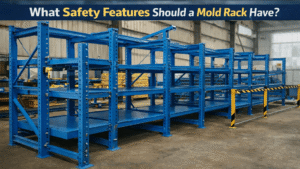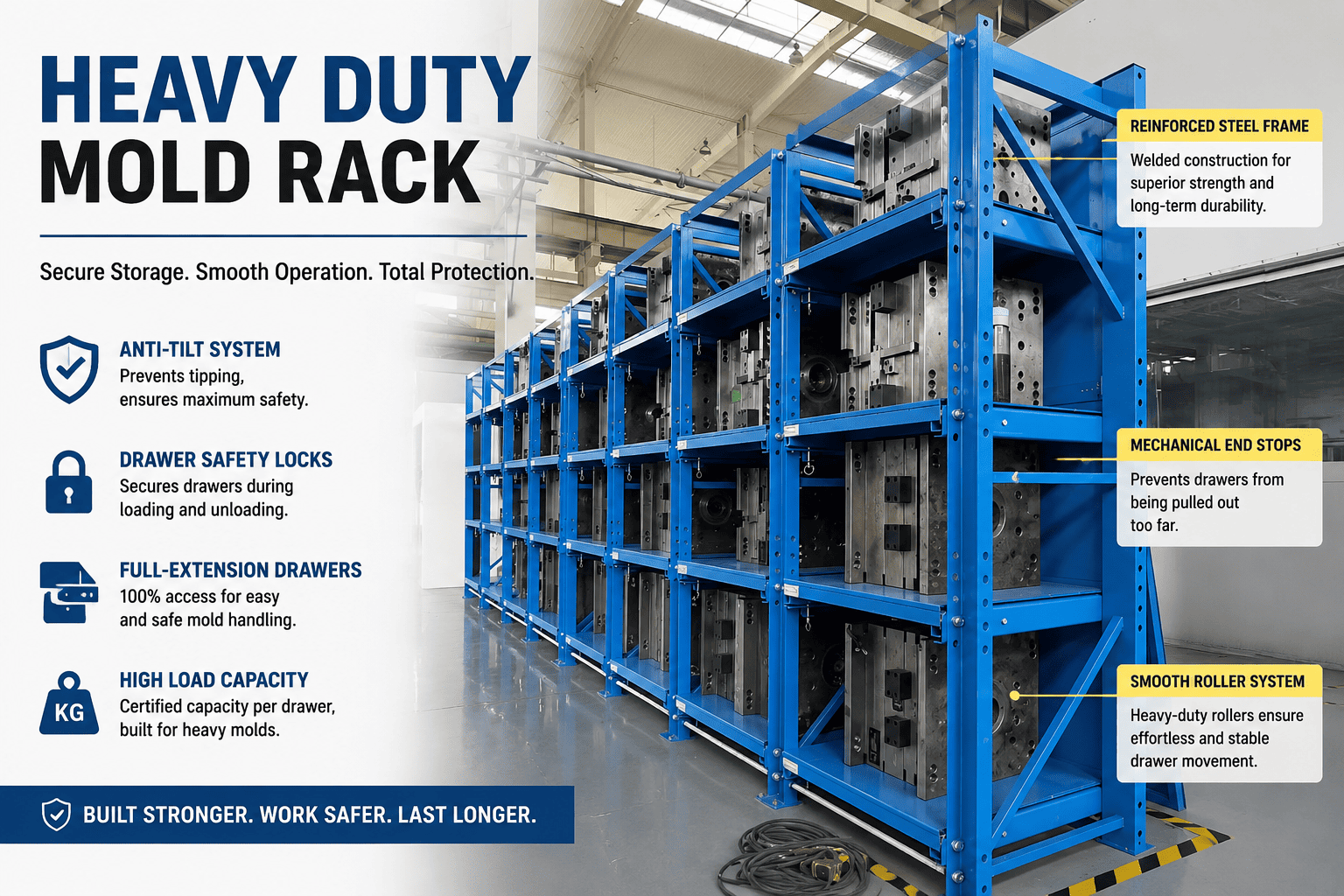
Storing heavy molds is a constant worry. A dropped mold means disaster for your equipment and personnel.1 The right heavy-duty mold rack turns that risk into a secure, efficient process.
A top-quality heavy duty mold rack must prioritize safety with features like a certified load capacity for each drawer2, full-extension drawers with safety locks3, and a reinforced steel frame. These elements are essential for protecting both operators and valuable molds from accidents and damage.
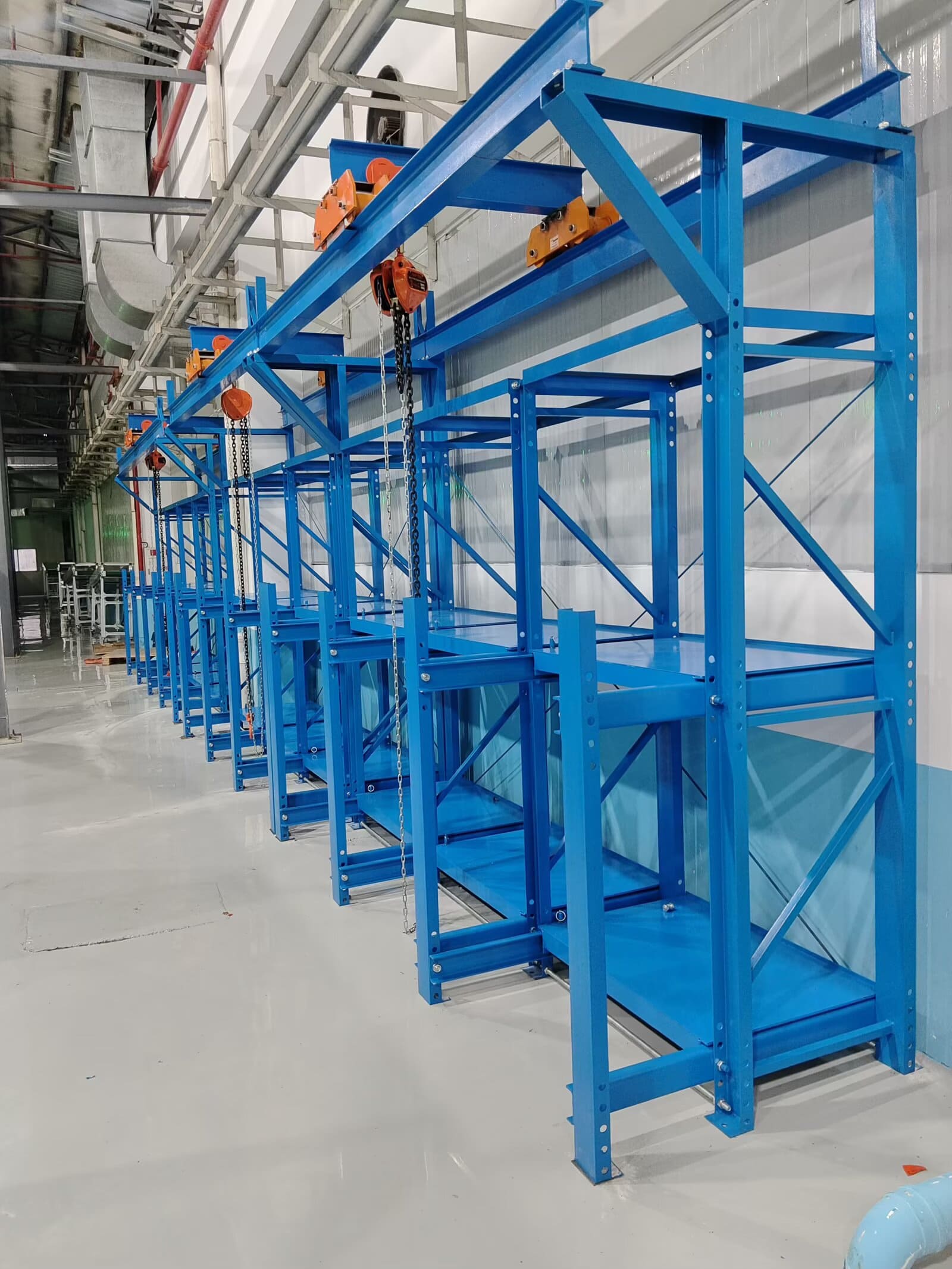
I've been in this industry for over a decade, and I've seen firsthand what happens when mold storage is treated as an afterthought. It’s not just about finding a place to put your molds; it's about creating a system that makes your entire workflow safer and more efficient. The initial investment in a proper rack pales in comparison to the cost of a damaged multi-ton mold or a workplace injury. That's why I always tell my clients to look beyond the price tag and focus on the features that deliver long-term safety and value. It’s time to break down what truly matters in a mold rack.
What Safety Features Are Essential in a Heavy Duty Mold Rack?
You think your current storage is safe, but hidden risks can lead to sudden accidents. A single oversight, like a drawer slipping or the entire rack tipping, can be catastrophic.
Essential safety features include anti-tilt mechanisms that prevent tipping4, individual drawer safety locks for secure loading, and mechanical stops to keep drawers from falling out. These components transform a simple shelf into a secure, professional-grade storage system for your valuable molds.
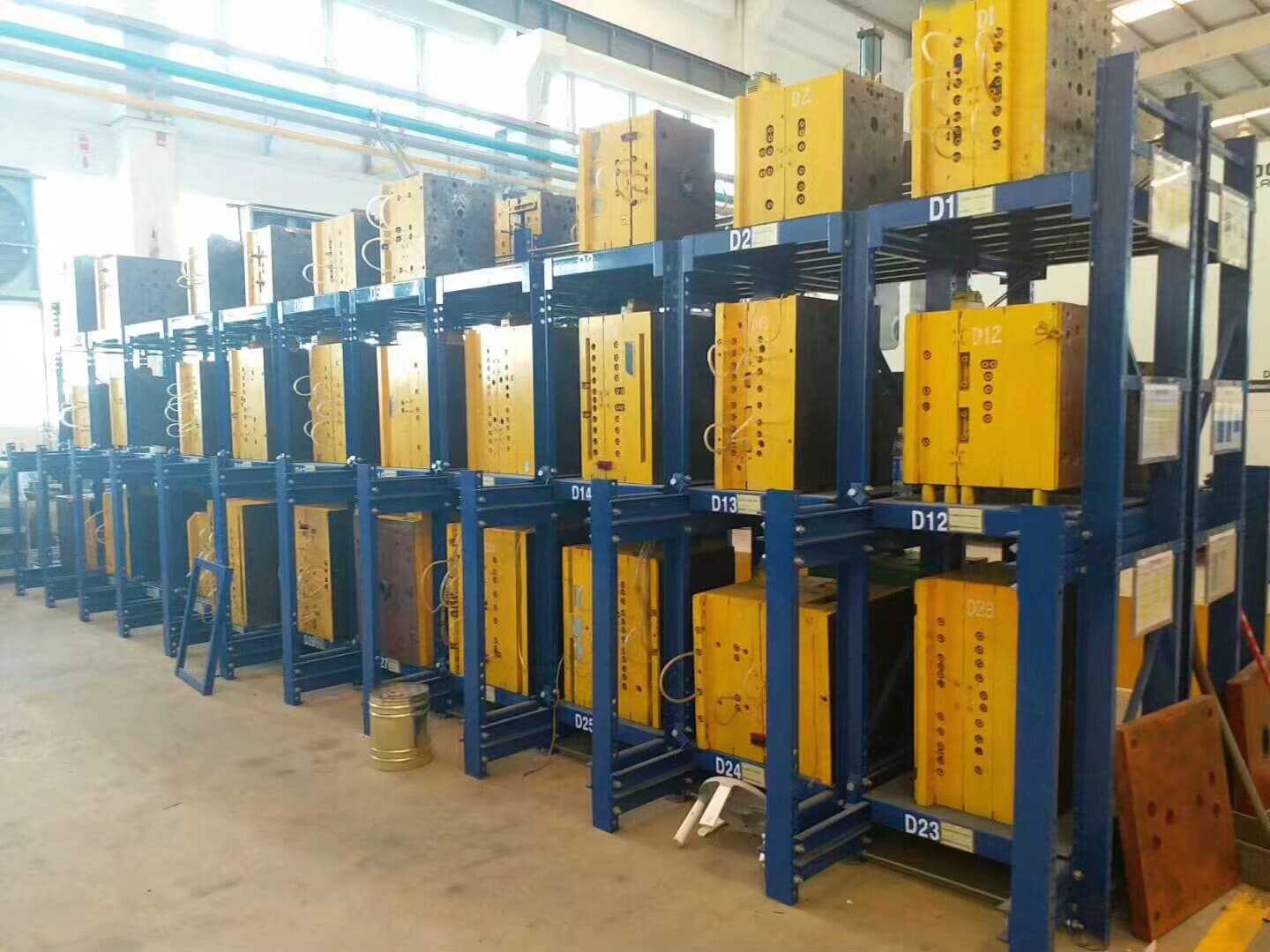
When we design a warehouse or workshop layout, safety is the number one conversation. For mold racks, this conversation gets very specific. It’s not enough for a rack to be strong; it has to be smart. The safety features are not just add-ons; they are the core of the system. I've seen too many workshops rely on homemade solutions that put their team at risk every single day. A professional mold rack is engineered to anticipate and prevent the worst-case scenarios, giving you and your operators peace of mind. Let’s look closer at how these features protect your assets and your people.
Preventing Catastrophic Failure
The most critical safety feature is an anti-tilt or interlocking system. This mechanism ensures that only one drawer can be opened at a time5. When you pull out a drawer holding a two-ton mold, the rack's center of gravity shifts forward6. Without an anti-tilt system, opening a second drawer could cause the entire unit to tip over, leading to devastating consequences. This feature mechanically locks the other drawers in place, maintaining the rack's stability at all times.
Securing Individual Molds
Each drawer should also have its own locking mechanism. This includes:
- Safety Pins/Latches: A simple but crucial device that secures the drawer in the closed position, preventing it from sliding open due to vibrations or accidental bumps7.
- Anti-Drop Locks: When a drawer is fully extended for loading or unloading with an overhead crane, an anti-drop lock engages to hold it securely in place. This prevents the drawer from accidentally being pushed back or slipping during the delicate lifting process.
- Mechanical End Stops8: These are robust physical barriers that prevent a drawer from being pulled out too far and falling off its rails.
| Safety Feature | Primary Function | Why It's Essential |
|---|---|---|
| Anti-Tilt System | Prevents opening multiple drawers at once | Stops the entire rack from tipping forward under load. |
| Drawer Safety Lock | Secures drawer for crane access | Prevents movement during loading/unloading, avoiding accidents. |
| Mechanical End Stops | Physically stops the drawer | Prevents drawers from being pulled out completely and falling. |
| Clear Load Labels | Displays max weight per drawer | Prevents operators from overloading a drawer, which can lead to failure9. |
How Do Load Capacity, Drawer Design, and Construction Affect Mold Rack Performance?
You bought a "heavy-duty" rack, but the drawers are already sagging and difficult to operate. This isn't just an inconvenience; it's a clear sign of impending failure and a serious safety hazard.
Load capacity must safely exceed your heaviest mold's weight to prevent structural failure. Full-extension drawers on heavy-duty rollers ensure smooth, safe access. A reinforced, welded steel frame provides the core integrity needed for long-term performance under constant, heavy use.
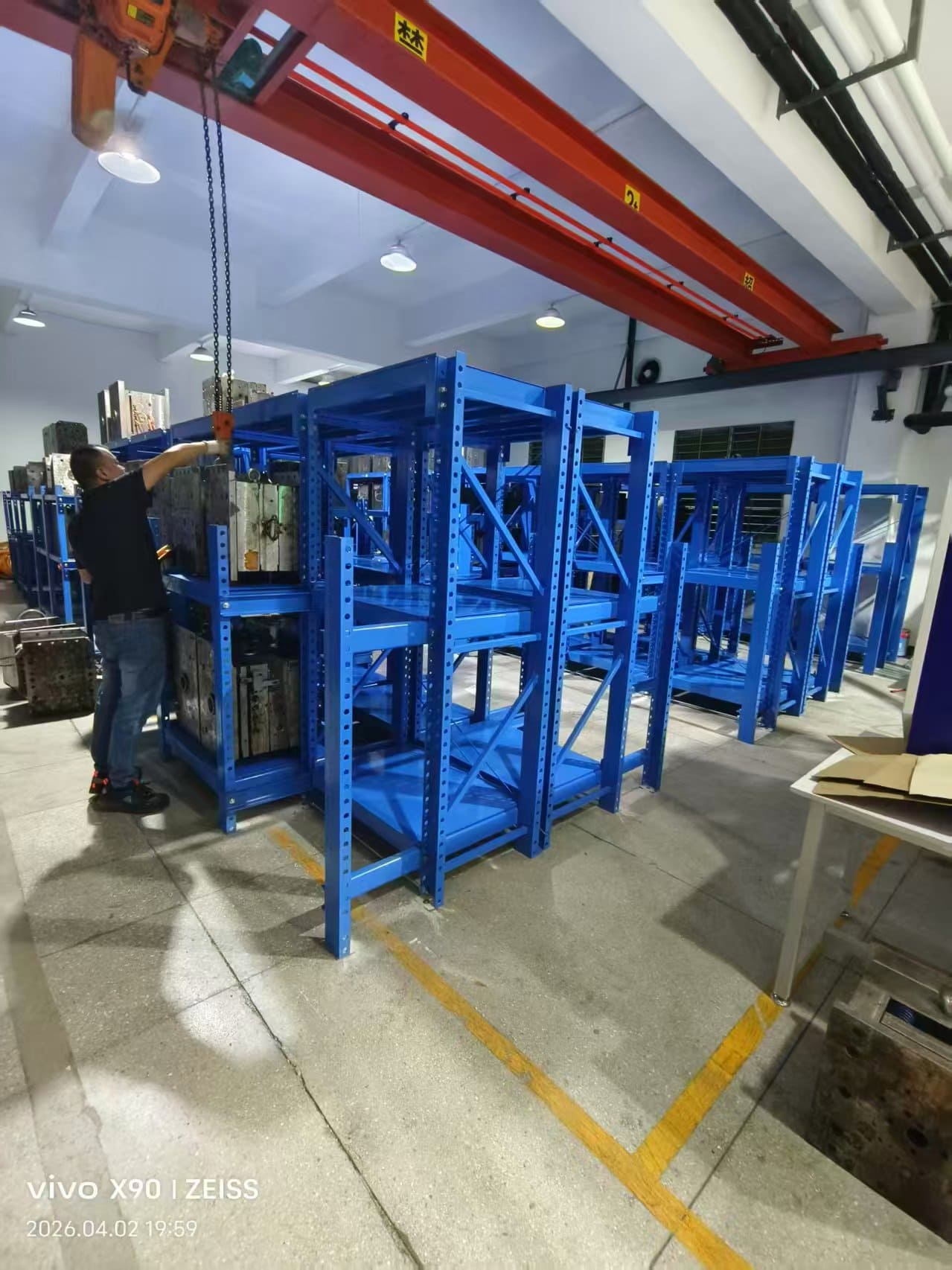
Performance isn't just about how a rack looks on day one. It's about how it operates on day one thousand. When a client calls me about a rack they bought elsewhere, the complaints are always the same: drawers that jam, sag, or feel unstable. This is a direct result of cutting corners on construction and materials. A properly engineered mold rack should feel just as smooth and solid years down the road as it did when it was first installed, even when you're moving multi-ton molds every single day. The secret lies in the synergy between load capacity, drawer mechanics, and frame construction.
The Importance of Accurate Load Capacity
When a manufacturer states a load capacity, you need to ask a critical question: "Is that for the entire rack or for each individual drawer?" The capacity you care about is the drawer capacity. It should be clearly labeled and, for safety, should exceed the weight of your heaviest mold. Overloading a drawer designed with a low safety factor can cause the steel to deform, the rollers to bind, and eventually lead to a catastrophic failure10. Always choose a rack where the certified drawer capacity gives you a comfortable margin of safety.
Drawer Mechanics for Heavy Loads
The design of the drawer itself is crucial for performance. Full-extension drawers are non-negotiable.11 They allow the drawer to slide out completely, giving an overhead crane clear, safe access to lift the entire mold without obstruction. Partial-extension drawers are a major safety risk, as they force operators to maneuver the crane around the rack structure. Furthermore, the movement should be effortless. This is achieved with high-quality, heavy-duty roller bearings that can handle the immense weight without binding or grinding.
The Frame as the Foundation
The drawers and their loads are supported by the rack's frame. A bolted frame can loosen over time from vibrations and the stress of heavy loads12, leading to instability. A fully welded, reinforced steel frame provides superior rigidity and durability. It resists twisting and flexing, ensuring the drawer alignment remains perfect and the entire structure stays solid for its entire service life. It's the strong backbone that guarantees reliable performance year after year.
How to Choose the Best Heavy Duty Mold Rack for Your Workshop or Factory?
Choosing a mold rack feels overwhelming with so many options and technical specifications. Making the wrong choice means wasted money, inefficient storage, and potential safety risks down the line.
First, assess your heaviest and largest molds to set your minimum capacity and size requirements. Then, prioritize racks with essential safety features like anti-tilt systems. Finally, consider a modular design for future growth and a durable powder-coated finish for longevity.
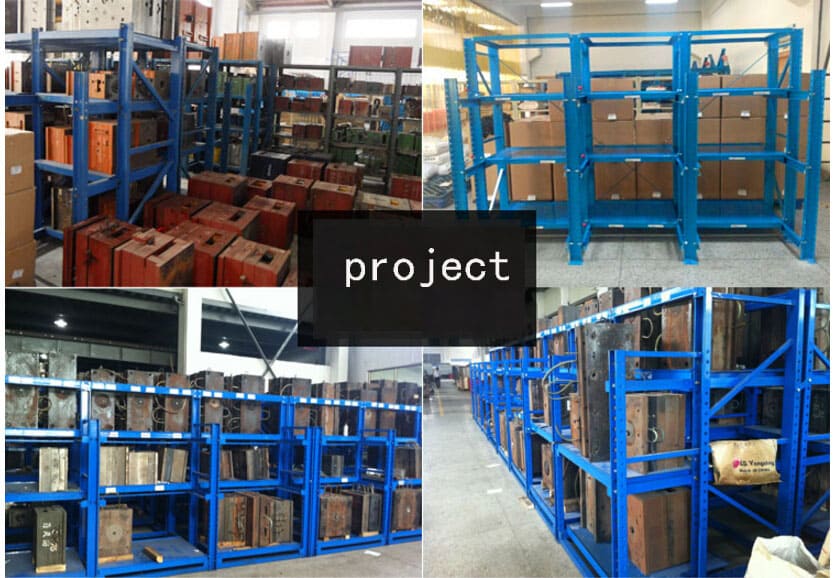
I often walk clients through a simple decision-making process. The goal is to cut through the noise and focus on what will deliver the most value and safety for their specific operation. It’s not about finding the cheapest option; it’s about finding the right solution that you won't have to worry about again for a very long time. By starting with your own inventory and then evaluating racks against a clear set of criteria, you can make a confident choice that will improve your workshop's safety and efficiency. Let’s build your checklist.
Assess Your Molds First
Before you even look at a single rack, you need to do your homework. Go into your workshop and gather data on your mold inventory.
- Weight: What is the exact weight of your heaviest mold? This number will dictate the minimum drawer load capacity you need. Add a 25% safety margin to be safe.
- Dimensions: Measure the length, width, and height of your largest molds. This will determine the required drawer size and the vertical spacing you need between drawers. Don't guess. Use this data as the foundation for your search. A rack is useless if your molds don't fit or are too heavy for it.
Think Beyond Today
Your business is growing, and your mold collection might grow with it. A modular mold rack system is a smart investment. It allows you to start with the bays you need now and easily add more units later. This scalability prevents you from having to replace your entire storage system down the road. Also, consider the workshop environment. It's tough, with oils, chemicals, and humidity. A standard paint job won't last. Insist on a durable, powder-coated finish that resists corrosion, scratches, and daily wear and tear, protecting your investment for years to come.
Your Final Selection Checklist
Use this simple table to compare potential mold racks and make an informed decision.
| Feature to Verify | My Requirement | Vendor A | Vendor B |
|---|---|---|---|
| Drawer Load Capacity | (e.g., >2000 kg) | ||
| Drawer Dimensions (W x D) | (e.g., >900x900 mm) | ||
| Full-Extension Drawers? | Yes | ||
| Anti-Tilt System Included? | Yes | ||
| Individual Drawer Locks? | Yes | ||
| Welded Steel Frame? | Yes | ||
| Modular Design? | Yes / No | ||
| Powder-Coated Finish? | Yes |
Conclusion
The best mold rack prioritizes safety, durability, and efficiency over a low initial price. This ensures long-term value, operator protection, and streamlined mold management for your facility.
"[PDF] Materials Handling and Storage - OSHA", https://www.osha.gov/sites/default/files/publications/OSHA2236.pdf. Occupational safety guidance on materials handling and storage documents that falling or shifting heavy objects can cause severe injury and equipment damage, supporting the claim that dropped molds create substantial operational hazards. Evidence role: general_support; source type: government. Supports: Dropping a heavy mold can seriously endanger personnel and damage equipment.. Scope note: The source will likely address heavy materials generally rather than injection molds specifically. ↩
"1926.250 - General requirements for storage. - OSHA", http://www.osha.gov/laws-regs/regulations/standardnumber/1926/1926.250. Industrial storage-rack safety standards and guidance require rated load capacities to be established and communicated for storage systems, supporting the need for clearly certified drawer-level load ratings. Evidence role: expert_consensus; source type: institution. Supports: Each mold-rack drawer should have a verified or certified load capacity.. Scope note: Most standards address industrial storage racks broadly; applicability to mold-rack drawers may be contextual unless the source explicitly covers drawer racks. ↩
"[PDF] Materials Handling and Storage - OSHA", https://www.osha.gov/sites/default/files/publications/OSHA2236.pdf. Guidance on safe access to stored heavy loads and securing movable industrial equipment supports the use of designs that provide unobstructed access and prevent unintended drawer movement during handling. Evidence role: mechanism; source type: government. Supports: Full-extension drawers with safety locks can improve safe access and reduce unintended movement during mold handling.. Scope note: The source may support the underlying safety principles rather than naming full-extension mold-rack drawers specifically. ↩
"Device to prevent tip-over of indoor furniture - BioResources", https://bioresources.cnr.ncsu.edu/resources/device-to-prevent-tip-over-of-indoor-furniture/. Engineering and industrial-storage safety literature on overturning stability explains that restraining simultaneous extension of loaded drawers reduces forward moment and tipping risk, supporting the role of anti-tilt mechanisms. Evidence role: mechanism; source type: research. Supports: Anti-tilt mechanisms help prevent heavy drawer-based storage units from tipping.. Scope note: Direct evidence may come from cabinet or drawer-storage systems rather than mold racks specifically. ↩
"Grass Rear Anti Tip System Interlocking One Drawer at a Time Kit ...", https://www.rokhardware.com/grass-rear-anti-tip-system-interlocking-one-drawer-at-a-time-kit-prevents-furniture-tip-overs-for-5-drawers.html?srsltid=AfmBOoqFVueHzmFHO4SqCmJsjjtIjZ0qPdjtCfztLrsOqP8_Ogx8DtSZ. Anti-tip interlock descriptions in storage-equipment safety references state that limiting access to one loaded drawer at a time helps maintain cabinet or rack stability by controlling the shift in center of gravity. Evidence role: mechanism; source type: institution. Supports: A one-drawer-at-a-time interlock improves stability in heavy drawer storage systems.. Scope note: The evidence is likely to be based on analogous drawer-storage systems unless a mold-rack-specific standard is located. ↩
"Slipping vs. Tipping - Mechanics Map", https://mechanicsmap.psu.edu/websites/7_friction/7-2_slipping_vs_tipping/slippingvstipping.html. Basic statics and machinery-safety references explain that extending a heavy load away from its support shifts the combined center of gravity and increases overturning moment, supporting the stated tipping mechanism. Evidence role: mechanism; source type: education. Supports: Pulling out a loaded mold-rack drawer shifts the rack-load center of gravity forward and can increase tipping risk.. Scope note: This supports the physics of the claim generally, not a specific mold-rack design calculation. ↩
"[PDF] Materials Handling and Storage - OSHA", https://www.osha.gov/sites/default/files/publications/OSHA2236.pdf. Workplace safety guidance on securing stored materials and movable components supports using latches or restraints to prevent unintended movement from vibration, impact, or incidental contact. Evidence role: mechanism; source type: government. Supports: Drawer latches can prevent unintended opening caused by vibration or accidental impact.. Scope note: The source may not discuss mold-rack drawers specifically, but it supports the general hazard-control principle. ↩
"Method - OSHA", https://obis.osha.gov/Publications/Mach_SafeGuard/chapt2_2.html. Machine-guarding and mechanical-design references describe positive stops as physical travel limits that prevent components from moving beyond intended positions, supporting their use to keep drawers on their rails. Evidence role: definition; source type: education. Supports: Mechanical end stops act as physical barriers that prevent over-travel of mold-rack drawers.. Scope note: This evidence defines and contextualizes mechanical stops generally; it may not directly test mold-rack end-stop performance. ↩
"1926.250 - General requirements for storage. - OSHA", http://www.osha.gov/laws-regs/regulations/standardnumber/1926/1926.250. Industrial storage-rack safety guidance identifies overloading beyond rated capacity as a cause of structural damage or collapse, supporting the warning that exceeding drawer load limits can lead to failure. Evidence role: expert_consensus; source type: government. Supports: Overloading a drawer or storage level beyond its rated capacity can lead to structural failure.. Scope note: The cited guidance may address pallet racks or storage systems generally rather than mold-rack drawers specifically. ↩
"Profiled Rail Systems Theory - Industrial Solutions Lab", https://isl.charlotte.edu/profiled-rail-systems-theory/. Structural engineering references on members loaded beyond design limits explain that excessive loads can cause permanent deformation and loss of serviceability before structural failure, supporting the article’s warning about overloaded drawer systems. Evidence role: mechanism; source type: education. Supports: Overloading a mold-rack drawer can deform structural elements and contribute to mechanical failure.. Scope note: A general structural source supports deformation under overload; roller binding in mold-rack drawers may require a more specific mechanical-handling source. ↩
"1910.179 - Overhead and gantry cranes. - OSHA", http://www.osha.gov/laws-regs/regulations/standardnumber/1910/1910.179. Lifting-operation guidance emphasizes that loads should be accessible and handled without obstruction or side loading, which contextually supports full-extension drawers for crane access to heavy molds. Evidence role: general_support; source type: government. Supports: Full-extension drawers can support safer crane access to heavy molds by reducing obstructions during lifting.. Scope note: The source will likely support safe lifting-access principles rather than declare full-extension mold drawers mandatory. ↩
"Prediction of Bolt Loosening Life: A Practical Approach Considering ...", https://pmc.ncbi.nlm.nih.gov/articles/PMC11901137/. Mechanical engineering literature on bolted joints documents that cyclic loading and vibration can reduce clamp force and cause loosening, supporting the concern that bolted rack frames may require attention under heavy dynamic use. Evidence role: mechanism; source type: paper. Supports: Bolted frame connections can loosen over time when exposed to vibration and repeated heavy loading.. Scope note: This supports bolted-joint behavior generally; it does not prove that every bolted mold-rack frame will loosen in service. ↩