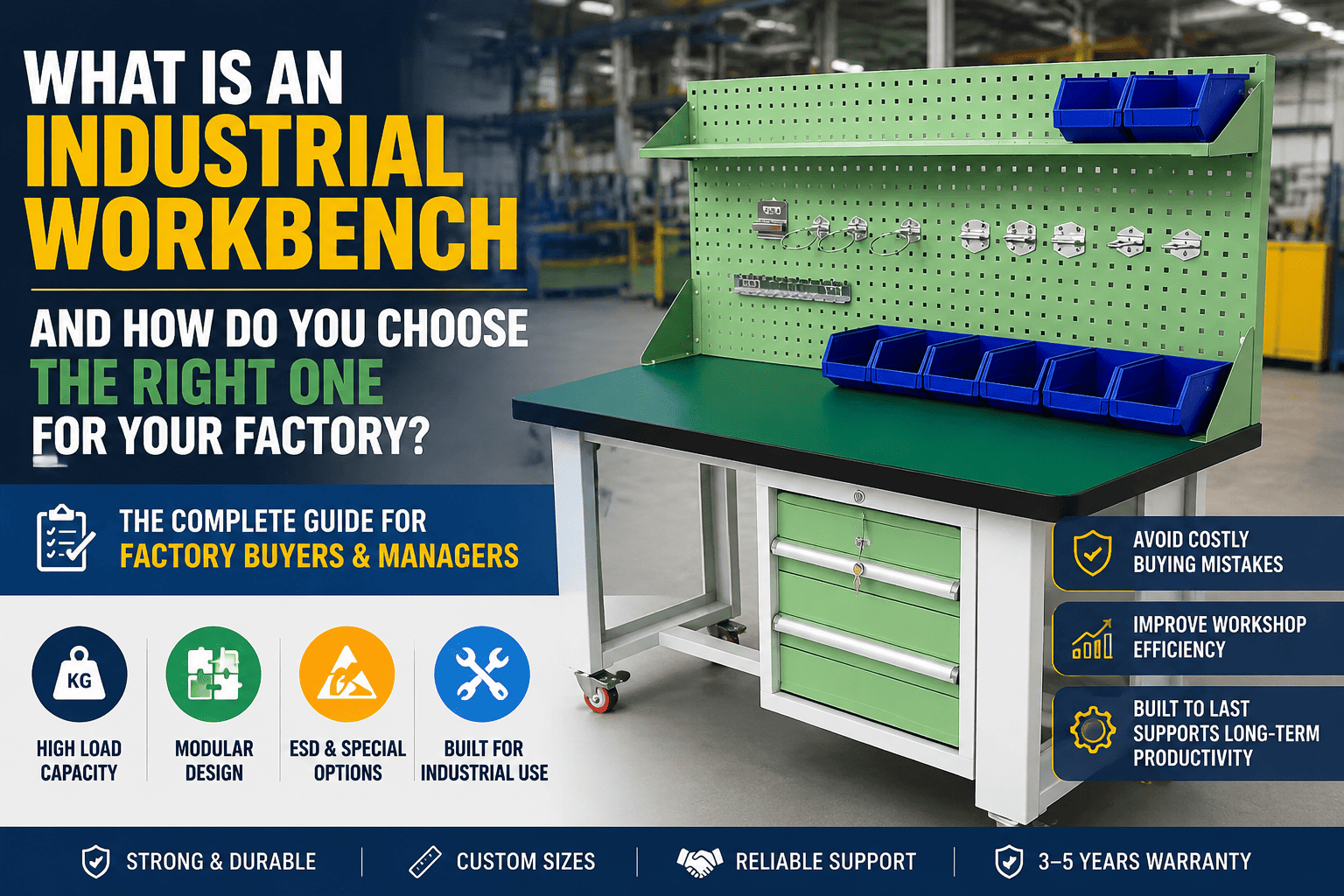
Choosing a new workbench seems easy, but a bad choice can cause workflow delays and safety hazards1. This guide helps you get it right the first time.
An industrial workbench is a heavy-duty table designed for factory and workshop environments2. To choose the right one, you must match it to your specific tasks, check key specifications like load capacity and material, and confirm the supplier provides long-term support and customization options.
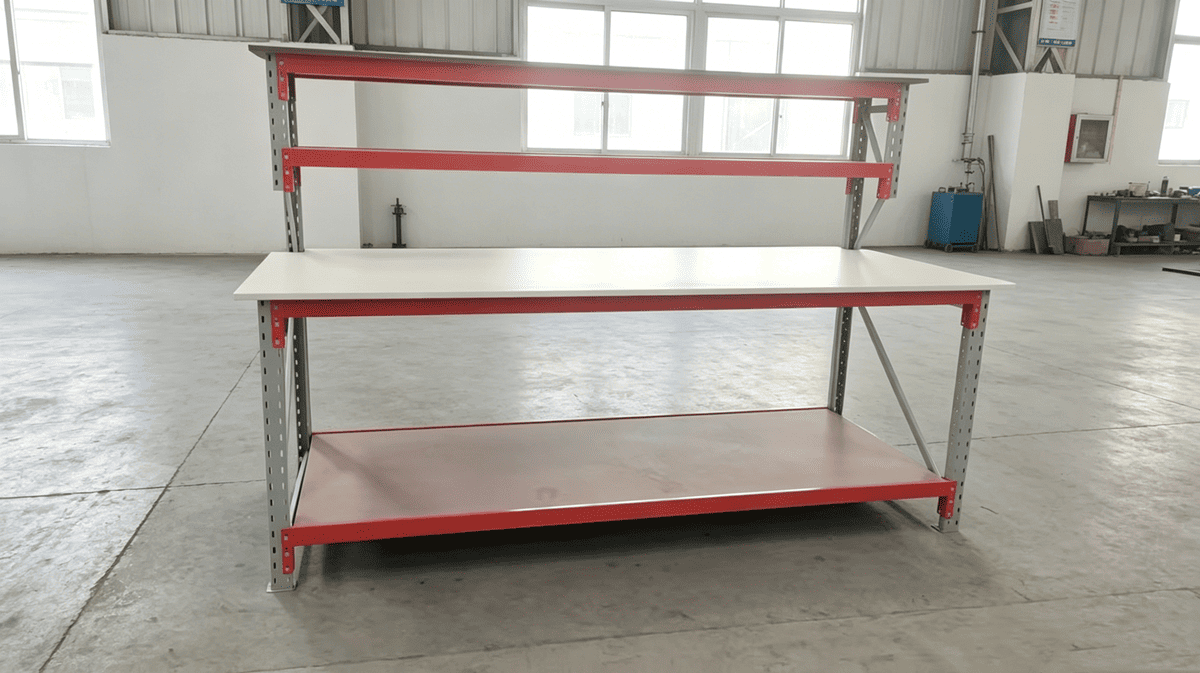
I've been in the industrial equipment business for over a decade, and I've seen firsthand how the right workstation can transform a factory's productivity. A workbench isn't just a table; it's the heart of a production cell. Getting this choice right from the start saves you headaches and money down the road. It all comes down to a simple, structured approach to your selection process. Let's walk through how to find the perfect workbench for your needs.
How Do You Choose the Right Industrial Workbench for Your Factory Application?
Many factories buy workbenches that don't fit their real needs. This leads to wasted money, unsafe conditions, and inefficient work. Let's fix that with a simple process.
To choose the right workbench, start by defining your work requirements, like the maximum weight it needs to hold and the environment it will be in. Then, verify key quality specifications and check that the supplier can customize it and provide reliable after-sales service.
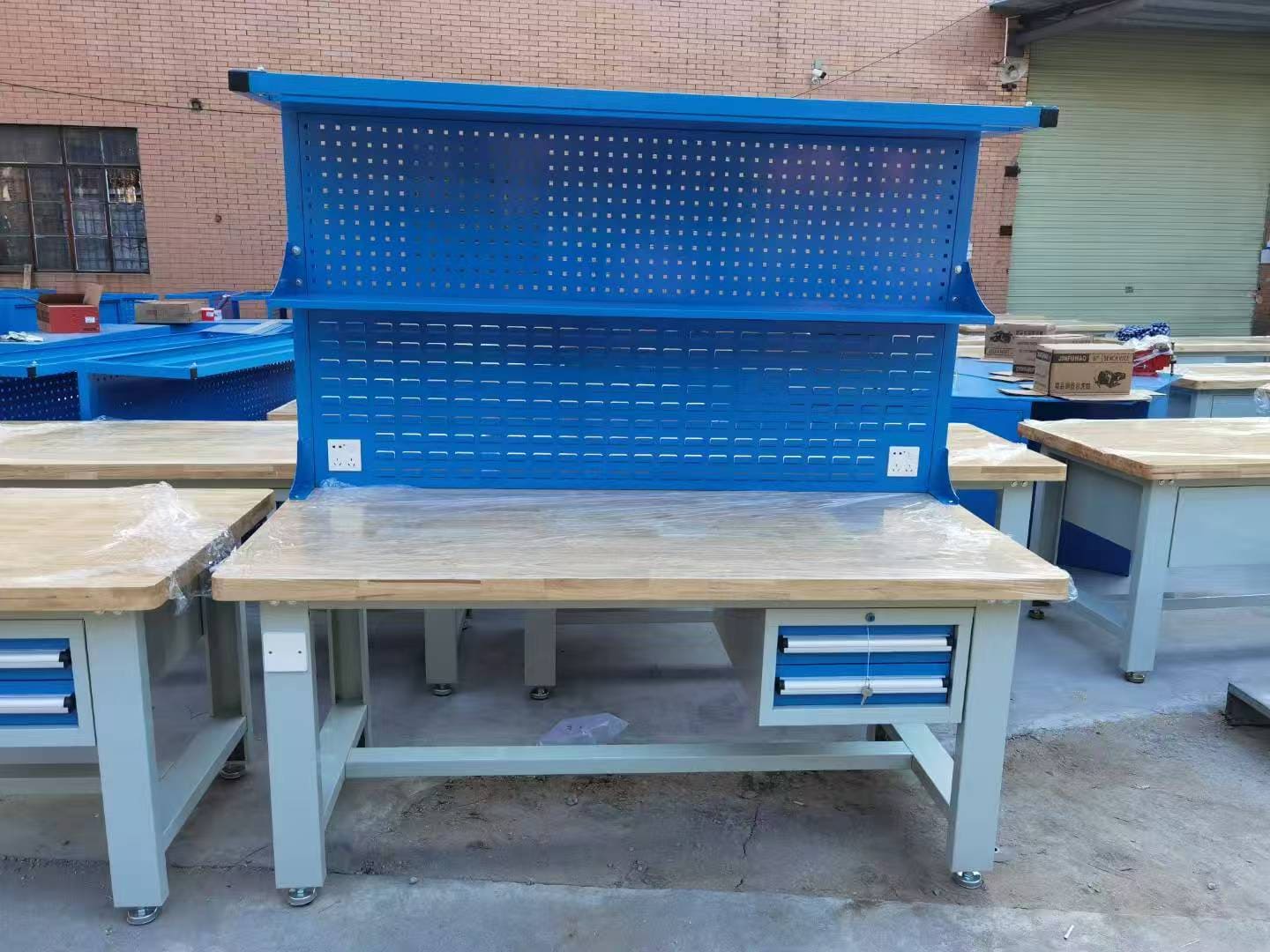
The best way to select a workbench is to focus on the application first, not the price. I always tell my clients to think about what they will do on the workbench every single day. This simple step guides all the other decisions. You need to look at three main areas: your work requirements, the quality of the workbench itself, and the reliability of the supplier. This method ensures you get a tool that helps your team, not one that gets in their way. Let's break down each of these areas so you know exactly what to look for.
1. Define Your Working Requirements
The first step is to be very clear about what the workbench needs to do. The most important factor is load capacity. The bench's static load capacity should be at least 30% more3 than the heaviest item you plan to put on it. For example, a workbench for assembling small electronics might only need a 300 kg capacity, but a maintenance station for heavy molds should handle 1000 kg or more. The environment also matters. An electronics factory needs an anti-static (ESD) workbench to protect sensitive parts4. A workshop with chemicals or moisture needs a stainless steel surface to prevent corrosion5.
| Application Environment | Key Requirement | Recommended Feature |
|---|---|---|
| Electronics Assembly | Prevent electrostatic discharge | ESD work surface (10⁶–10⁹ Ω resistance6) |
| Chemical/Humid Areas | Resist corrosion and spills | Stainless steel top or corrosion-resistant coating |
| Heavy-Duty/Impact | Withstand heavy loads and impacts | Thick steel frame (≥1.5mm) and worktop |
2. Verify Key Quality Specifications
Once you know your requirements, you need to check the quality of the bench itself. Look at the materials and how it’s made. A good workbench frame should be made from steel that is at least 1.5 mm thick. The surface should be treated with phosphating and then an electrostatic powder coating7 of at least 60 μm thick to resist rust and scratches. A fully welded frame is usually the most stable, but a system with high-strength bolts can also work well. Finally, think about ergonomics. A standard workbench is 750–800 mm high, but an adjustable-height model is even better. Make sure there is space to add drawers, pegboards, and lighting to help your workers stay organized and efficient.
What Features Make a High-Quality Industrial Workbench?
On the surface, many workbenches look the same. But I've seen low-quality ones bend and rust within months, causing major frustration. Let's learn to spot a truly durable workbench.
A high-quality workbench has a strong frame made from steel at least 1.5 mm thick, a durable powder-coated finish, and a stable, welded structure. It also features an ergonomic design with options for adjustable height and modular accessories like lighting, power outlets, and drawers.
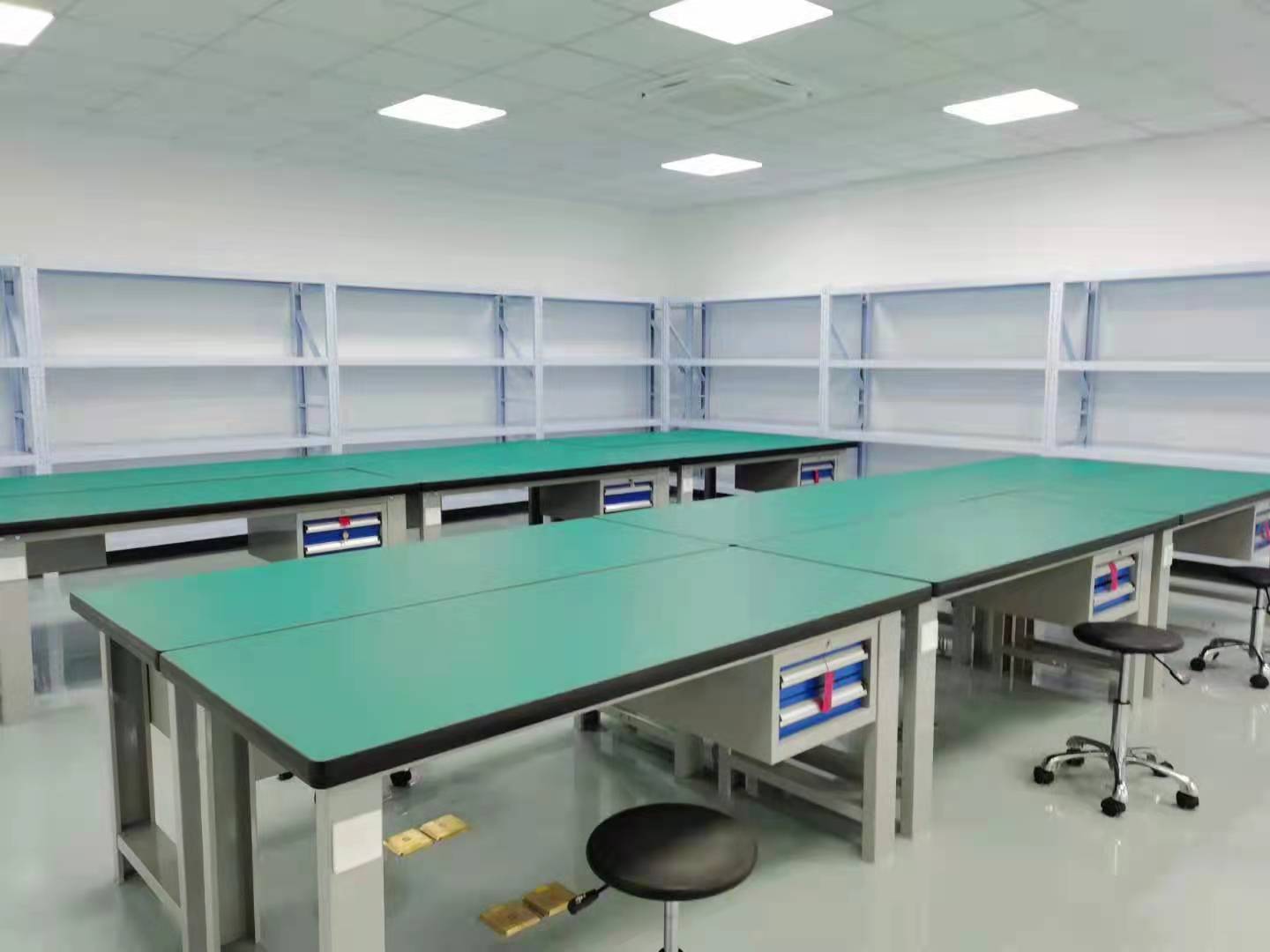
When I visit factories, I can often tell the quality of a workbench just by touching it. A good one feels solid and doesn't shake. This stability comes from its core features: the materials used, the quality of the construction, and a design that focuses on the user. These are the details that separate a workbench that lasts for a decade from one that needs replacing in a year. Paying attention to these features ensures you are investing in a productive and safe asset for your workshop, not just a piece of metal. Let's dive into what makes a workbench stand out.
The Foundation: Material and Construction
The strength of a workbench comes from its skeleton. The frame and uprights should be made from high-quality cold-rolled steel that is at least 1.5 mm thick. For heavy-duty applications, I recommend 2.0 mm or more. This thickness prevents the frame from bending or deforming under heavy loads. The surface treatment is just as important. A cheap paint job will chip and rust quickly. Look for a two-step process: phosphating, which cleans the steel and helps the coating stick, followed by electrostatic powder coating. This creates a tough, even finish that resists corrosion and impact. A good manufacturer will even provide salt spray test results8, proving the coating can last for hundreds of hours in harsh conditions.
| Quality Feature | Why It Matters | What to Look For |
|---|---|---|
| Frame Steel Thickness | Prevents bending and ensures stability | ≥ 1.5 mm for medium-duty, ≥ 2.0 mm for heavy-duty |
| Surface Treatment | Resists rust, scratches, and chemicals | Phosphating + electrostatic powder coating (≥ 60 μm) |
| Welding Quality | Provides structural integrity and rigidity | Clean, full welds at all joints; no gaps or cracks |
| Worktop Flatness | Crucial for precision assembly and inspection | Tolerance within 2 mm across the surface |
The Design: Stability and Ergonomics
A well-built workbench should be rock-solid. A fully welded structure is often the most stable option because it eliminates weak points. If the bench is bolted, make sure it uses high-strength connectors that can be tightened securely. When you test it, push on it from different angles—it shouldn't shake or wobble. The worktop itself needs to be perfectly flat, especially for any kind of precision work. A poorly made top can make accurate assembly impossible. Beyond stability, a great workbench is designed for the person using it. An adjustable-height feature allows each worker to set the bench to their ideal level, reducing fatigue and preventing back strain9. Modular design is another key feature. The ability to easily add drawers, shelves, pegboards, and lighting allows you to create a workstation that is perfectly tailored to the task.
How Can You Avoid Costly Mistakes When Buying an Industrial Workbench?
Focusing only on the lowest price is a huge risk with industrial equipment. This often leads to buying a workbench that fails, costing you much more in downtime and replacements.
To avoid costly mistakes, look beyond the initial price and evaluate the total lifecycle cost10. Always ask suppliers for third-party test reports and customer references. Choose a supplier with strong customization capabilities and reliable after-sales support to ensure long-term value and avoid downtime.
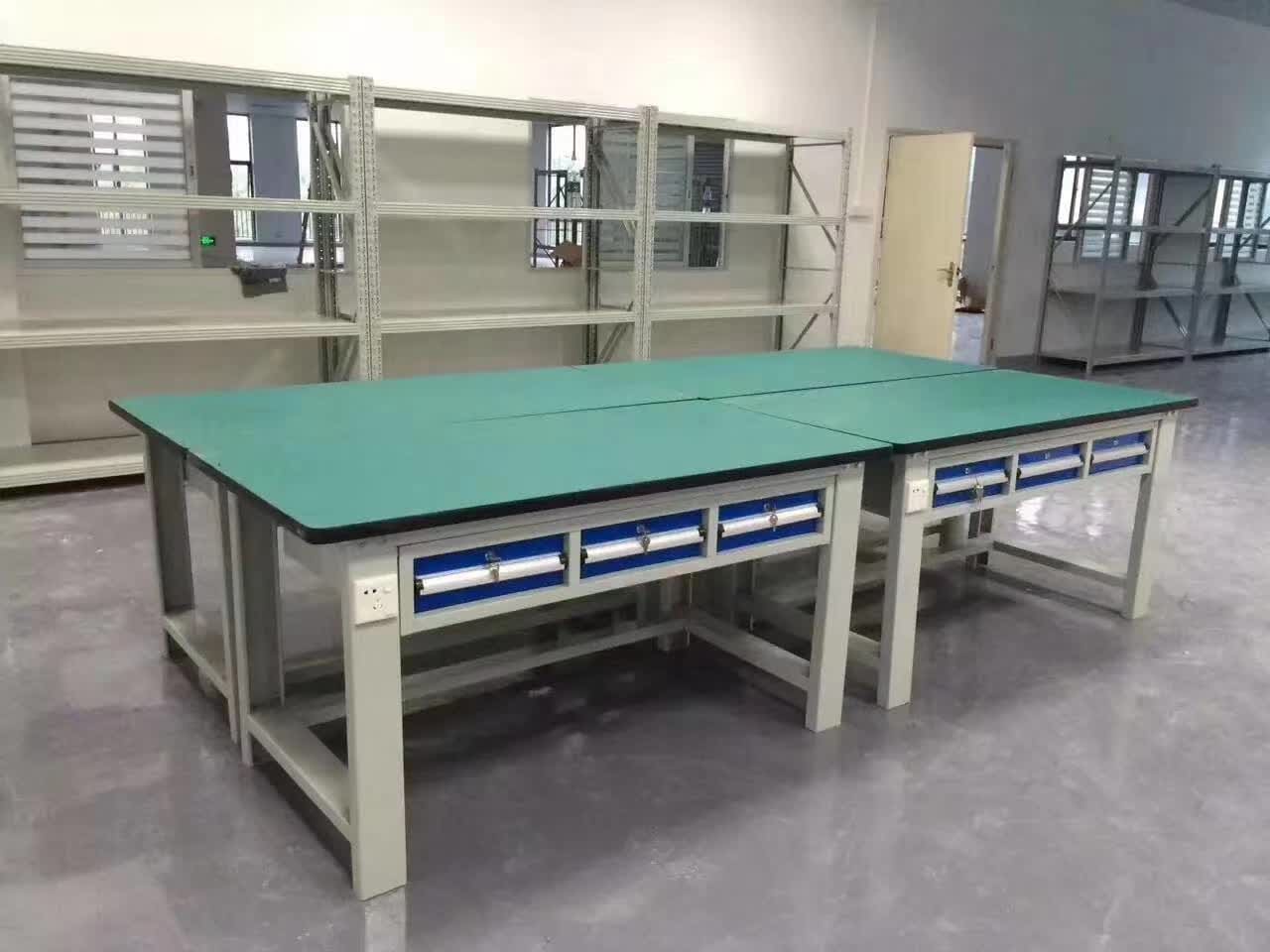
I've had clients come to me after buying a cheap, unbranded workbench online. Within six months, the top was warped, the frame was rusting, and it was too wobbly to use safely. They saved a little money upfront but ended up spending much more to replace it, not to mention the lost productivity. The cheapest workbench often becomes the most expensive one. The key is to think of it as a long-term investment. You can avoid these expensive headaches by asking the right questions and choosing a supplier who stands behind their product. Let's go over the most common mistakes and how you can sidestep them.
Looking Beyond the Price Tag
The biggest mistake I see is buying based on price alone. A low-quality workbench will cost you far more in the long run through repairs, replacements, and lost work time. Instead of looking at the purchase price, think about the total lifecycle cost. A high-quality workbench might cost more initially, but it will perform reliably for years with minimal maintenance. To protect yourself, always demand proof of quality from potential suppliers. Don't just take their word for it. Ask for third-party load testing reports11 to verify their capacity claims. Request material certifications to confirm the quality of the steel. And ask for references or case studies from companies in your industry. A reputable manufacturer will have no problem providing this information.
| Common Mistake | How to Avoid It |
|---|---|
| Focusing Only on Price | Calculate the total lifecycle cost, including maintenance and potential downtime. |
| Ignoring Load Capacity | Calculate your maximum load and add a 30% safety margin. Get test reports. |
| Buying Unbranded Products | Choose a supplier with a proven track record and strong after-sales support. |
| Overlooking Ergonomics | Consider adjustable-height options and modular accessories to boost productivity. |
The Importance of a Good Partner
Choosing the right supplier is just as important as choosing the right workbench. A good manufacturing partner doesn't just sell you a product; they provide a complete solution. Before you buy, confirm that the supplier can customize the workbench to your exact needs. Can they build it to specific dimensions? Can they add special cut-outs for equipment or integrate air lines and power? A supplier who offers this level of customization can help you create a much more efficient workspace. Equally important is after-sales support. Do they offer services like site measurement, layout design, and installation? What is the warranty period? A solid warranty of 3–5 years on structural components shows that the manufacturer is confident in their product. This partnership ensures you have support if anything goes wrong, preventing costly downtime.
Conclusion
Choosing the right industrial workbench is about matching it to your work, verifying its quality, and partnering with a reliable supplier. This ensures safety, boosts productivity, and delivers long-term value.
"eTools : Computer Workstations | Occupational Safety and Health ...", http://www.osha.gov/etools/computer-workstations. A workplace ergonomics or occupational-safety source can support the general link between poorly designed workstations, inefficient task performance, and increased risk of musculoskeletal or safety problems. Evidence role: general_support; source type: government. Supports: A poorly chosen workbench can contribute to workflow delays and safety hazards.. Scope note: This would support the general risk relationship, not prove that any specific workbench purchase will cause delays or hazards. ↩
"Workbench - Wikipedia", https://en.wikipedia.org/wiki/Workbench. An industrial engineering or occupational reference can define workbenches as work surfaces or benches used to support manual, assembly, repair, or production tasks in workshop and industrial settings. Evidence role: definition; source type: encyclopedia. Supports: An industrial workbench is a heavy-duty table intended for factory and workshop use.. Scope note: Definitions may vary by industry and may not use the exact phrase “industrial workbench.” ↩
"Factor of safety - Wikipedia", https://en.wikipedia.org/wiki/Factor_of_safety. Engineering safety-factor references can explain that load-bearing equipment is commonly specified with a margin above expected maximum load to account for uncertainty, wear, and dynamic effects. Evidence role: mechanism; source type: education. Supports: A workbench’s static load capacity should exceed the maximum expected load by a safety margin.. Scope note: The source may support the use of safety factors generally, while the exact 30% margin may remain a practical rule of thumb unless a specific standard is found. ↩
"[PDF] nasa handbook nasa-hdbk-8739.21 - NASA Standards", https://standards.nasa.gov/sites/default/files/standards/NASA/Baseline/0/nasa-hdbk-873921.pdf. Electrostatic-discharge control standards and technical guidance describe ESD-protected workstations as a method for reducing electrostatic damage risks to sensitive electronic components. Evidence role: expert_consensus; source type: institution. Supports: Electronics assembly areas may require ESD workbenches to protect sensitive components.. Scope note: The source supports the need for ESD controls in electronics handling, but the exact workbench specification depends on the components and facility ESD control program. ↩
"Case Study: How Chromium Protects Steel", https://mse.engin.umich.edu/internal/demos/case-study-how-chromium-protects-steel. Materials-science references describe stainless steels as iron alloys whose chromium-rich passive surface improves resistance to corrosion in many moist or chemically exposed environments. Evidence role: mechanism; source type: education. Supports: Stainless steel surfaces can help resist corrosion in humid or chemical work environments.. Scope note: Corrosion resistance depends on the stainless-steel grade and the specific chemicals, temperature, and exposure conditions. ↩
"How to use a Meter to Test ESD Mats - Elimstat.com", https://elimstat.com/how-to-use-esd-meter-to-test-mats/?srsltid=AfmBOop3b0bH-mi8xMW-WXcth29UoucDRZd8S6WhTgJ5oqna5YoK3Tnr. ESD control standards classify dissipative materials and worksurfaces by electrical resistance ranges used to control charge accumulation and discharge in electronics-handling environments. Evidence role: definition; source type: institution. Supports: ESD work surfaces are commonly specified within defined electrical resistance ranges such as 10⁶–10⁹ Ω.. Scope note: Different standards distinguish surface resistance, resistance-to-ground, and resistance-to-point measurements, so the cited range should match the measurement method used in the article. ↩
"Enhanced corrosion resistance of zinc phosphate coatings on mild ...", https://pmc.ncbi.nlm.nih.gov/articles/PMC12180131/. Coatings literature explains that phosphate pretreatment can improve paint or powder-coating adhesion and corrosion resistance, while electrostatic powder coating forms a durable protective finish on metal substrates. Evidence role: mechanism; source type: research. Supports: Phosphating followed by electrostatic powder coating improves the durability and corrosion resistance of steel workbench frames.. Scope note: The evidence supports the coating mechanism generally; actual corrosion and scratch resistance depend on pretreatment quality, coating chemistry, thickness, and curing conditions. ↩
"Salt spray test - Wikipedia", https://en.wikipedia.org/wiki/Salt_spray_test. ASTM B117 and related corrosion-testing references describe salt-spray testing as a standardized accelerated method for comparing the corrosion resistance of coated metal specimens. Evidence role: definition; source type: institution. Supports: Salt spray test results can provide standardized comparative evidence of coating corrosion resistance.. Scope note: Salt-spray exposure hours are comparative laboratory results and do not directly predict exact service life in a real factory environment. ↩
"OSHA Technical Manual (OTM) - Section VII: Chapter 1", http://www.osha.gov/otm/section-7-ergonomics/chapter-1. Ergonomics guidance links adjustable work heights and neutral postures with reduced musculoskeletal strain and improved fit between the worker and the task. Evidence role: expert_consensus; source type: government. Supports: Adjustable-height workbenches can reduce fatigue and musculoskeletal strain by allowing better posture and task fit.. Scope note: The source would support ergonomic risk reduction generally, not guarantee prevention of back strain for every worker or task. ↩
"Life Cycle Cost (LCC) | www.waru.edu", https://www.waru.edu/acquipedia-article/life-cycle-cost-lcc. Life-cycle costing guidance defines total life-cycle cost as including acquisition, operation, maintenance, downtime, and disposal costs, supporting evaluation beyond initial purchase price. Evidence role: definition; source type: government. Supports: Industrial equipment purchases should consider total lifecycle cost rather than only initial price.. Scope note: Life-cycle costing frameworks support the purchasing method but do not establish that every higher-priced workbench will have lower total cost. ↩
"Third party conformity assessment body - Law.Cornell.Edu", https://www.law.cornell.edu/definitions/index.php?width=840&height=800&iframe=true&def_id=55d622a9a5c85b9024f39aba69af7004&term_occur=999&term_src=Title:16:Chapter:II:Subchapter:B:Part:1107:Subpart:C:1107.21. Product-testing and conformity-assessment references explain that independent testing can verify whether products meet stated load, safety, or performance requirements under specified test conditions. Evidence role: expert_consensus; source type: institution. Supports: Third-party load testing reports can help verify supplier load-capacity claims.. Scope note: The value of a third-party report depends on the test standard used, laboratory competence, and whether the tested configuration matches the purchased workbench. ↩